
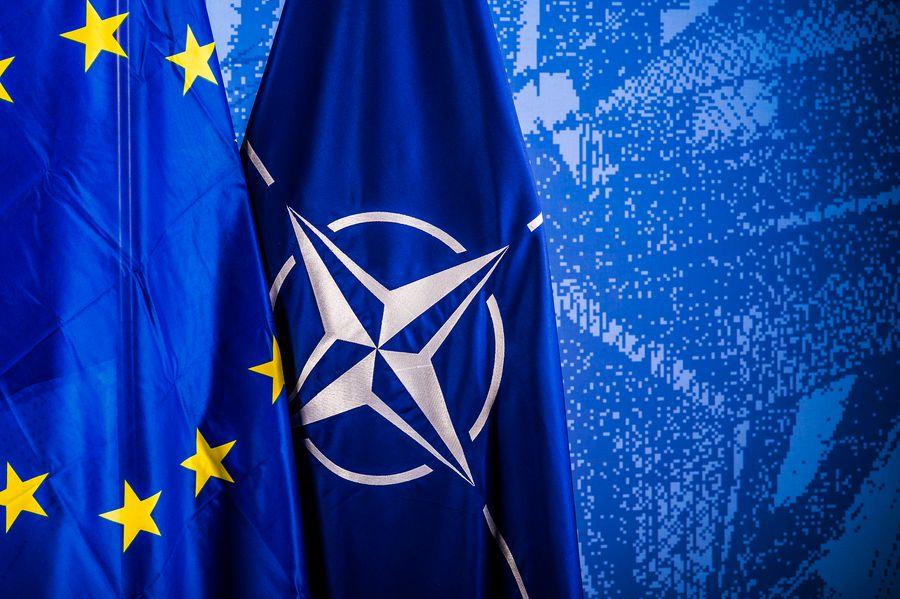
The New EU Defense Commissioner: Aligning Ambition with NATO
Last updated 05:30 PM EDT • Read time: 8m
With Andrius Kubilius nominated as the EU’s first defense and space commissioner, Europe is taking a historic step in cementing its renewed commitment to defense. Yet despite the importance of establishing such a position, it remains unclear what role the new commissioner will play in bolstering European defence. Kubilius will face a litany of challenges in the inaugural post, not least of which is convincing some member states to transfer more defense competency to the Commission even amid an egregiously fragmented defense industrial base.
Historically, the European Union has focused on economic and political integration of the continent, ceding defense capabilities to NATO. Yet, Russia’s war against Ukraine, heightened tensions in the Middle East, and the prospect of a United States disengaged from European security come November has revealed EU’s lack of agency in providing for its own defense and security. As the EU finds its footing as a major defense player, it would do well to view its defense ambitions as one facet of the broader transatlantic security architecture, with NATO at its core as the premier European defense and security venue. Adopting such an approach will require great statesmanship to bring the two multilateral organizations closer together on key issues. As such, Kubilius has a unique opportunity to not only address current strategic challenges facing Europe, but also to transform the new post into a natural liaison with NATO, positioning Europe as a stronger partner in NATO while strengthening EU defense initiatives and reducing redundancies.
Aligning EU Ambitions with NATO
American military power remains the strongest deterrent power in transatlantic security. Even as EU member states build up their capabilities and the European Union establishes itself as a major player in international security, the United States’ nuclear umbrella will always necessitate Europe to cooperate within NATO as the primary driver of transatlantic defense. Additionally, NATO brings an important value with the inclusion of United Kingdom and Turkey, which bring to bear significant defense capabilities and military strength that reinforce NATO’s role as the main venue for military policy in Europe. As such, European defense ambition must integrate into the existing transatlantic security framework, with NATO at its core, to maximize its contribution to collective defense.
The European Union will play a key role in steering defense industrial cooperation, ensuring efficiency while addressing security challenges, and coordinating increased defense funds across its 27 member states (23 of whom are NATO allies) to harness a whole-of-continent approach to the security challenges that it faces. This approach will streamline EU defense spending initiatives and ensure that funding is directed toward areas which will garner the greatest return on investment for EU defense ambitions and eliminate overlap between NATO and EU initiatives. Deepening this collaboration is essential for effectively addressing shared threats, maximizing resource efficiency, and reducing redundancies, particularly in defense procurement.
Despite political hurdles and an unclear mandate that have led many to question the value of the new defense commissioner role, Kubilius has a unique chance to define the defense commissioner post as a key player in European politics. By leveraging EU-NATO cooperation, Kubilius can address strategic challenges facing Europe and position the defense commissioner as a natural liaison with NATO, redirecting the center of gravity of transatlantic security toward the European Union.
Maximizing Impact
Additionally, the Commissioner will need to focus on securing more defense investment in the next EU budget cycle, consolidating Europe’s fragmented defense industries, and developing a comprehensive defense industrial policy, while ensuring these efforts are broadly in line with NATO commitments.
Adequately financing military ambitions is the single most significant role the European Union can play within NATO, which will provide the Supreme Allied Commander Europe (SACEUR) with the necessary capabilities to realize NATO’s new regional defense plans. The former EU Internal Market Commissioner Thierry Breton has called for a €100 billion EU defense fund to boost defense industry. Yet within the bloc, there is hesitancy to cede defense and security policy and more expressly military financing to the European Union, calling into question whether Kubilius can convince European capitals to chip in on new initiatives. To start, Kubilius could contextualize this investment in terms of bolstering Europe’s status within NATO and increasing its aggregate contributions to the Alliance. Irrespective of the outcome of the US presidential election, the United States will continue to urge its European allies to fund defense commensurate to the challenges it faces globally. Greater defense investment in the aggregate will serve to balance US criticisms, cement the European Union’s place as a leader in defense within the transatlantic alliance, and demonstrate a growing commitment within the Alliance to take on challenges within the European security sphere.
Beyond the commitment to fund its military ambitions, Europe needs to centralize its defense industrial capacities. The new EU defense commissioner will need to ensure that Europe's defense industrial revival efforts not only bolster national industries but also align closely with NATO's defense industrial pledge, as failing to do so will undermine both European and allied warfighting capabilities in the face of future threats. The commissioner needs to address the deep fragmentation that exists across European industries as a result of years of underinvestment and a lack of central planning by the European Union. To address this, the commissioner should integrate NATO standards into European initiatives such as the European Defence Industry Reinforcement through Common Procurement Act (EDIRPA) and the European Defence Industry Programme (EDIP). In doing so, the European Union will be a main driver of defense capabilities necessary to equip SACEUR with the capabilities necessary to achieve transatlantic security ambitions.
Another key to success of the new commissioner lies in balancing between Europe’s short-term defense needs and the Continent’s growing ambition to develop a European defense industry. Instead of starting from nothing, Europe has a unique capability to stand up defense industrial capabilities that will fill specific gaps in NATO’s collective defense strategies, making the alliance more resilient. European industries can and should provide significant military equipment for the bloc; however, there are significant opportunities for the European Union to cooperate with its NATO allies to achieve strategic ambitions. For example, the United States outpaces its European counterparts in key areas necessary to compete on future battlefields, like space-based missiles and offensive cyber capabilities. The commissioner should prioritize harnessing the collective power of NATO allies by finding greater opportunities to collaborate with allied defense industrial bases to fill critical gaps in Europe’s own defense base in the immediate term, while also fostering innovation that will ultimately lead to a stronger European defense industrial landscape.
Lastly, while the primary mandate of the new defense commissioner is to ramp up European defense industrial capacity in line with the European Union’s new defense industrial strategy, the role also faces challenges to deconflict mandates with Kaja Kallas, EU’s new foreign and security policy chief, who is in charge of coordinating bloc’s security policy. To maximize effectiveness and minimize duplication, the commissioner’s portfolio should extend beyond defense industry matters to also encompass military mobility efforts and cyber security —areas where both NATO and the EU have struggled to achieve substantial progress together. While Kallas will continue to play an important role in consensus-building on defense and security policy between Member States and EU institutions, the defense commissioner can work directly with NATO and industry to overcome the lack of progress and direct EU funding to areas where it’s most needed to strengthen EU defense initiatives and reduce redundancies —paving the way for greater EU-NATO cooperation as the bloc stands up its broader security policy.
Kubilius's Opportunity: Aligning EU Defense with NATO
The EU defense commissioner has the potential to reshape both the European and allied defense landscape, but it will require a well-defined mandate, a sufficiently resourced portfolio, and an individual willing to rise to the moment. To do this, Kubilius must prioritize the consolidation of Europe’s defense industry, drive greater defense investment, and ensure that EU defense efforts are closely aligned with NATO.
As Europe faces an increasingly unstable global security environment, the need for deeper EU-NATO cooperation is more urgent than ever. A successful EU defense commissioner will advocate for a bold agenda that integrates European defense efforts with NATO, ensuring that Europe not only contributes to its own security but also strengthens the broader transatlantic alliance that has kept it safe for decades
Luka Ignac is an Assistant Director for the Transatlantic Security Initiative (TSI) within the Scowcroft Center for Strategy and Security at the Atlantic Council. With a background as a former Assistant Director and young global professional at the Europe Center, Luka brings expertise in EU-NATO cooperation, NATO partnerships, and the transformation of European defense.

The Gulf of Finland’s Forgotten Islands
By Ben Poulin • RealClearDefense
NATO’s New Spending Pledge Must Buy Real Energy Resilience
By Chuck Dockery • RealClearDefense
The Army Needs a Data Logistics Discipline Before the Next Surge
By Steve Ferenzi • RealClearDefense
2949 Marine Prisoners, Hostages, and Peacetime Governmental Detainees Since Our Corps' Founding
By Jon Couch • RealClearDefense
America Must Win the Biotech Race Against China
By Rob Maness • RealClearDefense
U.S. Air Force To Arm C-17 Cargo Aircraft With Cruise Missiles
By C. Jones, Defence Blog
How Marine Vet Ernest Langdon Became a Renowned Shooter & Gunsmith
By WATM
In First, Two CCAs Fly Air Combat Maneuvers Using Autonomy Software
By A&SF
Space Force Launches Mission Operations Center
By Jon Harper, DefenseScoop
Pentagon Mulls Placing Fleet of Military Satellites Around the Moon
By Ars Technica