
A Semi-Nuclear North Korea May Be a Path to Peace
Published Feb. 22, 2019 • Read time: 7m
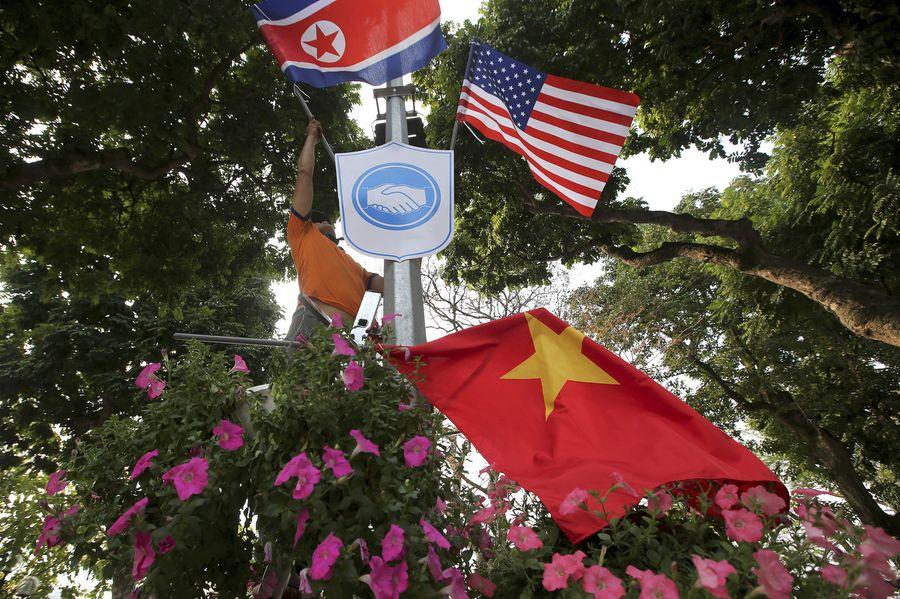
On February 27 and 28, the guys with the crazy hair – Donald J. Trump and Kim Jong-un - will meet in Vietnam, an appropriate venue as the Communist Party of Vietnam has successfully (so far) squared the circle of developing a dynamic economy while holding onto exclusive power.
The first Trump-Kim meeting was in Singapore in June 2018 and spawned speculation of an immediate start of North Korean denuclearization. Instead, while North Korea hasn’t tested a nuclear weapon since September 2017 or a ballistic missile since November 2017, the country has dispersed its nuclear weapons and missiles, and “…little to no verifiable change has occurred in North Korea’s military capabilities,” according to U.S. Forces Korea commander, Army General Robert Abrams.
And why not? North Korea doesn’t have an agreement with anyone to do anything, and it makes sense for Kim to keep up weapon production so to have more to trade later, and it keeps his engineers, scientists, and generals busy.
What will likely happen is this: As part of a deal, North Korea will host a long-term presence by the International Atomic Energy Agency (IAEA), which it has agreed to “in principle,” and everyone else agrees to a gradual reduction of sanctions. Kim will hand over the warheads and dismantle facilities that can only be used for atomic weapon fabrication, but North Korea will keep the remaining research and manufacturing facilities which will be key to its future economic development.
We’ll be left with a “semi-nuclear” North Korea, not a country neutered by a modern-day Morgenthau Plan. Perfect? No, those North Korean scientists won’t forget how to make a bomb or a ballistic missile, and we’d be wise to track their holiday travel, but denuclearization isn’t an end in itself. It is one of the practical political steps to reduce a threat to the United States, which is the President’s first responsibility.
Why will North Korea be reluctant to surrender its nuclear capability?
Because Libya.
When the United States launched its ill-fated intervention in the Libyan Civil War in 2011, it did so to give a boost to the Arab Spring (and Hillary Clinton’s presidential prospects), but the Americans forgot they could not suspend the rules of regime survival. The war party in the U.S. failed to consider the lesson nuclear aspirants Iran, and North Korea would take away: Unless the Americans are willing to invade you - a non-starter after the Iraq and Afghanistan adventures - you can negotiate a deal as you ride out the sanctions. Don’t give up your nukes - a lesson Ukraine wishes it heeded.
The denuclearization process envisioned by the arms control community is long and detailed, with rent-seeking opportunities for the policy wonks, but Trump and Kim are operating under a short time horizon that is focused on end state, not process. The U.S. goal should be to reduce risk, not churlishly punish North Korea for pulling one over on the world.
Trump wants to start the 2020 campaign with a demonstration that only he, the practical deal-maker, was able to make progress in a conflict that was frozen for 65 years; Kim needs to deliver the prospect of an economic payoff to his cadres and assurances the regime will stay independent. A decade-long negotiating process with the possibility of a reward at the end is guaranteed employment for staff officers but of no immediate use to the President and the Chairman.
The principals’ goals are to avoid war (Trump) and to stay in power (Kim) or, most likely, to remain in power by avoiding war (both).
Trump’s critics will say he got rolled no matter what deal he gets, but a loyal base, a growing economy, and progress in Korea will help keep his approval rating around 50% as he heads into 2020.
What will an agreement look like?
North Korea won’t settle for less than what Iran got, so the bargaining will start from there. Trump called the Iran deal the “worst deal ever,” so he will add ballistic missiles to the mix and rechristen it the “best deal ever.” Kim will counter with a demand for gradual sanctions removal, and Trump will link that to milestones confirmed by international inspectors such as the IAEA and the Organization for the Prohibition of Chemical Weapons and will tell Kim the declaration of an end to the Korean War will come only after the North makes progress on denuclearization.
The North will bring up the U.S. troop presence, but South Korea has said the are troops "not related" to denuclearization talks. South Korean President Moon Jae-in can remind Kim that his father, Kim Jong Il, the “Dear Leader,” was ambiguous about a continued U.S. presence after a peace treaty as the U.S. troops can be a balancer against Korea’s historic enemy, Japan, and overbearing neighbor, China.
China will fuss about U.S. troops remaining in the South, but an independent North Korea will ensure no U.S. troops are on its border and we won’t see another outbreak of “Yalu fever.” The U.S. may have to challenge China to ensure free navigation in the South China Sea and about its re-education camps in Xinjiang province, so avoiding parking U.S. troops near the Chinese border will reduce jitters in Beijing as a possible end to the Korean War looms.
Relations between Japan and South Korea are strained of late. The issues range from territorial disputes, close encounters between military aircraft and ships, to the status of the “comfort women.” A reunified Korea with a nuclear capability may be all that Japanese nationalists need to break the taboo against developing nuclear weapons, which will unnerve China especially if it is contesting sea lanes with the U.S. Navy at the same time.
And Russia, which shares a 23-mile border with North Korea, and is active in smuggling and sanctions busting with the North, will be in the mix for economic benefit, especially its economy is still lagging, and its Security Council vote is needed.
Real life will be bumpy and will take longer than Trump and Kim hope. To start, the parties still have to agree on the definition of “denuclearization,” and Kim would be wise to insist on a treaty with the U.S., unlike the Iran deal which was a non-binding list political commitments. This will be to ensure the real wild card, the U.S. Congress, won’t be able to vote on more sanctions.
What end-state does Trump envision? A safer Korean Peninsula, a reduced threat to the U.S., re-election in 2020, and a North Korea that “will become a different kind of Rocket - an Economic one!” And if the Establishment strikes back and Trump is defeated in 2020, the U.S. will be committed to the process he set in motion.
Trump’s financial focus means he will want to secure a deal that doesn’t require the U.S. to build a modern infrastructure in North Korea, especially as we’ll long be paying the bills for trying to modernize Iraq and Afghanistan, so keeping North Korea’s research and engineering capability intact is critical to future economic growth. The U.S. can focus its financial commitments to decommissioning WMD facilities and repurposing the scientists and engineers via the Nunn-Lugar Cooperative Threat Reduction Program or helping the North comply with U.S. and international industrial and commercial standards.
If the deal keeps Kim – a known quantity – and the current regime in power, the insiders in Pyongyang will be appropriately motivated, and they and their kids will reap the rewards - mobile phone licenses, mining concessions, and agency agreements. It will also get the rest of the world off the hook for upgrading the place to South Korean standards, though Seoul will fund projects anticipating a reunification that will never happen. That is an acceptable price to pay for a war foregone.
James Durso (@james_durso) is the Managing Director of Corsair LLC. He was a professional staff member at the 2005 Defense Base Closure and Realignment Commission and the Commission on Wartime Contracting in Iraq and Afghanistan. Mr. Durso served as a U.S. Navy officer for 20 years and specialized in logistics and security assistance. His overseas military postings were in Kuwait and Saudi Arabia, and he served in Iraq as a civilian transport advisor with the Coalition Provisional Authority. He served afloat as Supply Officer of the submarine USS SKATE (SSN 578).

End the Jones Act Waiver
By Mark H. Buzby • RealClearDefense
Prediction Markets Are Becoming a New Frontline for Military Operational Security
By Yang Yunke • RealClearDefense
Can Robots Bring Maneuver Warfare Back?
By Ayeza Areej • RealClearDefense
Buy Smarter, Fly More
By Jeff Kojac • RealClearDefense
Stop Gutting the Conventional Army
By R.D. Hooker, Jr. • RealClearDefense
Hung Cao Facing Contentious Confirmation To Become Navy Secretary
By Konstantin Toropin • Associated Press
U.S. Marines Expand M27 Rifle Contract
By Inder Singh Bisht
Kadena AFB Gets First F-15EX Eagle IIs
By Emily Ryan Miller, Defence BlogHung Cao Facing Contentious Confirmation To Become Navy Secretary
By AP
Fair Winds, Peacoat and Desert Camo: Navy Makes Big Changes to Seabag
By MTimes