
Preparing for What Comes Next in North Korea
Published Nov. 1, 2017 • Read time: 4m
Highlights
- By moving carrier strike groups and stealth fighter jets into the region, the United States will enhance its force posture in and around North Korea.
- The preparations do not necessarily suggest that the United States is getting ready to launch a war — though they will elevate the risk in the region.
- Tracking U.S. military movements around the Korean Peninsula will offer insight into the standoff between Washington and Pyongyang.
North Korea is still racing to achieve a comprehensive nuclear deterrent. And the closer it gets to its goal, the less time the United States and its allies have to try to stop it. Depending on factors such as the strength of U.S. intelligence, the progress of North Korea's missiles and nuclear programs and how much risk Washington and its allies are willing to tolerate, the United States may already have missed its opportunity for preventive military action. Official assessments indicate that, at most, Washington has 18 months before the window closes; after that, the United States and its allies probably will have no choice but to adopt a policy of deterrence toward North Korea.
As the clock ticks down, we're constantly scanning the horizon for signs of an impending strike on North Korea, such as the evacuation of nonessential personnel from South Korea or a heightened alert level in the region. Most of these have yet to materialize, suggesting that military action is unlikely this year. Others, however, have already manifested.
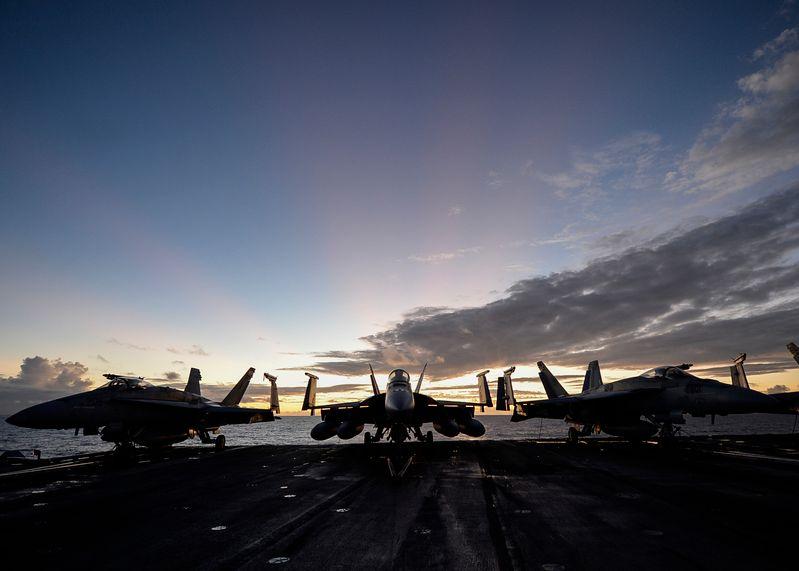
The United States is enhancing its force posture in and around North Korea. Three U.S. carrier strike groups are en route to the Western Pacific, where they will conduct a combined exercise in mid-November. The gathering is a rare occurrence — the last time three U.S. aircraft carrier strike groups convened for a combined exercise was in 2007 — and will give the United States a powerful force within striking distance of North Korea. The U.S. Air Force, meanwhile, has announced that, for the first time, it will send a squadron of a dozen F-35A stealth fighter jets to Kadena Air Base in Japan in early November for a six-month deployment. Stealth fighters would figure prominently in a potential U.S. strike on North Korea. The United States has also dispatched several submarines, including at least one nuclear cruise missile submarine, to Korean waters. And finally, the U.S. military recently revealed that it increased its stockpile of munitions in Guam by about 10 percent between late August and late September. The small island in Micronesia is a major fuel and ammunition storage area for the U.S. military in the Pacific region, and it would play a central role in a conflict with North Korea.
Russian help would make North Korea’s missile-test flurry worse news
North Korea Launches 2 Ballistic Missiles and Dials Up Pressure on the U.S.
What's Behind Seoul's Olive Branch to Pyongyang?
Seeking a New Normal on the Korean Peninsula
Taken together, these developments suggest that the United States is preparing for a confrontation. But that doesn't necessarily mean that Washington is gearing up to start a war with Pyongyang. The United States and it allies are in a precarious standoff with North Korea. Military preparations, exercises and movements like the ones underway near the Korean Peninsula may simply be a part of the United States' effort to keep its options for handling North Korea open. Not every deployment is a prelude to military action.
Nevertheless, these types of developments give an idea of what a prospective military campaign would look like, while also raising the risk in the region. Consequently, tracking them is critical. North Korea, after all, will be watching out for the same kinds of military movements and preparations from the United States. If it concludes that a strike is imminent, Pyongyang will be more likely to resort to pre-emptive action. And even if both sides manage to avoid a war, buildups and exercises to contain and deter North Korea may well be the new normal.
This article appeared originally at Stratfor.

Iron Raven: Remembering Colonel Joseph B. Conmy, Jr.
By Louis Marano • RealClearDefense
Stand Proud of the Force
By Jay Rogers • RealClearDefense
How a Dying Agency Turned Fentanyl Into a Weapon of Mass Destruction
By Barry Angeline • RealClearDefense
The Pressure Is the Message: What Xi and Putin Faced in Shenzhen
By Emzari Gelashvili • RealClearDefense
China’s Revised Mobilization Law and the Expanding Reach of National Defense
By Muhammad Shoaib • RealClearDefense

Marine Corps Hero Under Federal Investigation
By Laporta, Burnham & Watson, CBS
A Postmortem of Maneuver Warfare in the U.S. Marine Corps
By Donald Vandergriff
U.S. Putting Weapons in Space: A Strategic Blunder?
By Ajey Lele • RealClearDefense
U.S. Senate Seeks to Exchange Shipbuilding Funds for More Munitions
By Naval News
F-35C Completes First Launch and Recovery Trials on a Ford-Class Carrier
By Navy T.