
Poland: NATO's Strategic Partner or Pawn?
Last updated 07:17 AM EDT • Read time: 6m
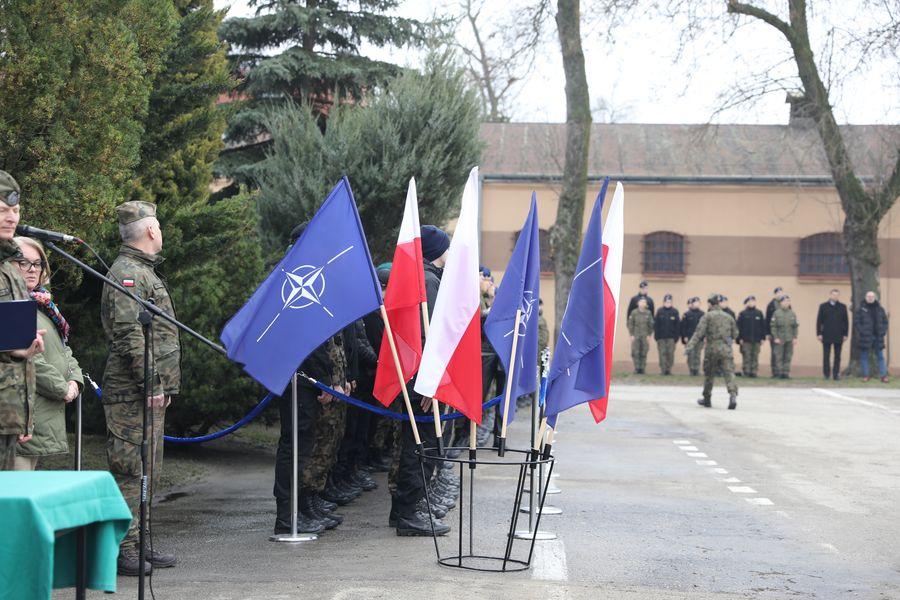
In the realm of geopolitical realignments, the strategic prowess and positioning of nations often become a topic of intense scrutiny and debate. Poland's unenviable geographical location - nestled in the heart of Central Europe between two historically rapacious quasi-imperial powers - has found itself at the crossroads of tensions within highly volatile contemporary power dynamics, particularly within the context of its relationship with NATO (North Atlantic Treaty Organization). While Poland has undoubtedly benefited from its NATO membership, which facilitated its economic development and bolstered its long-sought diplomatic clout on the global stage, questions inevitably arise regarding whether its historical traumas and inherently weak political elite establishment are not being strategically utilized as pawns in the great power rivalry by more consequential players within the alliance.
For Poland, NATO membership symbolizes security, stability, and integration with the broader Euro-Atlantic community. Since joining the alliance in March 1999, Poland has upgraded its diplomatic and economic ties with Western partners, significantly bolstered its defense capabilities, modernized its armed forces, and participated actively in NATO exercises, missions, and operations. In the year 2023 alone, Poland ascended to the top of NATO's expenditure rankings with an unprecedented commitment of 3.9% of its gross domestic product towards military objectives, nearly doubling NATO's existing 2% target. It is projected to spend over 4% of GDP on defense in 2024. Poland’s president now calls on its allies to raise their defense spending to 3% of GDP.
The country’s “Technical Modernization Plan” for its Armed Forces estimates spending $131 billion on new military equipment between 2021-2035. In line with the plan, in 2023 Poland placed orders for $23.8B in weapons purchases from South Korea and the US, which include air-defense systems, anti-ship missile systems, armored vehicles, and drones in the name of ensuring, according to Polish President Andrzej Duda, its security and that of its neighbors and the whole eastern flank of the NATO alliance.
The alliance, in turn, has provided Poland with a much-needed and much-desired security umbrella, particularly in light of its centuries-long history of betrayals, partitions, and subjugations evincing modern skepticism and distrust towards external powers and institutions and heightening tensions with its eastern neighbor, Russia. According to STATISTA, in March 2023 NATO membership was supported by 92 percent of Poles while opponents of the alliance accounted for only one percent of all respondents. Compare this to more ambivalent French attitudes toward NATO, where 52 percent of French people believed France's participation in NATO was a good thing while 19 percent of those surveyed by STATISTA in November 2023 thought it was generally a bad thing.
Paradoxically, despite having previously been disillusioned by the West, which, alongside Stalin, relegated Poland to the Soviet sphere of influence at the Yalta Conference, leading to its subsequent positioning behind the emerging Iron Curtain in the post-1945 political landscape, Polish society firmly believes in NATO's Article 5 mutual defense clause and regards its membership as a net benefit. Coupled with dedicated support for NATO and a high 82% confidence rating for the present US administration there is also a decisively negative perception of Russia. According to the Spring 2022 Pew Research Poll, Polish views of Russia are more critical than ever in its post-communist history, with nearly 97% of Poles holding an “unfavorable view of the country, including 91% who have a very unfavorable view” and 94% of Poles see Russia as a “major threat.”
However, beneath the hubbub of military posturing, Poland's relationship with NATO is not devoid of complexities and ingrained suspicions alluded to earlier. Some critics argue that Poland's staunch advocacy for NATO's expansion eastward, particularly into former Soviet bloc countries and Ukraine, serves the interests of the United States and other Western powers more than it serves Poland's own geostrategic security concerns. By positioning itself as a frontline state — the so-called NATO's “eastern flank” — against perceived Russian aggression, Poland has become a key element in NATO's deterrence strategy in Eastern Europe. This has led to increased military presence, including the deployment of NATO troops and assets (primarily American rotational presence) on Polish soil. The strengthening of the US military combat units, reconnaissance, and command systems, while seemingly enhancing Poland’s and, by extension, the pact’s collective security, also heightened diplomatic and political conflicts with Russia and Belarus.
Additionally, Poland's vocal support for Ukraine’s NATO membership, the “not unthinkable” deployment of Polish/NATO troops to Ukraine, a missile defense system, and military exercises in the region have been met with criticism from Moscow, exacerbating already strained relations between the two countries and further complicating the security landscape in Eastern Europe. Thus, instead of fostering robust strategic deterrence and “peace through strength”, the NATO pact countries today find themselves on the brink of an escalating nuclear standoff with Russia.
Can acting in NATO’s interest endanger Poland's enlightened self-interest, however conceived?
Critics of Poland's role within NATO point to its susceptibility to being used as a pawn in the highly complex geopolitical game, particularly the one between the United States and Russia. As tensions between these two superpowers intensify, Poland finds itself increasingly caught in the middle, balancing its membership obligations to NATO with its desire to maintain broader regional stability without compromising its sovereignty and borders.
Poland's transition to democracy and market economy since the fall of communism has fueled a desire to catch up with Western Europe and assert Poland's place on the global stage, often marked by political naïveté stemming from an intrinsic weakness of its state institutions and institutional traditions, a lingering post-communist inferiority complex, and an unquenchable desire for external praise and approval. As one of the largest and most populous countries in Central Europe, Poland plays a pivotal role in shaping NATO's policies and priorities in the region. Its strategic location and military capabilities make it a valuable ally within the alliance, which has much to contribute to collective defense efforts and even more to lose from prospective misjudgments in NATO's response to emerging security challenges.
The complexities and tensions inherent in Poland's relationship with NATO underscore the need for nuanced analysis and diplomatic engagement to ensure that Poland's security interests are effectively balanced with broader geopolitical considerations within the alliance. The Polish delegation that met with President Biden at the White House on March 12, 2024, to mark the 25th anniversary of Poland’s NATO membership, walked away with promises of “ironclad” commitments to Article 5 and a $2 billion loan for 96 Apache attack helicopters. As the adage says, whilst history does not repeat itself, it often rhymes. One can only hope that Poland's desire for validation on the international stage will not constitute an incentive for NATO to push the country under the train of the accelerating war machine to become once again mercilessly partitioned and devoured by its much more powerful neighbors. After all, if Thucydides is right, Poland's frantically subservient political class should heed the forewarnings of the ancients - the strong do what they can, and the weak suffer what they must.
Dr. Joanna Rozpedowski is a non-resident senior fellow at the Center for International Policy and an Adjunct Professor at George Mason University. Twitter @JKRozpedowski

The Gulf of Finland’s Forgotten Islands
By Ben Poulin • RealClearDefense
NATO’s New Spending Pledge Must Buy Real Energy Resilience
By Chuck Dockery • RealClearDefense
The Army Needs a Data Logistics Discipline Before the Next Surge
By Steve Ferenzi • RealClearDefense
2949 Marine Prisoners, Hostages, and Peacetime Governmental Detainees Since Our Corps' Founding
By Jon Couch • RealClearDefense
America Must Win the Biotech Race Against China
By Rob Maness • RealClearDefense
U.S. Air Force To Arm C-17 Cargo Aircraft With Cruise Missiles
By C. Jones, Defence Blog
How Marine Vet Ernest Langdon Became a Renowned Shooter & Gunsmith
By WATM
In First, Two CCAs Fly Air Combat Maneuvers Using Autonomy Software
By A&SF
Space Force Launches Mission Operations Center
By Jon Harper, DefenseScoop
Pentagon Mulls Placing Fleet of Military Satellites Around the Moon
By Ars Technica