
Ukraine Faces Another Desperate Winter
Last updated 06:10 AM EDT • Read time: 4m
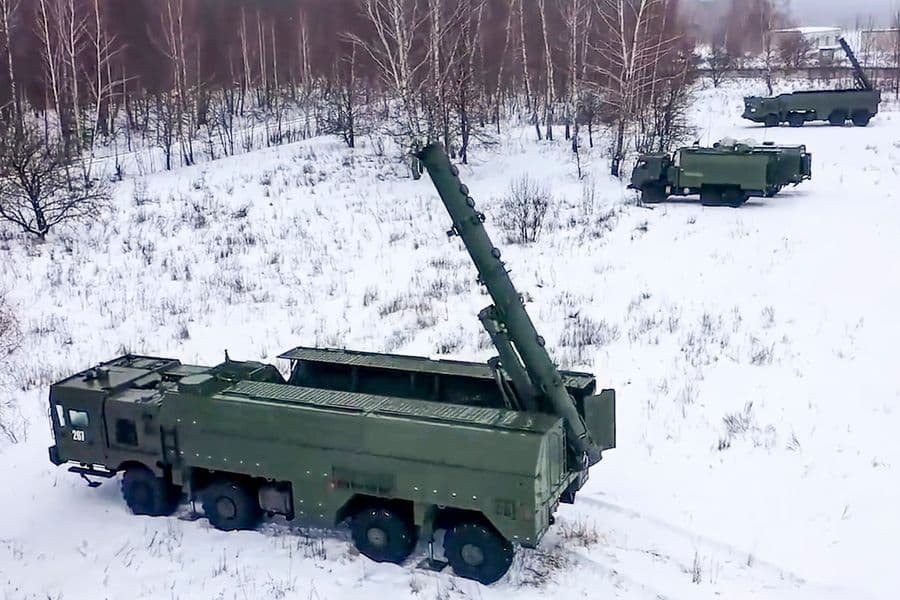
For the fifth consecutive Winter, Ukraine faces ferocious Russian bombardments. This year they will have to withstand a range of ballistic missiles, which, because of their speed and trajectory, are exceptionally difficult to intercept.
Russia launched 61 ballistic missiles against Ukraine in April, which has incrementally increased to 198 launches in July. Ukraine intercepted only 29 of the July missiles.
Ukraine’s allies cannot, or will not, be able to supply Ukraine with missile interceptors before Winter. The much vaunted Patriot Defence Systems are very expensive and complex.
According to The Atlantic, the American manufacturers of Patriot systems cannot fully supply their own military and are afraid of technology transfer. In response, Ukraine starts mass producing their own FP-7.X ballistic missile interceptor. Significantly cheaper than the Patriot systems, it is untested, less precise, and unlikely to be available until 2027.
Meanwhile Ukrainian citizens suffer.
Tenby Powell of Kiwi K.A.R.E (Kiwi Aid & Refugee Evacuation) has been delivering aid, including portable stoves, water boilers, and logistical support like reconditioned ambulances, into war-torn Ukraine for the last four years. He is currently supplying citizens in the Kyiv and Sumy Oblasts.
Powell grimly declares, “Russian drones continue to deliberately target ambulances and paramedics as part of a wider assault on Ukraine’s healthcare system. To date, Kiwi K.A.R.E has had six vehicles targeted (3 ambulances and 3 support vehicles) with two written off.”
Russia continues to target human necessities -
"Russia is systematically attacking Ukrainian oil and gas production in order to cause maximum damage to our infrastructure on the eve of winter," declared Serhii Fedorenko, of the Ukraine’s largest oil and gas company Naftogaz
In response to Ukraine attacking Russia oil refineries with drones, Russia has attacked Ukraine’s gas infrastructure 293 times so far this year, more than all of 2025.
As well as gas and oil Russia looks set to destroy Ukraine’s water and sewage infrastructure.
Powell notes, “There are residential houses and apartments that have been completely destroyed, accentuated by constant attacks on power and water infrastructure. Before heading into winter proper, we have 6500 requests for reconditioned water boilers.”
Ukraine’s Energy Minister Denys Shmyhal told Politico, "Russia's goal now is to destroy our water supplies. Last winter they targeted electricity and heating, but you could still survive if you had gas and water during electricity shutdowns.”
"It is difficult to survive for more than three days without water and sewage," the Minister added.
Tenby Powell reinforces the practical needs: “to wash your hands or clothes, to clean a wound, to bathe your children. For most of us, it’s something we take for granted. Kiwi K.A.R.E’s Heat-for-Health stoves and water boilers give families in devastated communities a way to heat water, cook food and warm their homes.”
What will it take for Russia to end this pitiless war?
Russian President Putin’s maximalist goals have not changed. Putin cannot accept a ceasefire on current frontlines for three reasons: Firstly, he cannot justify the 1.4 million casualties to date, without any significant gains. Secondly, he will not meet with Ukrainian President Volodymyr Zelensky because has repeatedly told the Russian people that Zelensky is “illegitimate”. Finally, without control of all of Donetsk, a bulwark of Ukrainian defense, he cannot fulfil his long-term aim of taking Ukraine in its entirety.
So, Putin repairs his damaged oil refineries and imports refined oil from Belarus and Kazakhstan, manufactures even more ballistic missiles, and brings in over 30,000 military mercenaries from North Korea. While economically not sustainable in the long term, these measures will sustain another aggressive winter campaign.
In a sign of exasperation on August 6 Putin directly rang army commanders in Donetsk, urging them to intensify attacks on defending Ukrainian forces.
On August 20, a massive Russian attack destroyed parts of a residential high-rise in Slominski District in Kyiv, killed 16 people, and injured 42. A nearby boiler house was also destroyed that supplied heating to the surrounding apartment blocks.
On August 21, Russian Deputy Foreign Minister Sergei Ryabkov stated that while Russia will look into “new ideas” about peace in Ukraine, they will only accept proposals that align with Putin’s maximalist aim.
There will be no respite for the besieged Ukrainian people, until Putin is removed from office.
Patrick Drennan is a journalist based in New Zealand, with a degree in American history and economics.

A Passage to the Middle East: India as a Mediator and Security Partner
By Irina Tsukerman • RealClearDefense
South China Sea is Key to Invigorate Positive U.S.–Malaysia Relations
By Brent D. Sadler • RealClearDefense
The Necropolitics of the Wasteland
By Yunus Emre Tumen • RealClearDefense
AI, Robotics, and Marines
By Gary Anderson • RealClearDefense
The Emerging SQUAD
By Muhammad Shoaib • RealClearDefense
AI, Robotics, and Marines
By Gary Anderson • RealClearDefense
AUKUS Partners Test Autonomous Maritime Systems
By Jangoulun Singsit, Naval Tech
AUKUS: USS Colorado Announced as First Submarine for SRF – West
By USNI News
Navy, Marine Corps Simulate Ship Strikes From Air and Land
By Alex Wilson, S&S
Air National Guard To Stand Up a New Special Tactics Squadron
By Patty Nieberg, T&P