
Ukraine's Drone Campaign Is More Than a Military Operation — It's a Political Strategy
Published June 22, 2026 • Read time: 6m
Join the Conversation
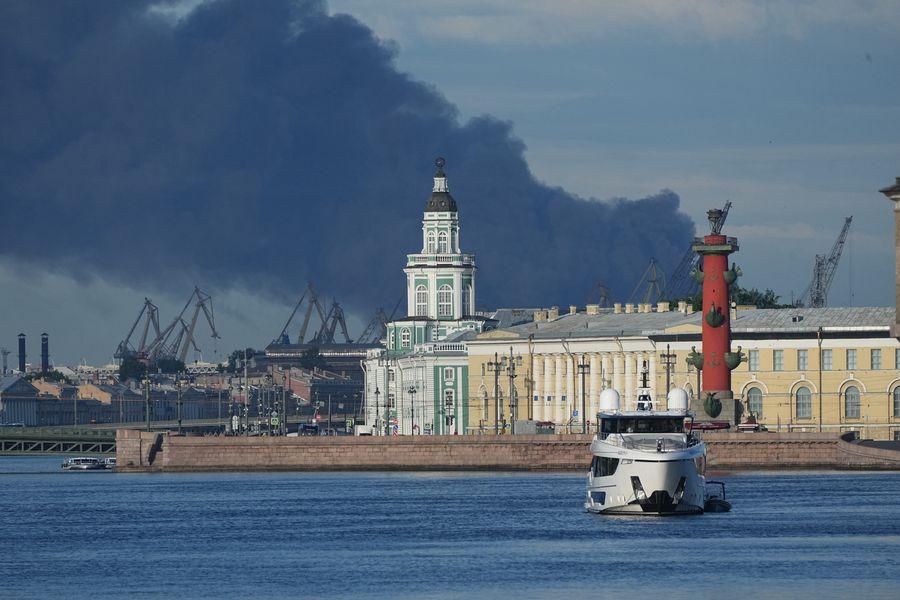
0Ukraine fired hundreds of drones at St. Petersburg last week — the second attack on the city and its surrounding region in less than seven days. According to press reports, the strikes targeted oil depots and refineries across the Krasnodar region in southern Russia, following an earlier attack on an oil terminal and naval base near St. Petersburg — launched just miles from where Vladimir Putin was hosting Russia's International Economic Forum, the Kremlin's answer to Davos. On Friday, Putin told the assembled audience he had rejected Ukrainian President Zelensky's request for a direct meeting.
The juxtaposition was not accidental. It was the point.
These attacks tell me two things — one operational, one strategic. Together they suggest that Ukraine has developed a level of political-military sophistication that deserves serious attention in Washington and every allied capital.
An Operational Transformation
First, the operational reality. Ukraine has dramatically improved its offensive drone strike capability — not just its defensive posture against Russian drones, but its ability to reach deep inside Russian territory and hit targets of genuine strategic value. The range, precision, and scale of these attacks represent a qualitative leap from the early years of the conflict. Ukrainian forces are now capable of conducting sustained, coordinated strikes against energy infrastructure, naval installations, and industrial facilities hundreds of miles from the front lines. The operational progress over the past year has been remarkable by any measure.
Russia Says Its Defenses Intercepted Over 1,300 Ukrainian Drones
How Seoul’s Break With Kyiv Serves Trump’s Russia Turn
The First Test of Peace Lies in Ukraine's Borderlands
Ukraine Abandons Truce and Attacks Russian Oil Refinery
This transformation did not happen overnight. It reflects years of hard-won battlefield experience, rapid innovation in drone design and production, and an intelligence and targeting architecture that has grown steadily more sophisticated under wartime pressure. Ukraine has become, by necessity, one of the world's most capable practitioners of drone warfare — and the lessons it is generating are ones that the United States and its allies urgently need to absorb.
A Clausewitzian Strategy
But the more important insight is strategic, not operational. Ukraine has developed a coherent and sophisticated political-military strategy — one that is deeply Clausewitzian in its logic.
Carl von Clausewitz argued in his classic book On War, that war is the continuation of politics by other means — that military force is not an end in itself, but an instrument for achieving political objectives. He also identified the concept of the "center of gravity": the source of an adversary's power and will, the hub around which everything else turns. Effective strategy, in Clausewitz's framework, requires identifying and targeting that center of gravity — imposing costs that erode the adversary's capacity and willingness to continue the fight.
Ukraine's drone campaign against St. Petersburg, the Krasnodar refineries, and Russian energy infrastructure is a textbook application of that logic. Ukraine is not targeting these assets because it expects to win the war through economic disruption alone. It is targeting them because they matter to the Putin regime and the Russian elites who sustain it — and because pain inflicted on what those elites value most creates political pressure that battlefield attrition alone cannot generate.
Striking an oil terminal miles from the venue where Putin is hosting Russia's version of Davos — while the Russian president is performing normalcy for an international business audience — is not a coincidence. It is a message, delivered with precision, at a moment of maximum political embarrassment. The timing is as important as the target.
The Message Kyiv Is Sending
The message Ukraine is sending to Moscow is unmistakable: end this war through negotiated compromise or be prepared to absorb continued and escalating pain against the political, military, and economic targets you value most. This is a strategy designed not to defeat Russia militarily — Ukraine does not have that capacity — but to change Putin's calculus. To make the cost of continuing the war higher than the cost of ending it on terms Ukraine can accept.
That is a sophisticated strategic concept. And it is one that Ukraine has arrived at through four years of brutal, grinding conflict — not through academic theory, but through operational necessity.
What Washington Should Take From This
For American policymakers, the implications extend beyond Ukraine's immediate situation. Several lessons deserve serious attention.
The first is that asymmetric military capability, intelligently employed, can achieve strategic effects that conventional force cannot. Ukraine is a smaller, poorer country fighting a nuclear-armed great power. It cannot match Russia tank for tank or missile for missile. But it can — and increasingly does — hold at risk the things that matter most to Russian leadership. That is a model with broad applicability.
The second is that drone warfare has matured into a genuine instrument of strategic coercion — not just a tactical tool. The ability to strike deep, strike precisely, and strike repeatedly against high-value targets changes the strategic calculus in ways that defense planners across NATO need to internalize. The United States and its allies must develop both the offensive capabilities and the defensive architectures to operate in this environment.
The third is that political-military integration — the alignment of military action with political objectives — remains the decisive variable. Ukraine's drone campaign is effective not because the drones are technically impressive, but because they are being used in service of a coherent political strategy. Military capability in the absence of political strategy is just destruction. Ukraine is demonstrating that the two, properly integrated, can be genuinely coercive.
The Question That Remains
Ukraine is fighting to change Putin's calculus. The question — the only question that ultimately matters — is whether he is listening.
The evidence so far is mixed. Russia has absorbed significant economic pain from Ukrainian strikes on its energy infrastructure. The political cost to the Putin regime of attacks on St. Petersburg — a city of enormous symbolic importance — is real, even if difficult to measure. The fact that Putin publicly rejected Zelensky's request for a direct meeting while drones were striking facilities miles away suggests a leader who is managing domestic optics as carefully as military operations.
But Ukraine's strategy is not designed to produce an immediate result. It is designed to accumulate pressure over time — to make the war progressively more costly for the people whose support Putin needs to sustain it. Whether that pressure eventually reaches a tipping point depends on factors — Russian elite cohesion, economic resilience, Western support for Ukraine — that no one can predict with confidence.
What can be said with confidence is this: Ukraine has developed a political-military strategy that is serious, sophisticated, and grounded in sound strategic logic. In a war now well into its fifth year, which is no small achievement. Washington should be paying close attention — not just to whether the strategy succeeds, but to what it reveals about the future character of warfare in an era defined by cheap, capable, and increasingly autonomous systems.
Frank A. Rose is president of Chevalier Strategic Advisors, a strategic advisory firm focused on the intersection of geopolitics and defense technology. He previously served as U.S. Assistant Secretary of State for Arms Control, U.S. Deputy Assistant Secretary of State for Space and Defense Policy, a Professional Staff Member on the House Armed Services Committee, and as a Policy Advisor at the U.S. Defense Department.

Batteries Can Power a Win for America in Super Intelligence
By Manisha Singh • RealClearDefense
Poland’s Fighter Fleet Is Growing: Can Its Training System Keep Up?
By Bruce Allen Lubbering • RealClearDefense
Why Iran is Not Vietnam
By Kevin Brown • RealClearDefense
Closing the Missile (Defense) Gap
By Jason Camilletti • RealClearDefense
Part of a Larger Secret, Hidden World
RealClearDefense

Sign of the Times: CCAs Dominate a Major Fighter Conference
By Bill Sweetman • The Strategist (ASPI)Closing the Missile (Defense) Gap
By Jason Camilletti • RealClearDefense
U.S. Navy Prepares for Third Zumwalt Hypersonic Upgrade
By C. Johnston, Naval N.
Pearl Harbor Hero Doris Miller Will Stay Namesake of CVN-81
By Mongilio, USNI News
Navy CCA Plans Will Not Wait For F/A-XX Next Generation Fighter
By The WarZone