
Hegseth Is Wrong About Women in Warfighting
Published July 7, 2025 • Read time: 5m
“I told him there was going to be a war and we’re simply not ready.” These were the words of an Israeli female spotter on duty at the Gaza border on October 7, 2023. Her seniors, male officers all, ignored her warning about suspicious Hamas activity. Had the information been taken seriously, it might have prevented Hamas from infiltrating on that Black Saturday.
Young female soldiers are often at the heart of successful counterterrorism operations. They are capable of spending hours in front of screens, scanning surveillance feeds for signs of suspicious behavior. The Israeli military prefers to use women in these roles, because they are vigilant and not easily distracted. Why their warnings were ignored in the run-up to the October 7 attacks is under investigation in Israel.
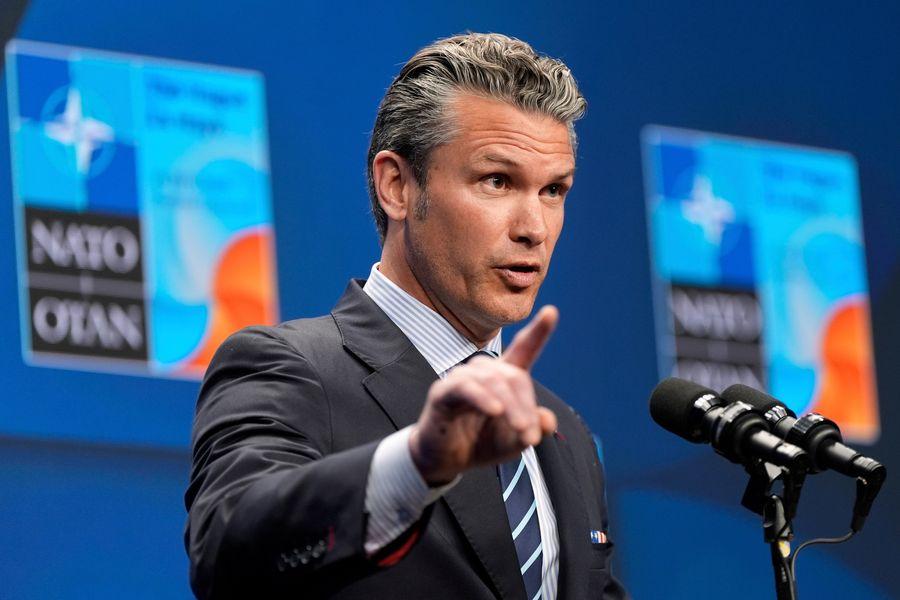
This is a signal example of the role that women can play in military missions, one that is evidently lost on U.S. Defense Secretary Pete Hegseth. In April, he explained his decision to end the Women, Peace and Security (WPS) program at the Defense Department by saying it was distracting the department from its core mission, “war-fighting.” But for years, women have played a profound warfighting role in the U.S. armed forces.
Not so long ago, Hegseth’s boss agreed. In October 2017, Donald Trump signed into law the “Women, Peace, and Security Act of 2017.” In its very first paragraphs, this law states that women in conflict-affected regions have achieved significant success in moderating violent extremism, countering terrorism, and enhancing the effectiveness of security services. These have been vital military missions for the U.S. armed forces ever since the war on terror began with the 9/11 attacks on the United States. When it was brought to Hegseth’s attention that Trump himself had signed the law, the Secretary of Defense grumpily blamed Joe Biden for subverting it.
How a Dying Agency Turned Fentanyl Into a Weapon of Mass Destruction
Congress Must Reauthorize Section 702 of the Foreign Intelligence Surveillance Act
Counterterrorism and the Growing Convergence in Homeland Security and Homeland Defense
Washington Cannot Ignore Afghanistan’s Weapons Legacy
But the law stands as written, founded on established consensus that women make vital contributions to national defense, whether in the United States or among our NATO allies. Just ask the Norwegians. They have a special operations unit made up entirely of women. It was formed to improve recruitment of women into the Norwegian armed forces, but also out of necessity, to improve access and intelligence in counterterrorism operations. “In Afghanistan, one of our big challenges was that we would enter houses and not be able to speak to the women,” said Captain Ole Vidar Krogsaeter, an officer with Norway’s Special Forces Operations. “In urban warfare, you have to be able to interact with women as well. Adding female soldiers was an operational need.”
Across the NATO alliance, this understanding is deeply embedded, because terrorist threats have hit NATO not only in Afghanistan, but also at home in Europe. Women in NATO armed forces become a force multiplier to counter these threats, building trust in local communities that translates into better intelligence and situational awareness, and better information to target the enemy. For NATO, these advantages are a necessity in military planning.
Of course, the strength debate rages on: if women are not as strong as men, can they and should they take on every combat role? NATO countries answer the question differently, with the United Kingdom and United States taking one approach—folding women into combat units—and Norway taking another—an all-female unit. The main point here, debate notwithstanding, is that women have been playing important roles in combat, sometimes in unique ways.
Ukraine, although not a NATO member, provides a good example: women have been contributing to critical missions related to territorial defense. This began after Russia invaded Crimea in 2014, when women joined Ukrainian combat forces to battle Russian proxies in the Donbas. Although the women had no official combat role, they insisted on being at the front lines.
The story of these original Ukrainian female fighters was movingly told in a 2017 documentary, The Invisible Battalion. Because they had no official blessing from their government to serve in combat, they signed up for more traditional female jobs such as military medics. But they excelled as snipers. According to one, “They said that men were especially afraid of women-snipers, because we are a little bit better at this job…Due to physiological differences, we are a little more resilient and attentive.”
Today, the unique role of women in Ukrainian territorial defense continues. Since most of the Ukrainian armed forces are tied down at the frontlines, women in special units prepare for the defense of Kyiv if the Russians try again to seize the city. But they are not only training against that future threat. At night, they actively defend against Russian air attacks on the capital, shooting drones out of the sky before they can reach their targets.
So women are vital to operations in both NATO armies and the Ukrainian armed forces. This message has to be front and center at a time when NATO and Ukraine are struggling to recruit enough people to fill their military ranks. The German Bundeswehr is currently 22,000 troops short of its target of 203,000 soldiers, and Denmark, in a bid to increase recruiting, has expanded its conscription rules to include women. In the United States, U.S. Army recruitment suffered a 25 percent shortfall in 2022 and a 10 percent shortfall in 2023. Because of a surge in female volunteers for active duty, the Army met its goal in 2024.
Mr. Hegseth, pay attention. You cannot afford to do without your women soldiers. They are an inherent part of the U.S. armed forces, and out of necessity, they will be into the future. The same will be true of NATO armies as they build up to respond to Russian threats. Ukraine is leading the way.
You should be listening to your boss. Long ago, he recognized the role of women in warfighting.
Rose Gottemoeller is a former Deputy Secretary General of NATO and former Undersecretary of State for Arms Control and International Security.

Batteries Can Power a Win for America in Super Intelligence
By Manisha Singh • RealClearDefense
Poland’s Fighter Fleet Is Growing: Can Its Training System Keep Up?
By Bruce Allen Lubbering • RealClearDefense
Why Iran is Not Vietnam
By Kevin Brown • RealClearDefense
Closing the Missile (Defense) Gap
By Jason Camilletti • RealClearDefense
Part of a Larger Secret, Hidden World
RealClearDefense
Closing the Missile (Defense) Gap
By Jason Camilletti • RealClearDefense
U.S. Navy Prepares for Third Zumwalt Hypersonic Upgrade
By C. Johnston, Naval N.
Pearl Harbor Hero Doris Miller Will Stay Namesake of CVN-81
By Mongilio, USNI News
Navy CCA Plans Will Not Wait For F/A-XX Next Generation Fighter
By The WarZone
Navy’s Shipbuilding Plan Would Require Massive Hike in Appropriations
By BrDef