
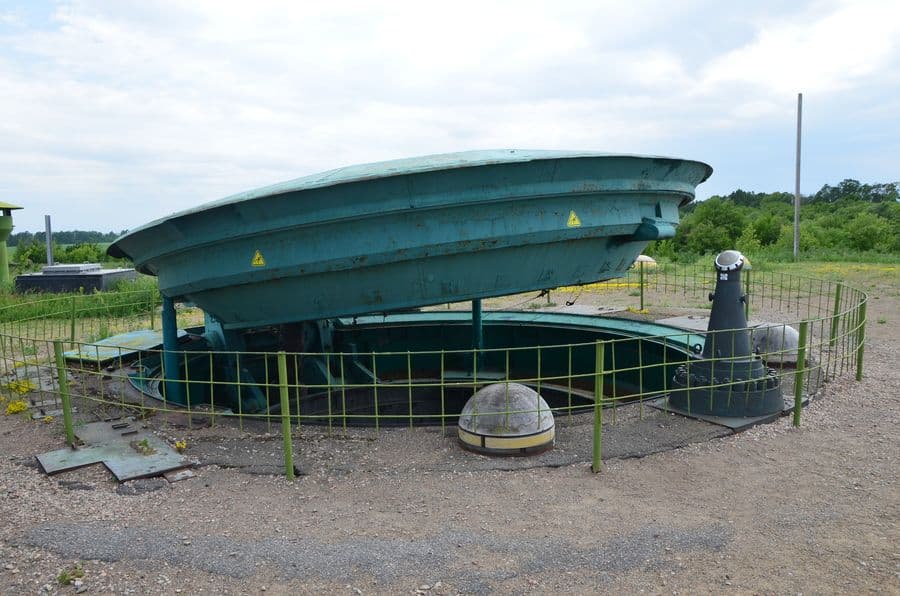
A Proposal for Escaping Russia's MAD Entrapment
Last updated 04:41 AM EDT • Read time: 7m
During the Cuban Missile Crisis, President John F. Kennedy, on October 22, 1962, in a nationwide-televised speech, said, “It shall be the policy of this Nation to regard any nuclear missile launched from Cuba against any nation in the Western Hemisphere as an attack by the Soviet Union on the United States, requiring a full retaliatory response upon the Soviet Union.” Kennedy’s straightforward statement made America’s reliance on nuclear deterrence explicit. Subsequently, it became enshrined in MAD (Mutual Assured Destruction), which became foundational in the nation’s Cold War foreign policy.
During Russia’s 2022 aggression against Ukraine, Russian autocrat Vladimir Putin, in an apparently successful application of nuclear deterrence, warned off United States President Joseph R. Biden and the American government from direct Ukraine military involvement, no-fly zone support, or lethal weaponry deliveries, save for handheld anti-air and anti-tank missiles.
In both the 1962 Cuban Missile Crisis and the 2022 Ukraine War, both Kennedy and Putin, respectively, threatened nuclear war to constrain the actions of their nuclear-capable adversaries. Since both threats have proved effective, have they now become a staple of international diplomacy?
If Putin’s invasion of Ukraine eventually proves successful, will he use a version of his nuclear-intimidation plus land invasion tactics against non-NATO Moldavia? And after a Moldavian conquest, would Putin subsequently demand a land corridor to Kaliningrad through Lithuania? After such a string of retreats made to accommodate Russian territorial ambitions, where, when, or how would NATO respond to yet more Russian demands for further NATO acquiescence? Would NATO survive east of Berlin, or would a new Russian empire emerge akin to the now-defunct Soviet empire?
Suppose Putin’s Ukraine adventure devolves into a stalemate that leaves Russian forces unable to advance from their Ukrainian salients, cripples the Russian economy, and culturally isolates Russia. Will the dictator again invoke nuclear threats to achieve more favorable terms from his adversaries? Will these more favorable terms include: transfer of Ukrainian territory to Russia, Ukrainian agreement not to join NATO or the European Union, no Russian reparations, removal of Russian sanctions, and some form of Ukrainian integration into the Russian political and economic sphere.
Finally, if the Russian forces inside Ukraine suffer significant reverses and the Russian government concludes that its forces must withdraw, will Putin cover that retreat with a threat of nuclear escalation? Additionally, will the tyrant demand terms favorable to Russia, such as a Ukrainian agreement not to join NATO or the European Union, no Russian reparations, and removal of Russian sanctions?
In the sixty years since President Kennedy’s 1962 televised address, the MAD-concept, used as a diplomatic tool, has blunted threats of nuclear weapon usage. Well-conditioned to the rules of nuclear blackmail, citizens of nuclear-capable nations understood that the proper response to an announced nuclear threat was your own nation’s nuclear counter-threat. However, since Putin’s threat, the United States leadership led by President Biden has sought to punish Russia, frustrate its invasion, and not provoke Putin. Will this American ‘high wire act’ succeed, or will Putin resort to more bellicose nuclear rhetoric and ratchet up international tensions? Will the American and European public and legislatures become more incensed and demand more Ukrainian involvement? Will the Russian public become disenchanted with Putin, or will they become virulently anti-American and anti-Western?
In the past, before the advent of nuclear weapons, dictators that were intent on reshaping international relations had to work through large militaries backed by sizable populations to achieve their ambitions. Today, tyrants of nuclear-capable nations need only the cooperation of a few missile technicians to launch a nuclear strike. A dictatorship no longer needs national support; instead, it can rely on the collaboration of a cadre of supporters plus the acquiescence of a cowed or duped populace. If these pre-conditions are met, the despot can freely use nuclear blackmail to achieve his goals.
Currently, the Western world simultaneously has the opportunity of ridding itself of one such nuclear-armed tyranny, Russia, and the possibility of preventing the emergence of a second, Iran.
How?
The Russian invasion of Ukraine will end. That end could come about because of a Russian success. But that eventuality looks to be increasingly unlikely because of Russian military incompetence, Western weapons, Western sanctions, and mostly because of Ukrainian bravery. More probable will be a cessation of fighting and a peace negotiation leading to a settlement between the Ukrainians and the Russians.
Additionally, the Western World and Russia will need to resolve their differences. The initial Putin demands created his justification for Russia’s aggression against Ukraine. A revised set of Russian objectives will probably include some rework of Putin’s earlier demands plus lifting all the different sanctions. The Western World’s public will likely find this unappealing. While Western diplomats may try to find something in the Russian objectives for their publics to enthuse about, they will likely find themselves sifting through a trash heap of unappealing Russian imperialistic dreams.
Instead, Western diplomats need an exciting idea that their people will find irresistible in its goodness and simplicity. An idea with the power of Reagan’s ‘Tear down this wall, Mister Gorbachev.’
Is there such an idea?
‘Well,’ as President Reagan used to say, there is one idea that would excite people far and wide: Russian nuclear disarmament.
To be unambiguous, not nuclear armament reduction, nor worldwide nuclear disarmament. Just Russian nuclear disarmament.
Unrealistic. Pie in the sky. A non-starter for the Russians. And so on.
But one must admit that eliminating the world’s largest collection of nuclear weapons from the control of a brutal, reckless tyrant does have an appeal.
Now for the sales pitch.
Russia will emerge from Putin’s military adventure isolated from the world, impoverished in every way. Impoverished culturally. Impoverished financially. Impoverished technologically. In a historical instant, Russia has become the New North Korea. Trapped behind a New Iron Curtain of its own making, Russia can now look forward to becoming a vassal state of the rising Chinese superpower.
Somehow, in the early months of 2022, Russia has managed to achieve virtually everything it professed not to want. A simply amazing example of dysfunctional statecraft.
Having dug itself into a deep hole, currently having no way out of its predicament unless the Western world chooses to bail them out, the Russian state must make a profound strategic choice. One strategic option would invoke a Wait Until the Western Nations Change Their Attitude toward Russia strategy. This option has two significant risks: First, Russia may have to wait a long time. For example, the Cold War lasted decades. Second, the Free World may only somewhat relax its sanctions. Consequently, Russia may only partially recover to its pre-Putin War levels of interaction with the West.
Only in the areas of strategic nuclear weapons and hydrocarbon production does Russia have any realistic pretense to being a superpower. Russia does not compete with more advanced countries in economic, financial, conventional military, or technological strength. While some Russophiles think that Russia is powerful, most now would characterize Russia as dangerous.
An alternative to the Wait Until the Western Nations Change Their Attitude strategy would have the Russians implement a Russia Scraps Its Superpower Ambitions strategy. Can a nation successfully reorient its national development? Japan did just that twice. In 1853, Japan opened its ports to Western trade and its society to Western influence, thus becoming Asia’s industrial leader. In 1945, after its World War II surrender, under American guidance, Japan scrapped its feudal society, imperialism, and militarism. It then instituted reforms that led Japan to become a prosperous liberal democracy.
The key to such a Russian transition is total nuclear disarmament. Without nuclear weapons, the focus of society changes from militarism, imperialism, and expansionism to national development. In particular, national development that focuses on the economy, elimination of rampant corruption, and the elimination of pollution.
A re-engagement between the Western World and Russia is an opportunity. An opportunity to eliminate a part of the existing institutionalized terror of nuclear deterrence, which is becoming riskier and riskier. An opportunity to take a bold step and rebuild the conduct of international relations in a more rational and livable way.
The world must not miss such an opportunity, for it may be our last chance.
Robert (Bob) Purssell is a Massachusetts Institute of Technology graduate, Bob worked in the defense and semiconductor industry first as an engineer and subsequently as an engineering manager. Currently retired, he writes novels and gives talks on military and historical events.
The Services Do Not Need a Four-Star Autonomous Warfare Command
By Steven Wills • RealClearDefense
Honor Them While There Is Still Time
By Jeffrey Rosales • RealClearDefense
From Siberia to Fairford: How Operation Spider’s Web Has Changed the Rules of Airpower
By Frank A. Rose • RealClearDefense
Faster Simulations, Better Defense Decisions
By Rut Lineswala • RealClearDefense
Will HASC Have an Oversight Subcommittee in the Next Congress?
By Christopher J. Bright • RealClearDefense
Hegseth Barred Trans Troops. Military Boards Are Rejecting Those Orders.
By NYT
Closing the Sea: Lessons from Ancient Mediterranean Blockades
By DeCasien, CIMSECFrom Siberia to Fairford: How Operation Spider’s Web Has Changed the Rules of Airpower
By Frank A. Rose • RealClearDefenseFaster Simulations, Better Defense Decisions
By Rut Lineswala • RealClearDefense
Bombers Could Have a Major Air-to-Air Combat Role
By Joseph Trevithick, The WarZone