
Don't Add a Gap to NGAP
Last updated 06:33 AM EST • Read time: 4m
In preparing its budget for 2024, the United States Air Force faced a crucial decision: Continue funding the program to develop an entirely new technology for future jet engines, or defer that development to a future program. Typically, that kind of deferral means a gap of several years while the new program is developed. But in this case, unusually, the budget line for a next generation program already existed. So, in its last decision in that budget, the Air Force deferred its main engine development to the future.
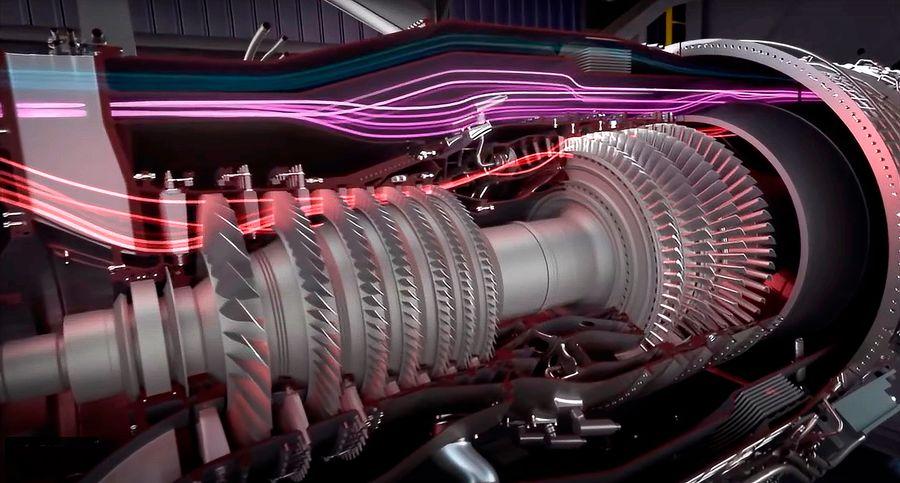
The technology is called adaptive propulsion, and it basically lets an engine switch from economical, airliner-like cruising modes to full-on fighter performance as needed. It improves range and performance while adding capability for extra cooling for modern avionics and weapons systems. Pratt & Whitney and GE Aerospace had both been funded to develop that new technology, but the Air Force’s decision for 2024 deferred that work to a future program, Next Generation Adaptive Propulsion, or NGAP. It was a hard decision, but in the end the Biden administration made the determination that dollars were better spent on the existing program. NGAP was funded in 2025, and adaptive propulsion research continued.
Then, for reasons passing understanding, the Trump administration proposed to reduce the budget for advanced engine development by almost 25% in 2026. It's not clear whether they believe that the United States is never going to build a new jet engine, but it seems odd to preclude the nation’s opportunity to do so.
Fortunately, that decision isn’t final. Congress is considering the proper level at which to fund NGAP for 2026. But unless Congress acts to amend the 2026 appropriations conference report, the 2024 deferral can become a bridge to nowhere.
In making that decision, it’s important for Congress to understand what NGAP is. It’s not just a program to build a new engine; it's building the technology base for all future high-performance military engines. This isn’t an earmark; NGAP isn't about one company winning. It's about the United States winning.
Other countries aren’t deferring their engine development. For many years, China has been hobbled by a lack of current technology jet engines for its fighters and bombers. Beijing is acutely aware of that, and so has devoted time, attention, and money to not only catching up but surpassing the West. It's a pattern we've seen before in Chinese technology development – as when they decided that instead of wiring the entire country for telephone service, they would jump straight to cellular. China doesn’t base their ambition on matching the rest of the world, but by using current technologies as a springboard to go directly to a future technology. And that appears to be exactly what they are doing with regard to military aircraft engines. Even before widely deploying current-technology military turbines, they have already built a three-stream adaptive engine prototype. This cuts their nearly 30-year deficit in engine development by almost two-thirds.
To be sure, the United States is reconsidering its place in the world. But a national security strategy that reduces its emphasis on the world beyond the western hemisphere doesn't mean our military technology needs to be in stasis. Indeed, whatever our strategy, we don't know where the next conflict will break out or the next need for U.S. capability will arise. And if we don't know that about today, we know much less what the situation will be 15 years from now, the time when the aircraft and engines we are developing today will be in service.
Former Defense Secretary Robert Gates famously accused the U.S. Air Force of “next-war-itis,” focusing too much on the future, when cutting programs like the F-22. As has become clear, though, the United States doesn't get to decide where the next war is or what it requires. We do get to decide whether the United States will be prepared for that next conflict. Freezing military engine development in 2026 does not seem to be a wise or effective preparation for the world ahead. Proper funding for NGAP to prepare for the next generation of aircraft and beyond keeps the U.S. in the game.
The world keeps changing. To keep up, the United States has to be… adaptive.
Jeremiah Gertler is senior analyst at the Teal Group market forecasting firm. These views are his own.

2949 Marine Prisoners, Hostages, and Peacetime Governmental Detainees Since Our Corps' Founding
By Jon Couch • RealClearDefense
America Must Win the Biotech Race Against China
By Rob Maness • RealClearDefense
How Digital Twins Can Strengthen Naval Readiness Before a Crisis Begins
By Carl Napoletano • RealClearDefense
The Uninsured Sky
By Joe Sandri • RealClearDefense
Counterterrorism and the Growing Convergence in Homeland Security and Homeland Defense
By Austin Doctor • RealClearDefense
How Digital Twins Can Strengthen Naval Readiness Before a Crisis Begins
By Carl Napoletano • RealClearDefense
F-16s Build on Iran Combat Lessons to Prepare for China Threat
By Rebecca Grant • Lexington Institute
U.S. Aircraft Evacuated From Second U.K. Base Due to Iran Threat
By Holliday, et al, WSJ
US Marine Corps Acquires Textron’s Ripsaw M3 Uncrewed Ground Vehicles
By DPost
U.S. Navy’s First San Antonio Flight II USS Harrisburg Completes Sea Trials
By GDN