
The Air Force Is in Receivership, and That's a Good Thing
Last updated 07:30 AM EST • Read time: 5m
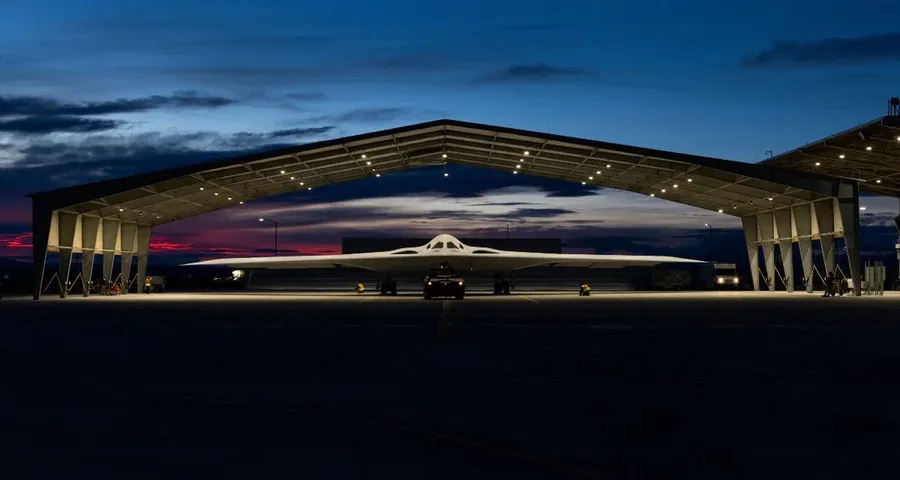
The Pentagon just executed one of the most consequential management restructurings in recent Air Force history. It didn’t come through a sweeping reform bill or a new strategy document. It came through a nomination: LtGen Dale White, elevated to four stars and assigned to a brand-new role reporting directly to the Deputy Secretary of War as the Direct Reporting Portfolio Manager for Critical Major Weapon Systems.
Translated into plain speech: the Air Force has been placed into a form of receivership. Its crown-jewel programs—the B-21, F-47, Ground-Based Nuclear Missiles, and Air Force One—are being carved out of the service’s fractured and dysfunctional acquisition bureaucracy and consolidated under a single leader whose chain of command bypasses the Air Force leadership entirely. For critics, this is an indictment. For reformers, it is the most promising move in a decade.
And its intellectual fingerprints are unmistakable. Deputy Secretary of War Steven Feinberg, whose private-equity career is now shaping the Department far more materially than any PowerPoint slide or strategy rollout. Private-equity logic has finally arrived at the Pentagon.
Anyone in the private-equity world recognizes this move instantly. When a portfolio company holds irreplaceable assets but is dragged down by misaligned incentives, diffuse authority, and repeated execution failures, the solution is the same. Isolate the high-value lines, move them under direct executive control, and force the rest of the organization to rebuild itself around performance. Feinberg has done exactly that.
When the Air Force repeatedly demonstrated that its internal processes, spread across program offices, major commands, headquarters staffs, and endless oversight bodies could not deliver at the required pace, Feinberg did what any seasoned investor would do: he executed a carve-out. This is both punishment and prudent stewardship. And it’s only half the story.
Because while Lt. Gen. White now owns the crown jewels, General Wilsbach just inherited the rest of the enterprise, the programs, processes, people, and culture that remain inside the Air Force. He must now perform the toughest turnaround of any service chief since the Army declared itself hollow in 1979.
In private-equity terms, White is now the leader of the high-value carve-out. With the marquee programs transferred out of the traditional chain, what remains in the Air Force is not irrelevant, it is the majority of the enterprise. The new CSAF is the CEO of the legacy organization that must be fixed and reshaped or completely restructured for long-term viability.
What success looks like
For this turnaround to work, three things need to happen. First, Feinberg needs to empower both White and Wilsbach to take bold and decisive action. If contracts need cancelation or restructuring, if senior leadership needs a shakeup, and if old paradigms need rethinking, Feinberg must be the one that gives these four-stars the political and bureaucratic cover to make the unpopular changes that are necessary. Second, Wilsbach must take the initiative to refocus the Air Force on its core mission, to “fly, fight, and win.” He must ruthlessly deprioritize missions that fall outside that core and relinquish missions that can be better accomplished by the other services, such as airborne warning and control, silo-based missiles, and base defense. Within the Air Force’s core mission areas, he must break the fighter jock and bomber mafia culture that is holding the Air Force back and instead embrace a new culture of innovation that leans aggressively into drones, autonomy, and artificial intelligence.
It may be true that for many Air Force missions, AI and autonomy cannot replace a pilot in the cockpit today, but this won’t be true forever. When reviewing programs that remain in the Air Force portfolio, Wilsbach must ask the difficult question: over the period each program plans to procure aircraft (often extending into the 2040s and beyond), will crewed aircraft remain superior to uncrewed systems? If not, then why is the Air Force pouring billions of dollars into crewed aircraft that will be second rate by the time they are fully fielded?
The third, and arguably most complex task, falls to White. His challenge is to restore good stewardship to the most critical programs in the Air Force portfolio. He will have to make tough calls about how to restructure these programs for success, which may include canceling or descoping existing contracts, rethinking acquisition strategy, and holding program managers accountable for their performance. Nothing motivates a bureaucracy to change its behavior quite as well as firing top leaders for poor performance. This should include past program leaders that may have moved on to other jobs if it can be shown that their poor decisions led directly to the problems we have today. Accountability doesn’t end when you PCS.
The bottom line
Putting the Air Force into receivership is bold, overdue, and absolutely necessary. America’s most critical airpower investments are now governed by a clean, accountable structure led by a single four-star who reports directly to the Deputy Secretary. And the Air Force, under a new Chief who now owns the turnaround, is being forced to rebuild itself in a way no internal reform effort has ever achieved. If this feels like private-equity discipline being applied to the Pentagon, that’s because it is.
Air Force leadership at all levels should take notice of what happens to companies that go into receivership and don’t reform. Private equity firms don’t mess around for long with struggling companies or intransigent management teams. When companies don’t reform, they get broken up and sold off in pieces. If the Air Force does not change course now, this could mean breaking it into different services, similar to what already happened with the Space Force.
Mr. Harrison and Major General Ferrari are Senior Fellows at the American Enterprise Institute. Previously, Mr. Harrison served as director of the Defense Budget Analysis program and the Aerospace Security Project at the Center for Strategic and International Studies. Major General Ferrari served as the director of program analysis and evaluation and the commanding general of the White Sands Missile Range.

Eight Months of Epic Fury and Still No Internal Alternative
By Stephen D. Cook • RealClearDefense
The Readiness Cliff: Pacific Lessons Drawn from the Middle East
By Brian McSorley • RealClearDefense
The Pentagon’s Real Modernization Problem Is Time, Not Technology
By Bruce Allen Lubbering • RealClearDefense
The World His Mother Opened
By Carlo J.V. Caro • RealClearDefense
Wake Island Lessons for Expeditionary Advanced Base Operations
By Brian J. Dunn • RealClearDefense
Wake Island Lessons for Expeditionary Advanced Base Operations
By Brian J. Dunn • RealClearDefense
U.S. Navy Expands Unmanned Mine Hunting
By Global Defense News
MRF-SEA Will Maintain Continuous Presence in the Philippines
By Mahadzir, USNI News
Space Force Weighs Proliferated Cislunar Satellite Constellation
By C. Albon, A&SF
America-Class Amphibs Enable New Ship-to-Shore Attack Strategies
By Warrior M.