
The U.S. Army Will (and Must) Get Heavier
Published Oct. 17, 2018 • Read time: 6m
The U.S. Army has put together a carefully constructed modernization strategy specifically designed to address the need to deter and even defeat high-end peer competitors while also maintaining the means to operate across the conflict spectrum. This strategy has both a near-term and far-term component. In the near-term, the next five years, the focus is on addressing major capability gaps vis-à-vis peer competitors. During this period, the Army is targeting its R&D on developing the technologies to support major, even transformational, advances in platforms and weapons starting at the end of the next decade.
Not surprisingly, most attention by the press and in defense articles has been on the more distant future and the potential for revolutionary capabilities emerging, in particular, from the efforts of the new Futures Command and its Cross-Functional Teams. There has been a spate of articles, some based on interviews with senior Army officials, discussing the potential for advanced capabilities including thousand-mile cannons, hypersonic projectiles, optionally-manned platforms, smart rifles and multi-spectral goggles.
The Army’s modernization strategy has one significant characteristic that will impact not only how that service will fight but also the conduct of joint and combined operations. That characteristic is weight. For program after program, whether they are to upgrade existing platforms or to replace systems that have reached the end of their useful lives, the new capability is almost universally heavier than its predecessor.
This is not a new phenomenon. The demands of modern warfare and the opportunities provided by technological advances have caused the Army to add capabilities and, hence, weight to its platforms and weapons systems. The addition of new sensors, communications systems, avionics, defensive measures and better weapons improve survivability and lethality but at the price of increasing weight. According to Major General William Gayler, the Commanding General of the Army Aviation Center of Excellence:
Stop Gutting the Conventional Army
The Army Needs a Data Logistics Discipline Before the Next Surge
U.S. Soldier Arrested on Suspicion of Espionage Linked to Russia
Partnering Decides Whether Flexible Military Construction Can Work
We've been growing and gaining weight for all the rights reasons ... every new technology, everything designed to protect a crew or its passengers, but we've given maneuverability at the objective away. We've given away payload, we've given away ammo, we are limiting options to a commander, we are not giving options. We do give options if the weather's right, but if the weather's not right, we can't give options.
So serious has this problem become for its helicopters, that the Army is about to award a contract to develop an improved turbine engine to provide greater power for its aviation platforms.
In program after program, the phenomenon is the same; as capabilities are improved, or the next generation system is deployed, weight goes up. Here are some examples:
- The High Mobility Multipurpose Wheeled Vehicle or Humvee had thousands of pounds of armor added to counter the low-tech threat posed by rocket-propelled grenades and improvised explosive devices. The Army plans to retire its remaining unarmored Humvees, retaining thousands of the heavier armored variants. The Joint Light Tactical Vehicle (JLTV), intended to replace a portion of the Humvee fleet, weighs nearly 50 percent more than even an uparmored
- The replacement for the obsolescent M-113, the Armored Multipurpose Vehicle, is much more capable and survivable. It also weighs around 37 tons versus the M-113’s 12 tons.
- The Abrams main battle tank, the best in the world, has grown from 60 tons when it was first deployed to around 70 tons today. This weight growth was the result of adding improvements such as a more powerful main gun, advanced sensors, better radios, ballistic computers, more effective armor and, most recently, the Active Protection System.
- The new Stryker Dragoon, with a turret that carries a 30mm cannon, weighs so much more than the basic vehicle that it requires a new, more robust suspension system. Another Stryker variant, the Interim Maneuver Short-Range Air Defense vehicle, has an unmanned turret equipped with a gun and surface-to-air missiles that add more than a ton in weight.
- The M-109 self-propelled howitzer, the Paladin, is in the midst of a major upgrade program that will significantly improve its effectiveness. Over the years, various upgrades have added nearly five tons to the system’s weight. Potential innovative upgrades, such as a longer gun able to fire shells much further, will make the Paladin even heavier.
- Military helicopters have experienced continual weight growth. The UH-60 Black Hawk gained some 2,500 pounds overall, or 78 pounds a year since it was first deployed. The CH-47 Chinook grew even more, from 16.5 to 25 tons. The basic model of the AH-64 Apache weighed in at 7.5 tons while the latest E model tips the scales at 11.5 tons.
- The next generation of Army aviation platforms, called Future Vertical Lift, could be larger and heavier. The V-280 Valor, a candidate to replace both the Black Hawk and Apache, goes farther, faster and with a greater payload than the helicopters it will supplant. But it also weighs a lot more.
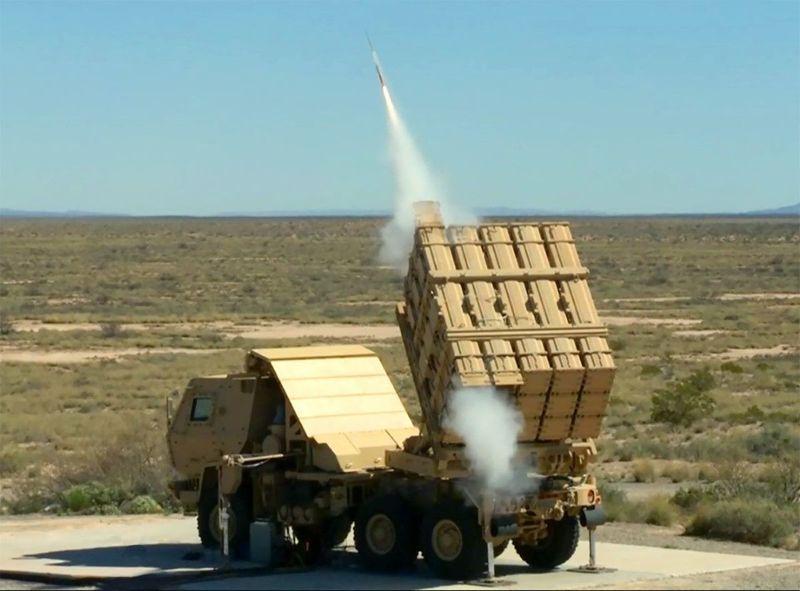
The Army also is getting heavier because it is adding platforms and weapons systems to its force structure where none existed before. One of the service’s priority acquisition programs is Mobile Protected Firepower. This is essentially a light tank weighing 25 to 30 tons, a number of which will be added to the Infantry Brigade Combat Teams. Similarly, the Army is developing the Multi-Mission Launcher (MML) as part of its advanced air and missile defense architecture. The truck-mounted MML weighs 12 tons without a full load of missiles. When these are deployed, the total weight of the units to which they are deployed will increase.
Facing the possibility of high-end conflicts with peer competitors, the U.S. Army not only will, but must grow heavier. Until new, lightweight and ultra-strong materials are developed, weight is the price that must be paid to field modern chariots of war. In addition to deploying more capable but inevitably heavier platforms and weapons systems, the intensity of future fights will certainly require the expenditure of larger quantities of munitions, tactical drones and consumables all of which weigh a lot. Theater commanders must recognize this reality and revise war plans accordingly.
Daniel Gouré, Ph.D., is a vice president at the public-policy research think tank Lexington Institute. Goure has a background in the public sector and U.S. federal government, most recently serving as a member of the 2001 Department of Defense Transition Team. You can follow him on Twitter at @dgoure and the Lexington Institute @LexNextDC. Read his full bio here.
When the Warfighter Becomes the Sensor
By Elise G. Annett • RealClearDefense
The U.S. and its Allies Need a Collective Maritime Strategy
By Antonios Marios Giannakopoulos • RealClearDefense
Making Maneuver Great Again
By Gary Anderson • RealClearDefense
Ending the Conflict with Iran
By Anthony Cowden • RealClearDefense
Going After the Cyprus Money Laundering Hub
By Lise Korson • RealClearDefense
Making Maneuver Great Again
By Gary Anderson • RealClearDefenseMaking Maneuver Great Again
By Gary Anderson, RealClearDefense
Bandwidth as a Service for Naval Forces
By Brandan R. Schofield, CIMSEC
The Army and the Marine Corps in a Pacific War
By Van Horrick & Bancroft, MWI
Coast Guard’s Updated Force Design Plan Includes Maven Smart System
By DS