
Digital Thread, Not Digital Theater: The Shipbuilding Fix Washington Keeps Missing
Last updated 06:53 AM EDT • Read time: 7m
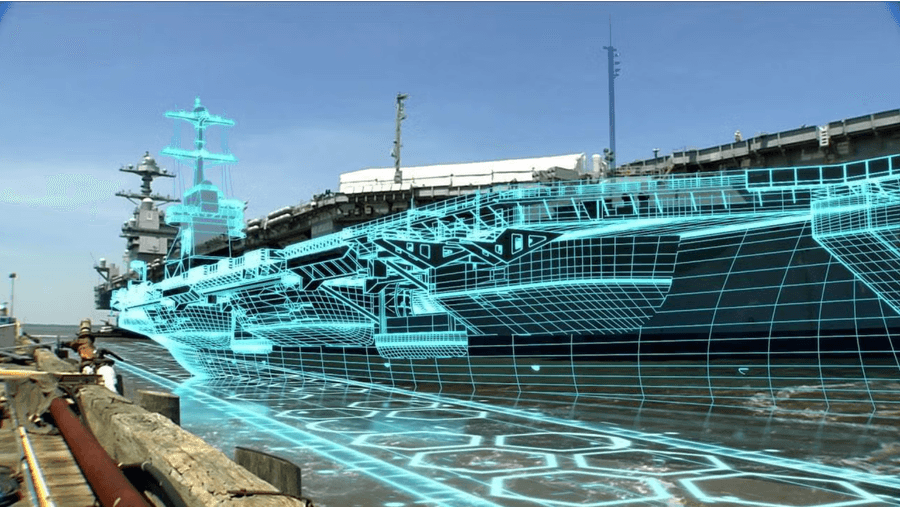
Hanwha Ocean is building warships in South Korea with integrated digital models, robotic inspection, and real-time production data feeding directly into maintenance systems. The United States Navy has 75 Arleigh Burke destroyers in service and cannot find two in the same configuration. That is the competitive gap no executive order has yet closed.
Rebuilding America’s maritime strength has been a topic of discussion within Washington, in the Pentagon, and on the conference circuit over the past 18 months. The White House's April 2025 executive order and the February 2026 Maritime Action Plan translated urgency into a blueprint for expanding capacity, strengthening the workforce, and modernizing with AI, digital twins, and additive manufacturing. Progress is real on several fronts, but failure by the Navy, Coast Guard, and industry to build a defensible digital architecture will prevent the broader ecosystem from achieving the production throughput the nation requires. Ambition without results is theater.
The foundational concept is the digital thread, a single authoritative evidence chain from cradle to grave that links design, manufacturing, inspection, maintenance, and modernization into one continuously updated environment. A true digital thread covers hull, mechanical, and electrical systems, additive manufacturing build parameters, weld data, robotic nondestructive examination results, acceptance records, in-service inspection findings, and cybersecurity and cyber readiness status. It enables hardware to be continually modernized and supports an agile, adaptable process for the life of a platform. For the Navy and Coast Guard, this is not a Silicon Valley luxury issue. It is the practical mechanism for satisfying conservative certification authorities while making engineering changes with far greater speed and confidence. The cyber dimension makes it non-optional; cyber ready and DevSecOps frameworks are valuable going forward, but they must be paired with a credible plan for the 200-plus ships already in the fleet, vessels carrying outdated networks, aging weapon systems, and C2 architectures that predate current threat requirements.
Recent program failures show exactly what it costs to ignore these disciplines. The Constellation-class frigate began construction before a stable design was achieved. That is the core failure, and no digital ambition corrects a program entering production without a mature baseline. By early 2025 the lead ship was reported nearly three years behind schedule, with an estimated unit cost of the lead ship a stagger 26 percent over its original $1.2 billion price tag. The Coast Guard's Offshore Patrol Cutter followed the same pattern. GAO found that construction began without a stable design and before critical technologies like the davit system had matured, producing costly rework and years of delay. These are exactly the kinds of failures a disciplined digital thread and ship-level digital twin are designed to prevent. The Columbia-class ballistic missile submarine program, projected at approximately $132 billion for 12 boats, carries its own cascading risk. Delays in Columbia reverberate across Ford-class carriers and Trump-class battle cruisers. Nuclear shipyard capacity is a systemic constraint; all three nuclear classes compete for the same yards, the same certified workforce, and the same industrial infrastructure. The Congressional Budget Office warned that the Navy's shipbuilding plan assumes increased throughput precisely where the industrial base is already under maximum strain. That is not a planning assumption, it is the lookout notifying about a risk of collision.
The Navy already has proof that a better approach is achievable. The Navy's Additive Manufacturing Center of Excellence has been developing digital technical data packages (manufacturing recipes) that can be distributed to qualified suppliers across the maritime industrial base. In one documented case, the center printed, machined, inspected, and delivered a bracket in under three weeks, then cut that turnaround to 13 days on the next request. NAVSEA reported a 70 percent reduction in lead time for a critical destroyer valve using additive manufacturing, and printed parts have reached new construction submarines. Naval Reactors and Penn State ARL are leading AM certification work, building the evidentiary foundations that conservative nuclear authorities require. The Navy has also demonstrated digital concepts in other domains. The AEGIS virtual twin on Arleigh Burke-class destroyers, digital models on gas turbine engines enabling predictive maintenance, and digital twins supporting the Shipyard Infrastructure Optimization Program are such examples. Meanwhile, Hanwha Ocean is doing this at scale in both new construction and ship repair, pairing digital with robotics. That is the competitive benchmark Washington should be studying, yet wholesale adoption across the U.S. surface and submarine forces remains absent.
The legacy fleet problem deserves its own reckoning. Over 200 ships in service lack digital models, and configuration control in the Navy surface force and Coast Guard cutter fleet have long lagged their aviation and submarine counterparts. The Ford-class Integrated Digital Shipbuilding program showed the cost of trying to retrofit a digital thread. Government and industry spent more than $600 million attempting to digitize a carrier built on analog drawings, but to this day has not yet produced consistently on-schedule deliveries. The Air Force and the National Institute for Aviation Research attacked the same problem by disassembling B-1s and 747-800s down to the rivet to create digital twins, saving millions of dollars over physical prototyping. Ships are far less standardized than aircraft; if you have seen one DDG, you have seen one DDG. Reverse engineering at ship scale is expensive and slow. Congress and program offices must address data rights and the right to repair alongside any digital architecture initiative, not as a downstream policy concern, but as a prerequisite.
The workforce dimension reinforces the urgency. Digital tools multiply scarce expertise. AI-assisted planning reduces documentation burdens, robotic inspection shortens training curves, and additive manufacturing enables qualified work to flow to third party suppliers, smaller yards, or even manufacturing foundries with less accumulated tribal knowledge. Distributing work outside of the prime yards is already underway in several new construction programs, precisely what makes a common digital thread across a dispersed industrial base so important. When second- and third-tier suppliers carry parts of the build, the evidence architecture connecting them to the prime becomes the difference between defensible quality and unverifiable assumption.
The path forward is clear, even if the execution is hard. SECNAV, the Coast Guard, program offices, technical warrants, shipbuilders, and suppliers must align now on common standards for component-level traceability, model-based engineering, inspection data, cyber readiness, and acceptance evidence. The digital thread must be treated as enabling infrastructure for maritime power, not an IT add-on procured after the hull contract is signed. It must be paired with additive manufacturing, robotic inspection, continuous cyber modernization, and AI-enabled supply chain management from program inception. This also requires building a funded, sequenced plan for the legacy fleet's cybersecurity vulnerabilities and configuration deficiencies, not simply optimizing future programs while the existing force atrophies. Finally, Congress and the services must confront data rights with the same urgency applied to physical production. Decision-makers who treat these as second-order concerns will spend the next decade funding rework instead of capability.
The gap between maritime rhetoric and maritime delivery will not close by will or decree alone. It requires an evidence architecture that makes speed defensible, one in which quality is provable, parts are traceable, maintenance is targeted, and more yards can credibly contribute to the mission, with agile cybersecurity built in from the start. While Washington debates the concept, Hanwha is running the production line. That is the shipbuilding fix Washington keeps missing.
Brian McSorley is a Director at Pallas Advisors and a retired U.S. Coast Guard Captain. In addition to multiple leadership positions at sea and ashore, he served for over two years as a Special Assistant to the Chairman of the Joint Chiefs of Staff and has extensive experience in military budgeting and leading legislative negotiations.

The Services Do Not Need a Four-Star Autonomous Warfare Command
By Steven Wills • RealClearDefense
Honor Them While There Is Still Time
By Jeffrey Rosales • RealClearDefense
From Siberia to Fairford: How Operation Spider’s Web Has Changed the Rules of Airpower
By Frank A. Rose • RealClearDefense
Faster Simulations, Better Defense Decisions
By Rut Lineswala • RealClearDefense
Will HASC Have an Oversight Subcommittee in the Next Congress?
By Christopher J. Bright • RealClearDefense
Hegseth Barred Trans Troops. Military Boards Are Rejecting Those Orders.
By NYT
Closing the Sea: Lessons from Ancient Mediterranean Blockades
By DeCasien, CIMSECFrom Siberia to Fairford: How Operation Spider’s Web Has Changed the Rules of Airpower
By Frank A. Rose • RealClearDefenseFaster Simulations, Better Defense Decisions
By Rut Lineswala • RealClearDefense
Bombers Could Have a Major Air-to-Air Combat Role
By Joseph Trevithick, The WarZone