
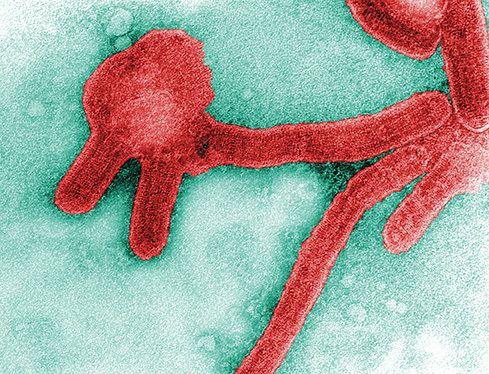
Achieving the Trump Administration's National Biodefense Strategy
Published Oct. 2, 2018 • Read time: 4m
The Trump administration recently published its National Biodefense Strategy. The strategy proclaims that managing the risk of biological threats is in the “vital interest” of the United States, whether such threats are naturally occurring diseases, accidents involving dangerous pathogens, or deliberate attacks using biological agents. The document provides a solid foundation, but more may be required to fully realize its goals and objectives.
In addressing this bipartisan issue, the administration largely builds on the biodefense strategies of the George W. Bush and Barack Obama administrations. Common areas across the three strategies include recognition of the global nature of biological threats; the need to collaborate with a range of key stakeholders including foreign partners, state and local authorities and industry; and the need for risk-based decisionmaking in preparedness and response activities. Like those of his predecessors, the Trump strategy was accompanied by an implementation document which provided additional details on how the goals and objectives would be achieved.
This consistency reflects the strength of the Trump strategy. However, it also provides a cause for some concern as neither the George W. Bush nor the Obama strategies were fully realized. Several challenges that prevented the full implementation of the earlier strategies could also limit prospects for fully realizing the Trump strategy.
First, ensuring adequate resourcing is essential. Each of the biodefense strategies contained goals and objectives that specified the outcomes to be achieved. The accompanying implementation plans provided direction on how these goals were to be met, but none of them, including the new Trump strategy, explicitly stated where the necessary resources would come from. To turn plans into action, full resourcing is required. The recent National Defense Authorization Act begins to identify resources but reflects only a start that would need to be further developed. A critical first step could be to determine current biodefense spending levels across the federal agencies and departments involved.
As Allies' Capabilities Grow, They Need To Work With U.S. on Nuclear Signalling
President Kennedy: MAD & the Lessons of Berlin and Cuba
The Pope of FEMA
Over-Feminization of Journalism and Modern Woke Reporting
Second, governance could again be an issue in implementing the new biodefense strategy. In the George W. Bush biodefense strategy, implementation of the strategy largely fell to the individual cabinet-level departments and agencies. The resources allocated to the individual portions of the strategy were distributed to the organizations for implementation. Coordination occurred but was not institutionalized across the government or managed through a permanent centralized structure.
Learning the lessons from the implementation of the earlier strategy, the Obama administration created a National Security Council (NSC) led process that required the individual departments and agencies to develop plans that were synchronized. The Office of Management and Budget allocated resources according to the priorities of the biodefense strategy through the NSC synchronized department and agency plans. This proved cumbersome and difficult to manage.
The Trump biodefense strategy contains provisions for a governance structure placing responsibility for execution with the secretary of Health and Human Services and providing a dedicated implementation body to assist in monitoring implementation of the strategy. While this centralizes responsibility and authority within a single department, whether a single secretary will have the clout to influence his counterparts across the government remains to be seen.
Interestingly, the bipartisan Blue Ribbon Study Panel on Biodefense co-chaired by former Pennsylvania Gov. Tom Ridge and former Connecticut Sen. Joe Lieberman identified this governance shortfall, recommending in its 2015 report that the vice president has the role of synchronizing national biodefense efforts. This recommendation, which was never acted on, was based on the cross-cutting nature of biodefense and inherent difficulties of interdepartmental coordination on complex issues.
Finally, building momentum and maintaining follow-through should be an essential element of any biodefense strategy. Implementing complex interagency plans requires leadership focus, measurable metrics to assess progress, and adequate resources. A full court press could be required to develop the institutions and resolve to place this overarching strategy above individual department and agency priorities.
The Trump strategy contains the foundations for a successful biodefense strategy to address the biological threats of today and tomorrow, but so too did its predecessors. The Trump biodefense strategy and implementation documents could best be considered first steps in a lengthy process to address this vitally important threat.
Daniel M. Gerstein works at the nonprofit, nonpartisan RAND Corporation and is an adjunct professor at American University. He was the undersecretary (acting) and deputy undersecretary in the Science and Technology Directorate of the Department of Homeland Security from 2011-2014.

Iron Raven: Remembering Colonel Joseph B. Conmy, Jr.
By Louis Marano • RealClearDefense
Stand Proud of the Force
By Jay Rogers • RealClearDefense
How a Dying Agency Turned Fentanyl Into a Weapon of Mass Destruction
By Barry Angeline • RealClearDefense
The Pressure Is the Message: What Xi and Putin Faced in Shenzhen
By Emzari Gelashvili • RealClearDefense
China’s Revised Mobilization Law and the Expanding Reach of National Defense
By Muhammad Shoaib • RealClearDefense

Marine Corps Hero Under Federal Investigation
By Laporta, Burnham & Watson, CBS
A Postmortem of Maneuver Warfare in the U.S. Marine Corps
By Donald Vandergriff
U.S. Putting Weapons in Space: A Strategic Blunder?
By Ajey Lele • RealClearDefense
U.S. Senate Seeks to Exchange Shipbuilding Funds for More Munitions
By Naval News
F-35C Completes First Launch and Recovery Trials on a Ford-Class Carrier
By Navy T.