
The New Trump Presidency: Enhancing ROK-U.S. Alliance
Last updated 07:06 AM EST • Read time: 5m
The New Trump Presidency:
Enhancing ROK-U.S. Alliance Through Naval Maintenance, Repair, and Overhaul (MRO) Cooperation
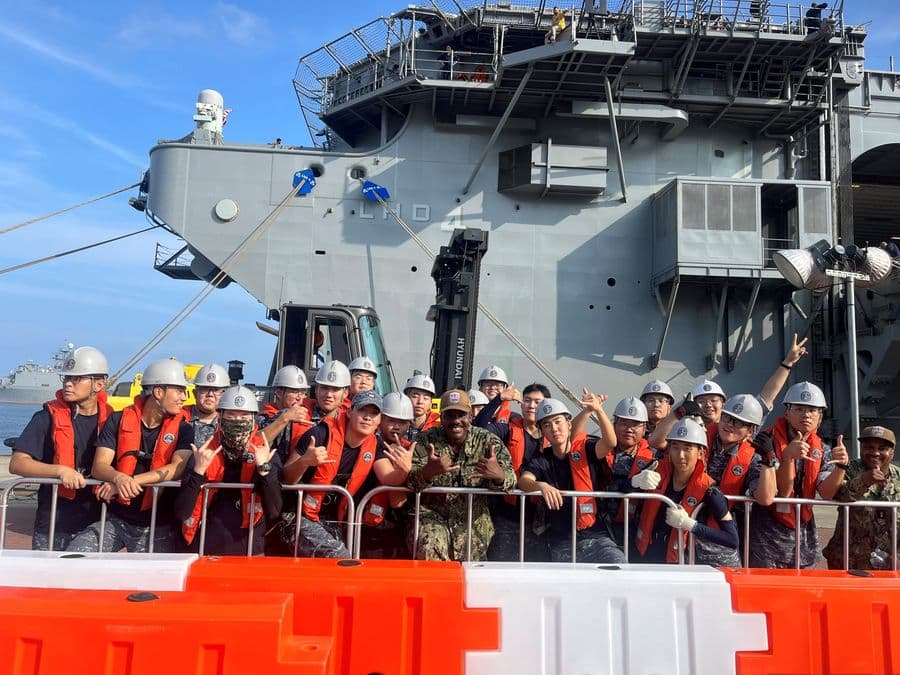
The recent election of Donald Trump signals potential shifts in the U.S.-Republic of Korea (ROK) alliance, especially in light of Trump’s renewed emphasis on alliance cost-sharing and economic contributions. Trump’s recent remarks on deepening cooperation in South Korea’s shipbuilding sector underscore this focus, as he highlighted the strategic and economic benefits of closer collaboration in naval industries. This emphasis on naval Maintenance, Repair, and Overhaul (MRO) cooperation has significant implications for alliance cohesion. Naval MRO cooperation could not only strengthen military readiness but also enhance economic interdependence, thereby contributing to a more resilient and adaptable ROK-U.S. alliance under Trump’s leadership.
Naval MRO cooperation is vital to the operational readiness of both U.S. and ROK naval forces. By combining resources and expertise, the two countries can ensure that naval vessels, including destroyers, submarines, and support ships, are maintained at optimal levels of readiness, particularly as tensions rise in the Indo-Pacific region. Joint MRO efforts would allow for a quicker response to regional threats, particularly from North Korea and the growing maritime influence of China. An integrated MRO structure would enhance the efficiency of these fleets, providing cost-effective maintenance solutions that appeal to Trump’s transactional approach to alliance management. Moreover, it aligns with his priority of ensuring allies are more self-reliant and financially invested in their defense, which could mitigate potential demands for increased financial contributions to the alliance.
Trump’s emphasis on shipbuilding cooperation is a nod to South Korea’s global standing in the industry. South Korea is a leader in advanced shipbuilding technologies, and its capabilities provide a unique value to the U.S. This expertise can be leveraged to support the maintenance and repair needs of U.S. naval assets in the region. Trump’s call for closer collaboration in the shipbuilding sector aligns with his “America First” focus, as it offers the U.S. cost-effective access to South Korea’s shipbuilding infrastructure while fostering job growth in both countries. Through collaborative MRO projects, the ROK can bolster its shipbuilding sector, reinforcing its reputation as a reliable partner with expertise that enhances the alliance’s operational strength.
Economically, naval MRO collaboration contributes to alliance cohesion by creating mutual economic benefits and increasing South Korea’s role in regional security. Trump’s focus on economic contributions from allies offers South Korea a chance to demonstrate its commitment beyond direct financial payments by supporting operational expenses through MRO work. This approach not only reduces the financial burden on both countries but also aligns with Trump’s policy goals, showing that South Korea is committed to supporting its defense and the alliance through tangible, economically sustainable contributions. Joint investment in shipbuilding infrastructure could also foster U.S.-ROK industrial partnerships, which support both nations’ strategic interests in the Indo-Pacific, while showcasing South Korea’s economic contributions to alliance stability.
Naval MRO cooperation provides an additional layer of stability to the ROK-U.S. alliance in an uncertain geopolitical landscape. Trump’s administration is known for its transactional approach, with past rhetoric suggesting that security guarantees may be linked to financial contributions. Naval MRO offers a practical avenue for South Korea to visibly support the alliance without focusing solely on budgetary allocations. By enhancing its MRO and shipbuilding capacity, South Korea builds a robust partnership framework that demonstrates its commitment to shared security goals. This interdependence creates a deeper institutional bond, allowing the alliance to weather potential policy shifts and political changes by maintaining a solid operational foundation.
Naval MRO collaboration also allows South Korea to contribute to broader U.S. strategic interests in the Indo-Pacific. Through MRO cooperation, the ROK can support freedom of navigation, contribute to maritime security, and help deter regional threats, all of which align with U.S. security goals. By taking an active role in these areas, South Korea enhances its strategic value in U.S.-led initiatives, reinforcing its position as a dedicated ally. These contributions are particularly significant under Trump, who prioritizes allies that take a proactive role in mutual security. Moreover, this cooperation showcases South Korea’s commitment to upholding stability in the Indo-Pacific while balancing relations with other regional actors like China.
Challenges remain, particularly as South Korea seeks to maintain a balance between its economic ties with China and its security commitments to the U.S. South Korea’s reliance on Chinese trade necessitates careful navigation of its growing military role within the alliance. Additionally, any significant increase in defense-related spending or expansion of MRO activities could face scrutiny from domestic stakeholders concerned about alliance costs. However, public diplomacy efforts that highlight the economic and security benefits of naval MRO cooperation could foster public support, underscoring the strategic importance of these initiatives in a period of heightened uncertainty.
In conclusion, naval MRO cooperation presents a practical and strategic opportunity for South Korea to reinforce the ROK-U.S. alliance under Trump’s leadership. By leveraging South Korea’s shipbuilding expertise and contributing to a shared naval operational readiness, the alliance can maintain its strength in the face of shifting U.S. policies. This partnership not only enhances military readiness and economic interdependence but also reflects South Korea’s role as a reliable and proactive ally, supporting broader stability in the Indo-Pacific. Through this strengthened cooperation, the ROK-U.S. alliance can adapt to the evolving geopolitical landscape while ensuring both nations are prepared to address regional security challenges together.
Jihoon Yu is a research fellow and the director of external cooperation at the Korea Institute for Defense Analyses. Jihoon was the member of Task Force for South Korea’s light aircraft carrier project and Jangbogo-III submarine project. He is the main author of the ROK Navy’s Navy Vision 2045. His area of expertise includes the ROK-U.S. alliance, the ROK-Europe security cooperation, national security, maritime security, hybrid-threats, and strategic weapons systems. He earned his MA in National Security Affairs from the U.S. Naval Postgraduate School and Ph.D. in Political Science from Syracuse University.

A Passage to the Middle East: India as a Mediator and Security Partner
By Irina Tsukerman • RealClearDefense
South China Sea is Key to Invigorate Positive U.S.–Malaysia Relations
By Brent D. Sadler • RealClearDefense
The Necropolitics of the Wasteland
By Yunus Emre Tumen • RealClearDefense
AI, Robotics, and Marines
By Gary Anderson • RealClearDefense
The Emerging SQUAD
By Muhammad Shoaib • RealClearDefense
AI, Robotics, and Marines
By Gary Anderson • RealClearDefense
AUKUS Partners Test Autonomous Maritime Systems
By Jangoulun Singsit, Naval Tech
AUKUS: USS Colorado Announced as First Submarine for SRF – West
By USNI News
Navy, Marine Corps Simulate Ship Strikes From Air and Land
By Alex Wilson, S&S
Air National Guard To Stand Up a New Special Tactics Squadron
By Patty Nieberg, T&P