
Washington Needs a Pressure Doctrine
Published July 3, 2026 • Read time: 5m
For state pressure to work, Washington must know where it will land, who will absorb it and whether the strain can crack an entire system.
Pressure exacts a steep price that governments are slower to acknowledge than the individuals who are affected.
I saw it happening recently in Doha, Qatar.
The morning after Iran’s drone attack on Al Udeid Air Base just 20 miles away, the hotel staff at the Sheraton Grand Doha had moved breakfast from the top floor to a ballroom downstairs to accommodate the few guests who stayed on. No doctrines had changed, but overnight pressure had moved from the battlefield into the behavior of everyone in the building.
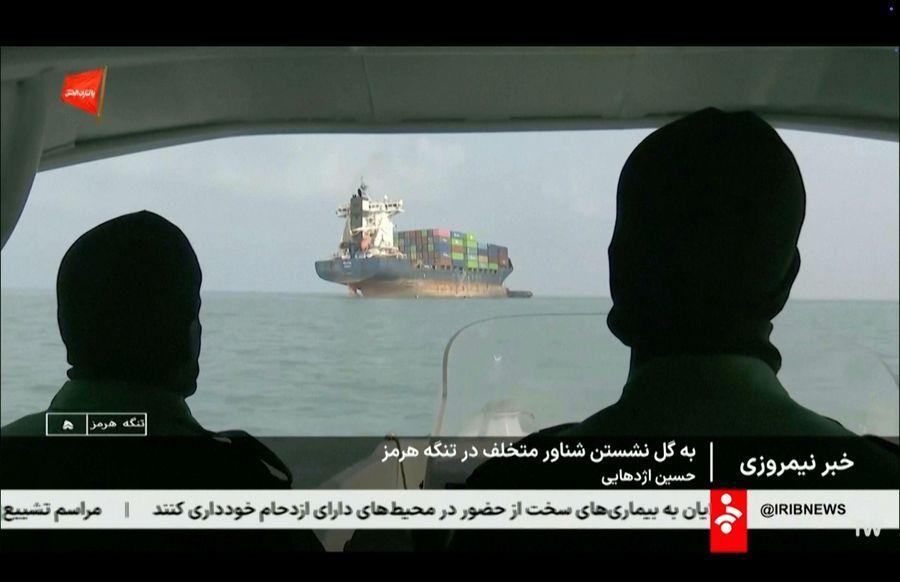
In the Hormuz crisis, few in February would have predicted that insurance premiums for a typical tanker would surge twelvefold—or that, months later, 20,000 innocent seafarers would be trapped aboard roughly 2,000 vessels stranded in the Gulf.
The effects move globally. In China, crude inventories are depleted by about one million barrels per day; in India, citizens are being urged to work from home to avoid unnecessary travel.
This isn’t background noise. It is a pressure chain.
A threat in the Strait of Hormuz becomes a bloated insurance bill, a stockpile decision, a fuel-price shock, an airfare spike, a foreign exchange crisis and a household adjustment in the price of produce in American grocery stores.
America has many advanced theories about applying pressure but lacks systems to predict and track where the consequences will be felt.
The Need to Remove All Fissile Material from Iran
Operation Epic Fury and the Illusion of Victory
Why Iran Cannot Simply Surrender
After the Midterms, the Right Strategy Against Iran
Washington has doctrines for tools, chokepoints and deterrence. It does not have a doctrine for how pressure moves through markets, returns through adversary action and breaks systems far from the battlefield. Iran proved it.
In any given conflict, Washington asks the familiar questions: Is diplomacy still possible? Are sanctions working? Is deterrence holding? Does military force remain on the table? All those questions matter, certainly – but in Iran, they failed to explain or predict where the pressure would be felt, or what the response might be.
A more comprehensive analysis would ask harder questions. Where will the impacts of our pressure be felt? Who will be affected? Will the targets absorb the stress, transfer it elsewhere – or turn it against us?
Weaponized interdependence helps identify chokepoints. Economic statecraft gives policymakers instruments to exploit them. Integrated deterrence tries to coordinate those instruments across diplomacy, economics, technology, intelligence and military power. Yet none of these frameworks fully measures the pressure cycle Iran has exposed: pressure applied, pressure absorbed, pressure transferred, pressure returned and pressure strong enough to crack a system.
Policymakers must remember that the consequences of pressure do not always follow a predictable path and can linger long after the pressure is relaxed.
A shipping disruption, for instance, does not stay at sea. It moves into war-risk insurance, tanker availability, crude sourcing, refinery runs, diesel and jet fuel prices, airfare, food costs and political stability.
Russia’s war on Ukraine provides the clearest example. Western sanctions and export controls did not collapse Russia: Moscow rerouted trade, absorbed costs and kept fighting. Although the sanctions remain relevant, the struggle has shifted to one of endurance, with Russia, Ukraine and its allies locked in a war of attrition to decide who tires first.
Ukraine survived because its military and civil society treated Russia’s war as an existential threat to national survival. That allowed Ukrainians to absorb extraordinary pressure. Thanks to outside support and its own remarkable drone innovations, Ukraine has been able to turn the tables on Russia. Its recent drone strike on a St. Petersburg oil terminal, timed to coincide with the opening of Putin’s International Economic Forum, did more than pummel an energy asset. It smashed Russia’s financial theater, undermining confidence in the regime and its claims of dominance and control.
Hormuz has turned the Middle East into a global pressure chain. Iran does not need to defeat the United States militarily to apply strategic pressure. It needs every captain, insurer, trader, refinery, cabinet minister and consumer to feel the pressure and price it differently. Hormuz does that.
Iran’s endurance in the first six weeks of the war exposed a Washington misread: American pressure moved slower than predicted and Iranian absorption ran deeper.
Governments need to budget, plan and staff around pressure, not policy lanes. It isn’t enough to conduct national security meetings focusing on energy. Rather, policymakers must map where fuel, power, grids, pipelines, tankers and stockpiles create leverage -- or vulnerability.
Treasury cannot simply manage sanctions lists. It needs to track how financial pressure moves through insurance, ports, currencies, credit, banks, energy chokepoints and household prices.
The National Security Council should run a standing pressure cell that brings together Treasury, Energy, Defense, Commerce, intelligence, cyber, communications and private-sector operators to produce one daily pressure map.
That map should inform the President’s Daily Brief and guide principals and deputies as they weigh escalation, sanctions, military action, diplomacy and public messaging. Interagency tabletops and military exercises should test the model before a crisis, not expose its gaps during one. The daily product should identify pressure applied, pressure absorbed, pressure transferred and pressure expected over the next 72 hours.
Had Washington run such a cell before the U.S. and Israel struck Iran, it would have entered the war with stronger leverage, tighter allied alignment and a clearer plan to resist counter-pressure.
A government that applies pressure without a plan to absorb the target’s counter-pressure is not executing strategy. It is gambling.
Mark Pfeifle is a former U.S. deputy national security advisor for strategic communications and global outreach. He advises governments, institutions and organizations on crisis management, strategic communications and national security and hosts Min Washington on Medi1 TV Morocco.
image: This frame grab of footage aired Wednesday, July 1, 2026, by Iranian state television shows a vessel that ran aground in the Strait of Hormuz. (Iranian state television via AP)
Iron Raven: Remembering Colonel Joseph B. Conmy, Jr.
By Louis Marano • RealClearDefense
Stand Proud of the Force
By Jay Rogers • RealClearDefense
How a Dying Agency Turned Fentanyl Into a Weapon of Mass Destruction
By Barry Angeline • RealClearDefense
The Pressure Is the Message: What Xi and Putin Faced in Shenzhen
By Emzari Gelashvili • RealClearDefense
China’s Revised Mobilization Law and the Expanding Reach of National Defense
By Muhammad Shoaib • RealClearDefense

Marine Corps Hero Under Federal Investigation
By Laporta, Burnham & Watson, CBS
A Postmortem of Maneuver Warfare in the U.S. Marine Corps
By Donald Vandergriff
U.S. Putting Weapons in Space: A Strategic Blunder?
By Ajey Lele • RealClearDefense
U.S. Senate Seeks to Exchange Shipbuilding Funds for More Munitions
By Naval News
F-35C Completes First Launch and Recovery Trials on a Ford-Class Carrier
By Navy T.