
Secretary of Defense Mattis's Trip to Southeast Asia
Published Jan. 29, 2018 • Read time: 3m
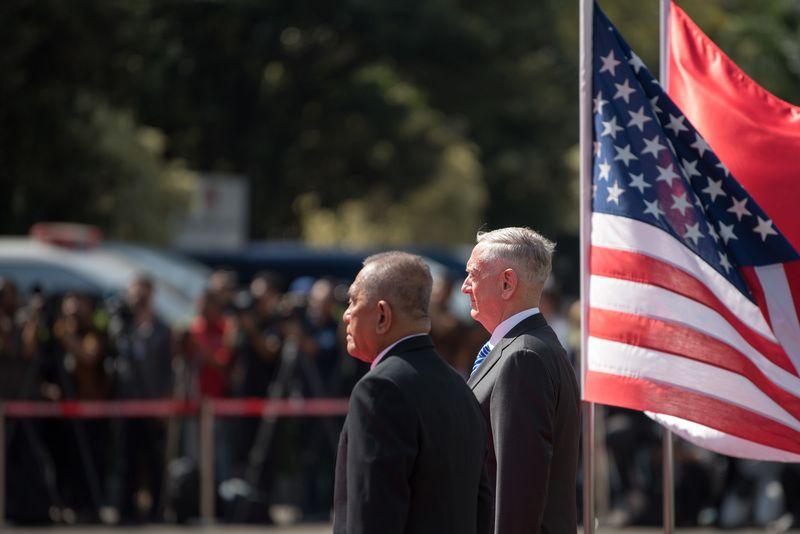
This past week, Secretary of Defense Jim Mattis traveled to Southeast Asia, where he visited Indonesia and Vietnam, two important U.S. partners in the region. As Prashanth Paramesewan notes, the two states could be important actors as part of the “networked security architecture” in Asia that the White House highlighted in its new National Defense Strategy. The trip was designed in part to highlight the administration’s commitment to freedom of navigation in the Pacific, and particularly in the South China Sea. Notably, Mattis did not visit the Philippines, a major South China Sea claimant but a country where President Rodrigo Duterte has repeatedly called for downgrading U.S.-Philippine defense ties and, as Richard Heydarian has noted, has been “downgrading certain bilateral military exchanges with the United States.” Duterte came into office slamming the U.S.-Philippines strategic relationship, and openly wooing China, Russia, and other external powers, and though he has not followed through on all of his rhetoric about limiting bilateral ties to the United States—he needs U.S. assistance in his counterterrorism fight—he has continued to push Manila closer to Beijing.
In Indonesia, Mattis assertively supported what has been, in the past two years, an increasing hawkishness by Jakarta regarding the Natuna islands, even though the Indonesian government remains wary of alienating China by completely embracing the United States—and as some key leaders in the Indonesian government strongly argue that Jakarta should keep its strategic relations balanced between Beijing and Washington. As I note in a forthcoming Council Special Report on U.S.-Indonesia relations, Indonesian leaders have become increasingly concerned about China’s continued encroachment on Indonesian waters near the Natuna islands. Indonesia’s armed forces have held several exercises in that area, in a display of strength, and Indonesian policymakers have been searching for ways to boost their abilities to push back against China in the South China Sea, although they still remain wary of being seen as accepting close U.S. support for Indonesia’s South China Sea policy.
Washington Built the Hub-and-Spokes – Australia and Japan Are Rewiring It
By Prodding Taiwan, Russia Takes Its Alignment With China to New Heights
Watch What Trump Does in Asia, Not What He Says
How the Quad Can Work With Southeast Asia
Although the Trump administration has taken few steps to push the U.S.-Indonesia economic relationship forward—it put Indonesia on a list of potential trade violators last year—the two states have important shared security goals. Mattis and the White House sent clear signals that they want to upgrade the strategic aspects of the relationship—and are willing to offer significant carrots to Jakarta to help foster cooperation, particularly on South China Sea issues, and to convince Indonesian leaders to embrace U.S. assistance. Mattis referred to part of the South China Sea as the “North Natuna Sea,” which surely pleased Indonesian leaders, and the Pentagon is apparently pushing to expand training programs with Indonesia’s special forces group Kopassus, which had been implicated in widespread human rights abuses in the past. Kopassus is currently barred from training with U.S. peers. Completely rehabilitating Kopassus is a major goal of the Indonesian defense establishment. The Pentagon also wants to help facilitate Indonesian procurement of U.S. arms, as part of an overall modernization of the Indonesian military; other competitors, like Russia, are also keen to expand sales to Indonesia. Newsweek reports that U.S. “officials are working hard to close a big fighter purchase, a deal they think could cover as many as 48 [U.S.] aircraft valued at $4.5 billion.”

Iron Raven: Remembering Colonel Joseph B. Conmy, Jr.
By Louis Marano • RealClearDefense
Stand Proud of the Force
By Jay Rogers • RealClearDefense
How a Dying Agency Turned Fentanyl Into a Weapon of Mass Destruction
By Barry Angeline • RealClearDefense
The Pressure Is the Message: What Xi and Putin Faced in Shenzhen
By Emzari Gelashvili • RealClearDefense
China’s Revised Mobilization Law and the Expanding Reach of National Defense
By Muhammad Shoaib • RealClearDefense

Marine Corps Hero Under Federal Investigation
By Laporta, Burnham & Watson, CBS
A Postmortem of Maneuver Warfare in the U.S. Marine Corps
By Donald Vandergriff
U.S. Putting Weapons in Space: A Strategic Blunder?
By Ajey Lele • RealClearDefense
U.S. Senate Seeks to Exchange Shipbuilding Funds for More Munitions
By Naval News
F-35C Completes First Launch and Recovery Trials on a Ford-Class Carrier
By Navy T.