
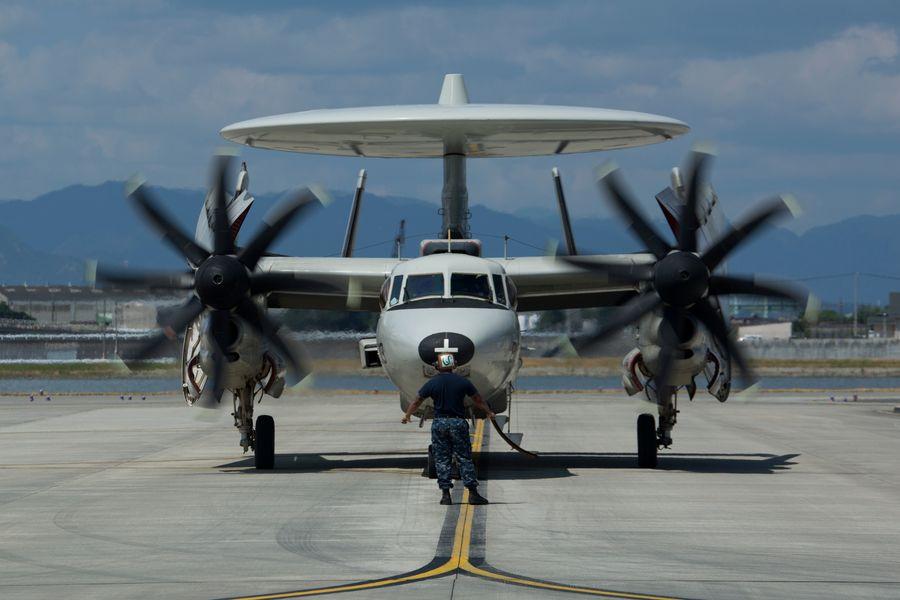
The U.S. and Japan Need Training with Taiwan to Deter China
Published May 12, 2022 • Read time: 4m
The clock is ticking for Taiwan. Russia’s attack on Ukraine should teach the West that state-on-state wars to redraw the global order are more than just possible. The United States cannot keep telling itself that its authoritarian adversaries will not attempt extreme measures to fulfill long-held ambitions of territorial aggrandizement. Nowhere is this danger clearer than Taiwan. Chinese Communist Party General Secretary Xi Jinping has been transparent about his goals: he wants to annex the flourishing democracy, by force of arms if needed.
The United States and Japan understand that the security of Taiwan is a critical national interest. Its de-facto independence and unique geographic position makes the defense of Japan possible and bottles up the Chinese Navy in East Asia, not to mention Taiwan’s importance as a beacon of democracy neighboring a China ruled by the Chinese Communist Party. But the United States, Japan, and Taiwan remain woefully unprepared to back up Washington and Tokyo’s growing commitments to support Taiwan.
If war began tomorrow, the three partners would have almost no ability to coordinate their actions. The result would be a disjointed campaign where the U.S., Japan, and Taiwan generate significantly less combat power than their wealth and technological sophistication would suggest. Just imagine: Japanese and Taiwanese ships unable to communicate. Taiwanese targeting systems confusing American and Chinese fighters. Taiwan shooting blindly into China for lack of targeting data from the United States. Only disaster awaits on the current trajectory.
Washington Built the Hub-and-Spokes – Australia and Japan Are Rewiring It
By Prodding Taiwan, Russia Takes Its Alignment With China to New Heights
Watch What Trump Does in Asia, Not What He Says
How the Quad Can Work With Southeast Asia
The United States, Japan, and Taiwan should create a triangular military grouping with one clear goal: enhance the three militaries’ coordination to deter or, if needed, defeat Chinese aggression. They are the only three countries with the combined military strength to reverse the worsening tide in the Taiwan Strait. Washington, Tokyo, and Taipei also possess the will to stand up to Chinese aggression against the Taiwanese people. Triangular military cooperation between the U.S., Japan, and Taiwan should have the long-term goal of building universally accessible communications to build shared threat awareness and, eventually, coordinate choosing target sets.
This goal is a tall order, but the United States, Japan, and Taiwan have no choice but to make the sacrifices necessary if they are serious about deterring war. Here are three concrete steps the three that are realistic in the short-term.
First, the United States, Japan, and Taiwan should immediately begin Coast Guard cooperation. The United States and Taiwan already established a Coast Guard Working Group in 2021. The 2022 National Defense Authorization Act required a report on National Guard cooperation with Taiwan. Congress should expand this mandate to include the Coast Guard for maritime training.
Second, the three partners should create a trilateral officer exchange program. The United States has been continually training Taiwan’s armed services for decades; Japan should join in these efforts to build a stronger Taiwanese military. Building trilateral ties between the American, Taiwanese, and Japanese militaries to share standards, processes, and procedures would constitute the bedrock relationship they will need to fight together during a crisis. Frequent exchanges would begin to build the sorely needed bridges between early and mid-career professionals. This officer exchange program could grow into an official training process.
Third, the three should build a formalized process for Maritime Domain Awareness. The United States and Japan actively collect, process, and utilize intelligence gathered in the waters near Taiwan daily. All three should aim to create a process that can actively track activities by the Chinese Coast Guard, Maritime Militia, and the People’s Liberation Army Navy. The three partners must go beyond open-source tracking. Instead, a formalized system enhanced by predictive technologies and sensitive information could take information sharing to another level. This effort could eventually develop into an automated target-sharing system in the future.
Policies like these would only be a start in a more difficult and longer effort of institutionalizing the military relationship between the United States, Japan, and Taiwan. These three should constitute a core grouping of militaries with close operational preparation for a Taiwan crisis that could invite other militaries to gradually join as their governments become more comfortable with supporting Taiwan over time.
Trilateral military cooperation alone will not be a silver bullet to deter Chinese aggression over Taiwan. But it will be a necessary first step for the three partners to effectively coordinate during a crisis. Time is short – the United States can no longer afford to delay taking the clear steps needed to prepare for war over Taiwan.
Ben Noon is a writer interested in Taiwanese security, alliance management in the Indo-Pacific, and American strategy in Asia.
Joseph Ross is a research assistant at the Center for Strategic and Budgetary Assessments, where his work focuses on the US-Japan alliance & US-Taiwan security policy.

Iron Raven: Remembering Colonel Joseph B. Conmy, Jr.
By Louis Marano • RealClearDefense
Stand Proud of the Force
By Jay Rogers • RealClearDefense
How a Dying Agency Turned Fentanyl Into a Weapon of Mass Destruction
By Barry Angeline • RealClearDefense
The Pressure Is the Message: What Xi and Putin Faced in Shenzhen
By Emzari Gelashvili • RealClearDefense
China’s Revised Mobilization Law and the Expanding Reach of National Defense
By Muhammad Shoaib • RealClearDefense

Marine Corps Hero Under Federal Investigation
By Laporta, Burnham & Watson, CBS
A Postmortem of Maneuver Warfare in the U.S. Marine Corps
By Donald Vandergriff
U.S. Putting Weapons in Space: A Strategic Blunder?
By Ajey Lele • RealClearDefense
U.S. Senate Seeks to Exchange Shipbuilding Funds for More Munitions
By Naval News
F-35C Completes First Launch and Recovery Trials on a Ford-Class Carrier
By Navy T.