
America's Next Defense Advantage
Published Sept. 21, 2026 • Read time: 8m
Join the Conversation
0Precision for Today’s Target, Not Yesterday’s
From Operation Midnight Hammer to last week’s strikes on Iran, U.S. forces have shown they can turn years of preparation into seconds of action. The next precision advantage is proving that the information authorizing a strike is as current as the weapon is accurate.
A weapon can arrive within meters of its aim point and still miss reality by a decade.
That is the operational lesson connecting the last fifteen months of U.S. action against Iran. It is not a verdict on a single weapon, commander, or strike. From Operation Midnight Hammer in June 2025, through the opening of Operation Epic Fury in February 2026, to the renewed air and maritime strikes last week, the joint force has demonstrated an extraordinary ability to connect intelligence, commanders, aircraft, ships, software, and precision weapons at speed. The achievement is real. So is the new assurance burden it creates. In an accelerated targeting system, the decisive error may not be in the weapon at all. It may be in the age, provenance, or changing meaning of the target record that reaches it.
Precision Has Two Halves
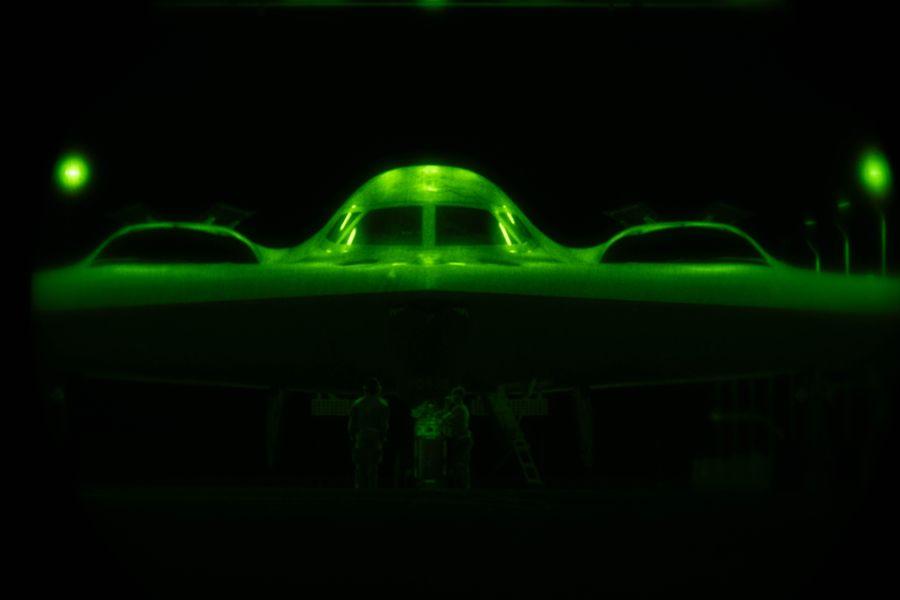
Operation Midnight Hammer remains the clearest model of what rigorous preparation can buy. On June 22, 2025, roughly 125 aircraft participated in the operation. Seven B-2 bombers carried fourteen 30,000-pound GBU-57 Massive Ordnance Penetrators, while a guided-missile submarine launched Tomahawks against Iran’s nuclear infrastructure. The Defense Threat Reduction Agency described years of development, modeling, simulation, testing, and validation conducted before the bomb was transferred to the Air Force.
The engineers did not decide whether the United States should attack Iran, when it should do so, or whether a particular strike was lawful. Those were decisions for elected leaders and commanders. What engineering supplied was narrower and indispensable: evidence about what the weapon could do against a defined class of hardened target, within known limits. It turned a claim about performance into something testable before an aircrew ever received an order.
The Need to Remove All Fissile Material from Iran
Operation Epic Fury and the Illusion of Victory
Why Iran Cannot Simply Surrender
After the Midterms, the Right Strategy Against Iran
Epic Fury changed the scale and the tempo. The Pentagon said the operation’s opening involved more than 100 aircraft, actions by Cyber Command and Space Command, and more than 1,000 targets in the first 24 hours. CENTCOM commander Adm. Brad Cooper later explained that advanced AI tools helped personnel sift vast quantities of data, compressing processes that once took hours or days into seconds, while humans retained the final decision over what, when, and whether to strike. That is an impressive operational gain. It also changes the dominant failure mode.
A model does not need to hallucinate for an AI-enabled targeting chain to fail. A database can contain an old truth: a building that once served a military function, a communications site whose civilian surroundings have changed, or a vessel whose identity has been inherited from an earlier report. If that record is cleanly formatted and confidently scored, software may rank, route, and recommend it with perfect efficiency. Automation can be correct about the data and wrong about the world.
That distinction matters in assessing the February 28 strike on a school in Minab. Reuters reported that preliminary U.S. findings pointed toward American responsibility and outdated targeting information; the Pentagon said the incident remained under investigation. The military’s final account has not been released publicly. Those qualifications must remain. But if the preliminary account is borne out, the failure was not one of terminal guidance. It was one of temporal guidance: a precision weapon may have been directed by a description of the site that no longer matched reality.
The same assurance question now spans a much wider target set. On September 1, CENTCOM struck air-defense sites, radars, maritime assets, mine-laying capabilities, and communications facilities. Four days later, after missile attacks on two U.S. Navy warships, CENTCOM disabled or destroyed three IRGC-linked crude-oil carriers. A buried nuclear installation, a radar, a communications node, and a moving ship do not age at the same rate as targets. Their identity, function, location, and civilian context have different half-lives. A targeting architecture that treats every validated record as equally durable will eventually move faster than its own evidence.
Separate reporting about civilian casualties at a wedding near one of the September 1 strike areas is now under U.S. investigation. It would be irresponsible to prejudge that inquiry. It would be equally unwise to treat civilian-harm review only as an after-action function. Every investigation should improve the validity checks that precede the next strike, especially during a campaign in which targets, tactics, and surrounding civilian activity are continually changing.
Build the Validity Layer
The Pentagon does not need another general principle telling commanders to be careful. It needs a target-data assurance layer that makes the age and evidentiary status of a target as visible as the weapon assigned to it. A target file should not be treated as a permanent fact. It is a time-limited operational claim composed of several propositions: this object is here; it performs this military function; its civilian environment is understood; the expected effects remain acceptable; and the evidence is current enough for action. Each proposition should carry its own clock.
First, target status should expire according to volatility. A deeply buried facility may change slowly. A warehouse, school-adjacent compound, communications site, or vessel may change by the hour. The revalidation interval should therefore reflect how easily the object can move, be repurposed, or acquire a different civilian context—not simply when an analyst first entered it into a database. Expiration would not delete intelligence. It would prevent an old characterization from returning to the engagement chain as if nothing had changed.
Second, contradictory evidence should create a machine-enforced pause. Fresh imagery, changed access patterns, civilian registries, local reporting, or disagreement among intelligence sources should automatically narrow the system’s authority to recommend action until a human resolves the conflict. The gate should sit outside the model that ranks targets. A model should not be permitted to average away evidence that calls the target’s present status into question.
Third, reauthorization should be named and traceable. If a stale or disputed target returns to the active list, the record should identify who renewed it, what evidence was considered, what changed, and how long the renewed status lasts. This is not paperwork for its own sake. It protects commanders and operators by showing where the substantive judgment occurred, rather than leaving the final human in the chain to inherit every assumption embedded upstream.
Fourth, the Pentagon should test the entire targeting workflow against deliberately stale and contradictory data. Exercises should seed repurposed buildings, shifted coordinates, corrupted provenance, duplicate identities, and targets whose civilian surroundings change during execution. The test is not merely whether the system finds a target quickly. It is whether it stops, escalates, and asks for new evidence when speed is no longer warranted.
This proposal is consistent with work the department has already begun. DoD Directive 3000.09 requires rigorous verification, validation, and realistic testing for autonomous and semi-autonomous weapon functions. The Department of the Air Force’s 2026 AI strategy likewise calls for accredited common pipelines to develop, test, and deploy AI models. Target-data assurance would extend that discipline from the model and weapon to the information product connecting them. It would apply even when no autonomous weapon is involved and even when AI did nothing more than sort or prioritize data.
None of these measures requires slowing every engagement or rebuilding the targeting enterprise. Most current, well-corroborated targets would pass automatically. Friction would appear where it belongs: around evidence that is old, contradictory, weakly sourced, or attached to a highly changeable object. That is not the opposite of speed. It is how a force preserves speed without allowing yesterday’s certainty to become today’s command.
Midnight Hammer proved that the United States can spend years making a weapon ready for one exceptionally difficult night. Epic Fury and the September strikes reveal the next challenge: maintaining trustworthy target status across a campaign that keeps learning, moving, and accelerating. The Pentagon should not have to choose between tempo and restraint. It can engineer restraint into tempo.
A weapon can be technically precise and still strike an obsolete version of reality. The next American precision advantage is not another meter of accuracy. It is knowing, in time to stop, when the target has changed.
Burak Oktenli holds an MBA and a Master of Professional Studies in Applied Intelligence from Georgetown University. His research addresses the governance of authority in autonomous and AI-enabled systems, and his writing has appeared at the Modern War Institute at West Point, RUSI, and RealClearDefense.

Iron Raven: Remembering Colonel Joseph B. Conmy, Jr.
By Louis Marano • RealClearDefense
Stand Proud of the Force
By Jay Rogers • RealClearDefense
How a Dying Agency Turned Fentanyl Into a Weapon of Mass Destruction
By Barry Angeline • RealClearDefense
The Pressure Is the Message: What Xi and Putin Faced in Shenzhen
By Emzari Gelashvili • RealClearDefense
China’s Revised Mobilization Law and the Expanding Reach of National Defense
By Muhammad Shoaib • RealClearDefense

Marine Corps Hero Under Federal Investigation
By Laporta, Burnham & Watson, CBS
A Postmortem of Maneuver Warfare in the U.S. Marine Corps
By Donald Vandergriff
U.S. Putting Weapons in Space: A Strategic Blunder?
By Ajey Lele • RealClearDefense
U.S. Senate Seeks to Exchange Shipbuilding Funds for More Munitions
By Naval News
F-35C Completes First Launch and Recovery Trials on a Ford-Class Carrier
By Navy T.