
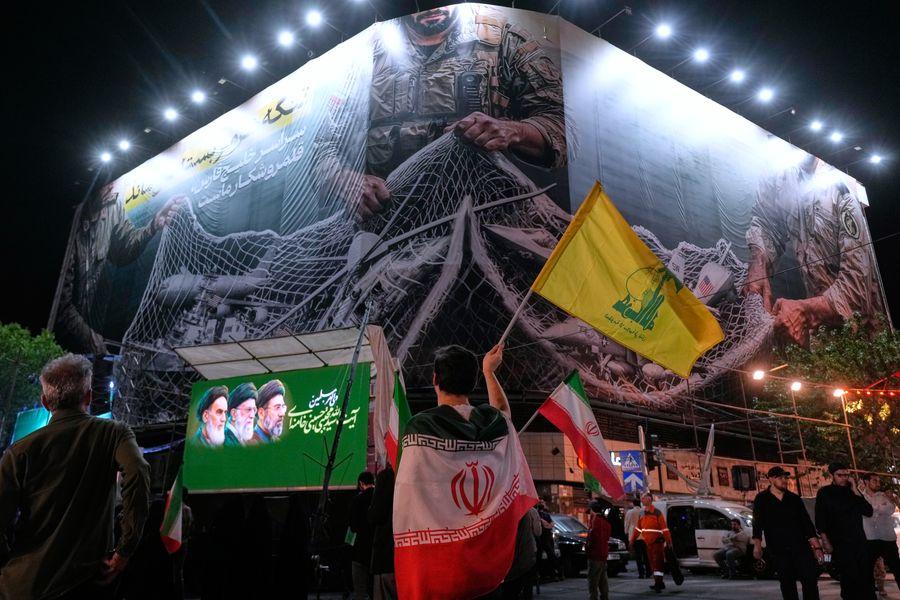
Could the Third Gulf War Become World War III?
Published May 12, 2026 • Read time: 6m
As the war between the United States, Israel, and Iran continues, it is becoming harder to treat it as a self-contained Middle Eastern conflict. The signs increasingly point to a growing intersection with the Russia-Ukraine war and with a wider pattern of great-power rivalry. One indicator is the warm reception extended to Ukrainian President Volodymyr Zelensky and the air-defense agreements recently signed with Saudi Arabia, the United Arab Emirates, and Qatar, under which Kyiv is expected to share its expertise in intercepting Iranian drones. At the same time, Russia is reportedly sharing geolocation intelligence with Iran to help guide missile strikes, while China, though not a direct military actor, continues to provide Iran with economic breathing room and indirect backing. The result is a sharper question: are we witnessing a series of overlapping crises, or the early stages of a wider systemic confrontation?
The emerging alignment on both sides suggests that a regional conflict is increasingly tied to bloc politics and great-power rivalry. History offers enough warnings about what happens when wars that appear local cease to remain so. Once alliances harden, theatres begin to connect, and outside powers become more deeply invested, escalation becomes harder to contain. Already, roughly six weeks into the US-Israeli war against Iran, strikes have reportedly been recorded in more than a dozen countries, with thousands of dead across the region. At a minimum, the conflict is widening geographically and politically.
The Need to Remove All Fissile Material from Iran
Operation Epic Fury and the Illusion of Victory
Why Iran Cannot Simply Surrender
After the Midterms, the Right Strategy Against Iran
For Moscow, the intersection of the Ukraine war and the Middle East crisis matters not only because of battlefield implications but because of its effect on Western cohesion. As the strategic burden on the United States grows, and as disputes sharpen within NATO and between Washington and its European allies over priorities, burden-sharing, and support for Ukraine, Moscow has more reason to conclude that Western unity may erode over time.
The real danger is that a series of tactical military moves hardens into a chain of strategic mistakes, with no clear exit ramps and with cascading effects that outpace any state’s ability to contain them. That risk is heightened by the fact that no leader currently in power has direct experience of managing a war on a truly global scale. Combined with a narrowed field of vision, that increases the risk of miscalculation and overconfidence in the idea that technology can compensate for political and strategic failure.
That helps explain why the initial consensus, which anticipated a short operation resembling the June 2025 strikes on Iran’s nuclear facilities, was so misguided. The assumption rested on the same logic that left much of the world flat-footed when Russia launched its full-scale invasion of Ukraine in 2022: the belief that the economic costs of all-out war would be too high to justify it, reinforced by the assumption that the stronger military power would swiftly overwhelm the weaker side.
That logic led the Kremlin in 2022 to order Russian soldiers to pack dress uniforms in expectation of a victory parade through Kyiv within days. A similar logic appears to have informed expectations that the Iranian regime would collapse under the combined weight of sustained airstrikes and targeted assassinations against the Revolutionary Guards leadership. Almost nothing resembling that has happened.
In both the Russia-Ukraine war and the US-Israeli confrontation with Iran, too little weight was given to a basic strategic reality: the enemy has agency, can absorb punishment, and can adapt in ways planners do not fully anticipate.
This matters not only on the battlefield but also in Washington. The war is unpopular among American voters, especially if ground forces are involved. The question, then, is whether Washington still sees this primarily as support for an ally in a regional war, or increasingly as one front in a broader confrontation with a hostile axis.
China sits at the centre of that ambiguity. The war against Iran is not primarily aimed at China, but in practice, it increases pressure on Beijing by exposing its dependence on Gulf energy supplies and vulnerable shipping routes. For Washington, this is better understood as a usable lever than as a declared strategic objective. But pressure is not one-directional. China has levers of its own, including economic lifelines to Iran, technological assistance, and a dense regional network of relationships.
In ordinary circumstances, a prolonged American entanglement in the Middle East could create opportunities for Beijing, provided it does not seriously damage the energy and economic stability on which China depends. Beijing appears to see the crisis not only as a risk but also as an opening to deepen its political relevance on both sides of the Gulf in the post-war environment. This is not only about managing the current crisis. It is also about positioning China as a more relevant actor in any future regional order, potentially at America’s expense.
At the same time, China enters this phase under serious domestic economic pressure. Beijing is therefore adopting a posture of restrained neutrality, seeking to preserve ties, reduce exposure, and avoid direct confrontation with the United States. On the one hand, it needs the war to end to restore stable oil flows in the Gulf. On the other hand, it wants to enter the Trump-Xi summit in Beijing from the strongest possible position. For now, it is trying to cool the temperature while preserving room to maneuver.
The closure of the Strait of Hormuz, alongside the parallel pressures of the Russia-Ukraine war and the spectre of a Chinese move against Taiwan, makes it increasingly difficult to view the current conflict as a neatly bounded Middle Eastern dispute. That does not mean the world is necessarily entering World War III. But it does mean that this regional confrontation is unfolding within a much broader global context shaped by great-power rivalry, energy interdependence, and competition over trade routes and strategic chokepoints.
The question is not only whether this is the beginning of World War III or the onset of a harsher Cold War II. It is whether regional wars are beginning to fuse into a broader contest across theaters, alliances, energy systems, and strategic chokepoints.
Dr. Gedaliah Afterman is Head of the Asia Policy Program at the Abba Eban Institute for Diplomacy and Foreign Relations, Reichman University. He is also a Senior Non-Resident Fellow at the Emirates Center of Strategic Studies and Research (ECSSR), Abu Dhabi. Previously, he served as an Australian foreign service officer and diplomat.
Dr. Roie Yellinek is the Co-Director of the Geopolitics Lab. Previously, he worked as a strategic consultant, a research associate at the Begin-Sadat Center for Strategic Studies (BESA), a non-resident scholar at the Middle East Institute (MEI) in Washington, and as a lecturer at Ono Academic College and Reichman University.

Iron Raven: Remembering Colonel Joseph B. Conmy, Jr.
By Louis Marano • RealClearDefense
Stand Proud of the Force
By Jay Rogers • RealClearDefense
How a Dying Agency Turned Fentanyl Into a Weapon of Mass Destruction
By Barry Angeline • RealClearDefense
The Pressure Is the Message: What Xi and Putin Faced in Shenzhen
By Emzari Gelashvili • RealClearDefense
China’s Revised Mobilization Law and the Expanding Reach of National Defense
By Muhammad Shoaib • RealClearDefense

Marine Corps Hero Under Federal Investigation
By Laporta, Burnham & Watson, CBS
A Postmortem of Maneuver Warfare in the U.S. Marine Corps
By Donald Vandergriff
U.S. Putting Weapons in Space: A Strategic Blunder?
By Ajey Lele • RealClearDefense
U.S. Senate Seeks to Exchange Shipbuilding Funds for More Munitions
By Naval News
F-35C Completes First Launch and Recovery Trials on a Ford-Class Carrier
By Navy T.