
Strategies Underlying Iranian Soft Power
Last updated 05:52 PM EDT • Read time: 36m
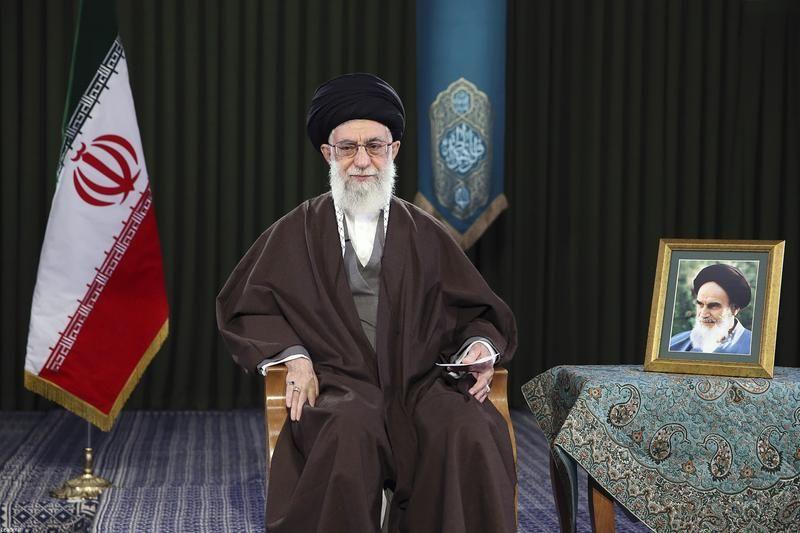
Iran’s approach to soft power is sophisticated and varied. While the Islamic Republic’s religious rhetoric might dominate the Western understanding of Iran, successive governments—both before and after the 1979 Islamic Revolution—have sought to capitalize on Iran’s culture, religion, and historical legacy to extend influence and achieve aims far beyond its borders. To understand Iranian soft power therefore requires recognition of Persia’s imperial past, its religious evolution, Persian language and culture, and its history.
Capitalizing on an Imperial Legacy
Iran is not only a modern nation state, but it is also the inheritor of an ancient civilization. While the Middle East and Asia are home to many artificial states born in the twentieth century, Iran—or Persia, as it was known until 1935—has had a near contiguous history and sense of identity going back two millennia. Modern Iranian culture is a mélange of the influences which dominated in various incarnations of the Persian Empire and Iranian state.
The Persian Empire, at its greatest extent, stretched from the Mediterranean to India. Over just the last five hundred years, however, it has lost half its territory: The Portuguese seized Bahrain in 1521; the Ottoman Empire took Baghdad in 1638; and, in the nineteenth century, the Russian Empire wrested from Tehran’s control of what today is Armenia, Azerbaijan, and part of Georgia. Iranian elementary school texts teach about the Iranian roots not only of cities like Baku, but also cities further north like Darbent, in southern Russia. The Shah lost much of his claim to western Afghanistan after in the Anglo-Persian War of 1856-1857. Between 1871 and 1872, Iran lost much of Baluchistan not to the British army, but rather to the Indo-European Telegraph Department, the nineteenth century equivalent of losing a battle to the post office. While Iran today may be a shadow of the Persian Empires of the past, a strong sense of history and pride pervades the country. Many Iranians consider their former imperial boundaries to be a natural sphere of influence, Iranzamin, just as Russian nationalists believe that Russia should have paramount influence within their “near abroad.” Indeed, the notion of Iranzamin is a staple of rhetoric and cultural conception which transcends the 1979 Islamic Revolution; it remains an important aspect of Supreme Leader Ali Khamenei’s rhetoric today.[1] Indeed, this is why Ali Saidi, the Supreme Leaders representative to the Islamic Revolutionary Guard Corps (IRGC) spoke about taking the fight “from Shalamcheh [on the Persian Gulf] to the shores of the eastern Mediterranean” and, more recently, Gen. Mohammad Jafar Assadi, a former ground forces commander, bragged in January 2017 about Iranian influence again stretching from Iran to the Mediterranean.[2]
A gas flare on an oil production platform in the Soroush oil fields is seen alongside an Iranian flag in the Persian Gulf, Iran. Reuters
If the history is one pillar of Iranian outreach and a commonality upon which Iranian leaders shape soft power strategies, then religion is another pillar. The Islamic Revolution may have inaugurated the modern world’s first Shi’ite theocracy, but to assume Iran’s importance or attraction rests only upon Shi‘ite Islam is to misunderstand the residual influence of Iran’s pre-Islamic past and its importance to the development of Islam. Across the Iranian plateau, Zoroastrianism grew from murky origins to become the official religion of the ancient Achaemenid Empire. From their capital in Babylon and their dynastic center at Persepolis, they ruled a vast empire stretching at its height from the Balkans to the Indus River Valley. Zoroastrianism outlived the Achaemenid Empire and dominated the Persian plateau for one thousand years. Its embrace of duality came to permeate Iranian culture, and not simply in terms of good versus evil. Even today under the Islamic Republic, the most prominent holiday in Iran is not Islamic but rather cultural: Iran’s leading ayatollahs have long ago given up any effort to stamp out celebration of Nowruz, the pre-Islamic Persian New Year which begins on the first day of the Spring Equinox and continues for almost two weeks. Rather than suppress this pre-Islamic identity, they have embraced it as a mechanism by which they can reach out to other “Persian” societies. In 2014, Iranian President Hassan Rouhani, for example, spent his first Persian New Year as president attending a Nowruz festival in Afghanistan rather than Iran. The annual festival, begun in Iran, is now hosted on a rotating basis in other regional countries.[3]
The magi, Zoroastrian priests, are all but forgotten to those in the West except for their bit role in the New Testament as wise men bearing gifts. However, as a priestly class, they reigned supreme, at least up until the rise of Islam. Islam arose in the seventh century against the backdrop of a region exhausted by war. The Byzantine and Sassanid Empires had fought each other to a standstill, exhausting both empires and giving the new armies of Islam fertile ground to expand. By the end of the Prophet Muhammad’s life in 632 AD, the Islamic Empire stretched across the Arabian Peninsula. Over the next three decades, it grew rapidly to encompass a region stretching from Libya to Afghanistan. The Arabs were predominantly a desert, nomadic people; managing a vast new empire required a different skill set. Enter both the Zoroastrian magi and Persian bureaucrats who converted to Islam to retain their privileged position. Herein lies Zoroastrianism’s relevance to the present day: The magi, and by extension Iran, shaped Islam as much as Islam shaped Iran. While outsiders might believe contemporary Iran’s reach to be limited to the ten or perhaps 15 percent of the Islamic world that is Shi‘ite, the Iranian influence upon Islam is actually much greater. Iranian officials see themselves not simply as the representative and protectors of international Shi‘ites, but rather as a beacon for all Muslims.
Shi‘ism is, of course, part and parcel of the Islamic Republic, but for Iran, it is actually a relatively new phenomenon. Iran was largely Sunni until the beginning of the 16th century. In 1501, Shah Ismail Safavi, the founder of the Safavid dynasty (1501-1736), decreed Shi‘ism to be Iran’s official religion. He imported clergy from southern Lebanon (the linkage between Lebanon and Iran thus extends back centuries before the creation of Hezbollah in the wake of the 1982 Israeli invasion of Lebanon) in order to replace and supplant a clerical class at the time indistinguishable from the Ottoman Empire. While textbooks might give 1501 as the date of Iran’s conversion, the process was slower. Just as King Henry VIII’s break with the Catholic Church in England was simply the start of a centuries-long religious upheaval rather than its end, so too did Iran only became majority Shi‘ite around the time that George Washington crossed the Delaware River.
Religion is one source of identity; ethnicity is another. While in the West, a genetic definition of ethnicity predominates, in the Greater Middle East ethnicity has revolved around language since the late 1920s and early 1930s:[4] An Arab is someone who speaks Arabic as their mother tongue, a Turk is someone who speaks Turkish, and a Persian is someone who speaks Persian (or its constituent dialects, Farsi, Dari, or Tajik). Arabic may be the lingua franca of the Middle East from the Mediterranean to the shores of the Persian Gulf, but Persian fulfills that role from the mountains of Kurdistan through the bazaars of Central Asia and down through the Indian subcontinent. Indeed, the official language of India was Persian under the sixteenth century Moghul Empire; only in 1832 did the British army force India’s princes and rajas to conduct business in English. Even so, Persian remains the language of culture and poetry throughout much of West, South, and Central Asia. School children well beyond Iran’s borders memorize the poetry of famous Persian poets like Rumi, Saadi, and Hafez. When Iranian authorities reach out to Shi‘ite communities, like Afghanistan’s Hazaras, they might embrace sectarian identity as the commonality around which to shape soft-power but, if their target is further afield—such as predominantly Sunni Tajikistan, Iranian authorities would be more likely to draw on their common ethnic heritage. That is not to say that other Persian speakers always embrace Iran’s big brother attitudes; indeed, they often resent it.[5]
Language and culture can be important for other reasons. Strategies evolve within cultural contexts. Western academics may trace modern strategy and statecraft to Niccolò Machiavelli (1469-1527), and China scholars may root Chinese strategy to Sun-Tzu (544-496 BC). A genre of princely literature also developed during Sassanian times in the centuries immediately before Persia’s Islamization. Mirrors for Princes, books of protocol and other guides, elaborated on the relationships and duties of ruler and subject. The most famous examples include the Qabusnama (“Book of [King] Qabus”) written by a 11th century king ruling over what is now the southern coast of the Caspian Sea; Nasihat al-muluk (Counsel for Princes), written by the eleventh century philosopher and theologian Al-Ghazali (1058-1111); and the Siyasatnama (“Book of Government”), a manual of government written by the eleventh century Seljuq grand vizier Nizam al-Mulk (1018-1092).[6] The Siyasatnama included 50 chapters, ranging from “On holding court for the redress of wrongs and practicing justice and virtue,” to “On having troops of various races,” to “Exposing the facts about heretics who are enemies of the state and of Islam.” There is documentary evidence that rulers into the nineteenth century not only kept such literature in their personal libraries, but that they also read them.[7] Supreme Leader Ali Khamenei may not see himself as a Persian king, but his strategy for ruling and for exporting his ideology has far more in common with Iran’s imperial and intellectual past than it does with other countries and regimes which have evolved out of other cultural milieu. Beyond simply examining specific chapters of the Qabusname or Siyasatnama or any other example of “Mirrors for Princes” literature, Notre Dame professor Deborah Tor’s “The Islamisation of Iranian Kingly Ideals in the Persianate Furstenspiegel”[8] provides some useful context by showing the interplay between Islam and kingship before the Islamic Revolution.
The Islamic Revolution transformed Iran from a country content simply to be a regional power into one which sought to export its ideology in order to remake other regional states into the Islamic Republic’s image. For this, the concept of export of revolution became paramount. The idea that this imperative to replicate Iran’s Islamic revolution is simply within the realm of regime radicals and can be dispensed by engaging regime moderates or reformers is naïve.
Both the constitution of the Islamic Republic and the founding statutes of the IRGC make export of Iran’s Islamic Revolution part of the raison d’être of the regime. Article 3 of the constitution, for example, declares the goals of the regime to be both “the expansion and strengthening of Islamic brotherhood and public cooperation among all the people” and “unsparing support to the oppressed of the world,” while Article 154 calls for support of the just struggles of the oppressed against the arrogant in every corner of the globe.” The issue came to a head in 2008 when former President Mohammad Khatami suggested that the Iranian leadership formally understand revolutionary export in terms of soft power. “What did the Imam [Khomeini] want, and what was his purpose of exporting the revolution? Did he wish us to export revolution by means of gunpowder or groups sabotaging other countries?” Khatami asked, before suggesting Khomeini “meant to establish a role model here, which means people should see that in this society, the economy, science, and dignity of man are respected….”[9] While clergy closer to the Supreme Leader intervened to ensure a military understanding of revolutionary export predominated, the debate nonetheless highlighted the importance by which Tehran holds soft power as an arrow in its quiver and illustrates the fact that the difference between regime reformers and hardliners is one of tactics rather than goals.
To illustrate these aspects, both the Constitution of the Islamic Republic of Iran and “the Last Will and Testament of Imam Khomeini” are useful because they illustrate the prerogative to export through all means necessary, both hard and soft, the precepts and ideology of the Islamic Republic. Indeed, Khomeini states in his Last Will and Testament, “This politico-religious testament of mine is not made to the noble people of Iran only. Rather, it is recommended for all Islamic nations and the oppressed peoples of the world regardless of religious or nationality.”[10] Khomeini’s notion in particular is important because it illustrates an Iranian objective to influence on a global scale, rather than simply just among lands in which it has had historical influence.
The Iranian Way of Influence
Iranian soft power seeks both to exploit commonalities Iran shares with the target it seeks to influence and to use a variety of tools to achieve that influence. The first is the “Hezbollah model.” While the United States government officially designated Hezbollah to be a terrorist group on October 8, 1997, many European governments argue that such labeling lacks nuance.[11] After all, Hezbollah is not simply a “resistance” group, but rather a political party with an active a social service network. It runs charities and schools, and even a satellite television station. The goal of the Hezbollah model is simply to create a state within a state, thereby delegitimizing the official sate structure until such a time that structure can be co-opted or overthrown.
Patronage is the basis of the Hezbollah model. Here, Iraq provides a useful example in the contrast between strategies: After the fall of Saddam Hussein, as various constituent groups bargained to form the next government, each pursued distinct strategies:
- Kurds prioritized formal recognition after years of ethnic and national denial and so sought the most prestigious offices and ministries on the world stage. They pushed first Jalal Talabani and then Fuad Masoum for Iraq’s largely symbolic presidency while Hoshyar Zebari became first foreign and then finance minister.
- Sunni Arab sectarian parties sought ostensibly powerful posts, for example, the defense ministry and the speakership of parliament. They may not have achieved their broad goal of restoring the influence they had before Saddam’s fall, but the defense ministry post symbolized that goal.
- What Iraqi Shi’ite sectarian leaders and parties prioritized was the ability to dispense patronage, a core component of a strategy long employed by Lebanese Hezbollah and encouraged by their Iranian advisors. Firebrand cleric Muqtada al-Sadr, who despite his Iraqi nationalist rhetoric tended to act as pro-Iranian militia leader, placed his followers in the health ministry. By controlling hospitals and clinics, Sadr could either use services to expand his influence among ordinary people or simply employ his followers in a personnel-rich bureaucracy. Khodair al-Khozaei, a member of the Da’wa Party, likewise sought to place Da`wa members in schools across Iraq. After all, the foreign ministry may be prestigious, but the health and education ministries employ more people. To control the health or education ministries means awarding jobs as doctors, nurses, teachers and administrators to political followers regardless of their qualifications.
It would be a false caricature to suggest all Iraqi Shi‘ites are under Iran’s thumb, but the strategy to take control of personnel-rich ministries does segue with Iranian goals. In the West, governments might prioritize competence, provision of services, and education. In Iran and among its proxies, the calculation seems to be that if this leads to a decline in the quality of service and even to brain drain, then that can be a net gain because the educated middle class tends not to support the theological goals of Iran or its proxies. More malevolently, Iranian proxies can also control who received assistance and who did not. In Baghdad, Sadrists treated Shi‘ites but neglected Sunnis, many of whom died as a result.
Charities absent Altruism
Charities form another pillar to the Hezbollah model. They enable the Islamic Republic and its proxies to develop patronage networks and infiltrate both cities and countryside. Of myriad Iranian charities, the Imam Khomeini Relief Committee (IKRC) is perhaps the most important. With assets supplied by the Supreme Leader, the Committee sponsors programs similar to those conducted by Western charities, helping orphans, the disabled, and the elderly in Iraq, Lebanon, and Central Asia. To those deprived and vulnerable in these areas, it provides food aid, blankets, and fuel; sponsors computer classes and medical clinics; and offers interest-free loans.[12]
In Afghanistan, Iranian-backed charities also helped sponsor weddings which would otherwise be unaffordable for young men, a gift which engenders a lifetime of loyalty.[13] They also sponsor competition to build further patronage. The Iranian embassy in Kabul, for example, hosted an IKRC contest to test knowledge of Khomeini’s Last Will and Testament among more than 1,000 aid recipients.[14] This parallels similar contests held inside Iran. Iranian authorities also use the IKRC to organize rallies and propagate Tehran’s vision. Hence, on the last Friday of Ramadan, the IKRC often organizes annual Qods [Jerusalem] Day rallies in places like Afghanistan and the Gaza Strip to parallel similar commemorations in Iran.[15] The annual event often descends into an orgy of incitement and radical rhetoric, most often directed toward Israel and both Jews and the West more broadly.
In addition to the significant amounts of aid they do deliver, Iranian charities seek to augment their influence by claiming credit for the activities of others. To drive into Basra from the north is to pass a phalanx of signs for the Shahid al-Mihrab Foundation, the charitable wing of the Islamic Supreme Council of Iraq (ISCI), claiming credit for housing and infrastructure projects implemented by US forces.
Such charities also signpost a broader Iranian presence. In Basra, Najaf, and Karbala, the three largest cities in southern Iraq, Iranian operatives have driven IKRC donation boxes into sidewalks along main thoroughfares. Local authorities deny issuing permits for such activities, but say they fear the Iranian response if they remove illegal boxes or signage.
The Iranian government has even sought to use charities in the United States in order to further its influence. In 2013, after a nearly five-year legal battle, the US Department of Justice seized the assets of the Alavi Foundation, including a $500 million Manhattan skyscraper, although litigation continues as to the propriety of the order. The FBI complaint alleged that the Foundation ran a charity on behalf of the Iranian government.[16] Before the US action, the Foundation provided grants and other funding to academics and individuals who would often then turn around and promote the Iranian government’s line.[17]
The career of Ammar al-Hakim, the current ISCI leader, illustrates the importance of charities to Iranian soft power. Iran’s IRGC helped found ISCI—originally named the Supreme Council for Islamic Revolution in Iraq—as part of its strategy to organize and co-opt Iraqi Shi’ites. ISCI presided over two corollary organizations: The Badr Corps, an IRGC-trained militia, and the Shahid al-Mihrab Foundation, ISCI’s charitable wing. Ammar rose to the leadership of ISCI not through the Badr Corps, but rather as head of the Foundation. This suggests that while American forces in Iraq focused on checking the advance of the Badr Corps, for the Iranian-backed leadership, the Foundation was equally if not more important. That said, the Iranian concept of charities often blurs the sharp line between aid and military that exists with Western NGOs. Hence, in August 2010, the US Treasury Department designated the Imam Khomeini Relief Committee branch in Lebanon as a terrorist entity for the assistance it provided Hezbollah.[18]
Beyond charities, the Iranian regime controls a vast business empire which it can use in pursuit of regime interests. The IRGC rose to prominence against the backdrop first of the Islamic Revolution and then of the Iran-Iraq War. When the war ended in 1988, the Revolutionary Guardsmen were loath simply to go back into the barracks let alone disband. As the Iranian government cut military expenditures, Khatam al-Anbiya, literally, “the Seal of the Prophets,” the IRGC’s engineering and contracting wing, moved into civilian enterprises. Today, they control much of Iran’s construction sector, oil industry, automobile manufacturing, and electronics. The IRGC uses Khatam al-Anbiya in order to expand its foothold and influence beyond its borders. For example, Iran is among the world’s most active dam-exporting nations.[19] Because every company involved in such heavy construction is affiliated with Khatam al-Anbiya, such activities enable Iran not only to win favor within countries which they help develop, but also to insert IRGC members into those same countries. As the Syrian civil war continued into its fourth year, for example, and Iran sought to retrench its forces not only in Syria but also in northern Lebanon, it struck a deal to build a dam in northern Lebanon.[20]
The same holds true with Iran’s automobile industry: By opening Iran Khodro plants in Azerbaijan, Venezuela, Senegal, and Belarus,[21] the IRGC is not only able to provide jobs and thus augment is patronage, but also to enable cover for IRGC officers.
In July 2012, IRGC Commander Mohammad Ali Jafari spoke to Khatam al-Anbiya employees and spoke of the importance of the Guards in development work.[22] Career trajectories underline this. In 2013, for example, the Defense Minister appointed Rostam Ghasemi, a former oil minister and Khatam al-Anbiya commander, to be his senior advisor.[23]
Educating the Next Generation
Khomeini meant the Islamic revolution not only to transform Iran but also the entire region. Nor did he see the revolution as only changing the political order; he saw its goal as the fundamental transformation of society. Accordingly, he prioritized the transformation of schools and universities and sought to change society through education. He formed a Cultural Revolution Committee which worked to impose an ideological litmus test on teachers and purge those who taught Western philosophy, history, literature, and subjects Khomeini deemed in contradiction to his own Islamic vision.
In recent years, the Iranian government has simultaneously sought to reinvigorate its cultural revolution and export it abroad. Hence, in 2008, Hossein Mozaffar, a member of Iran’s Expediency and Discernment Council, suggested creating mosque councils to counter Western influence.[24] Then, in 2015, Ayatollah Hosseini Bushehri, a member of the Assembly of Experts, a clerical body which will choose the successor to Khamenei, argued the need “to provide academic and administrative solutions for the serious struggle against manifestations of corruption and the enemy’s cultural NATO.”[25]
Education is also an important component of Iranian soft power and spans all levels. To understand fully the importance of education, it is useful to review Ayatollah Khomeini’s original “Program for the Establishment of an Islamic Government.”[26]
Iran’s Ministry of Culture and Islamic Guidance encourages sponsors Quran competitions and supports the Islamic Propagation Organization which publishes political and religious tracts and prints posters and religious art.[27] Iran opens its seminaries to foreign students with a goal to propagate Shi‘ism and Iran’s political philosophy. Latent Iranian racism, however, often undercuts the effectiveness of instruction in Iran, as Iranian landlords and others abuse foreign students.[28] Outside Iran, however, efforts to leverage education have had some success. In Afghanistan, Ayatollah Asif Mohseni, a figure beholden to Tehran because his religious credentials are not recognized in Najaf, founded Khatam al-Nabayin University. Its professors are trained in Iran, Iranian officials set its curriculum, and regime-approved publishers supply its library. In 2010, the budget for that single Iranian-backed university was greater than the Afghan government’s entire higher education budget.
In recent years, Iran has also worked to expand its network of Islam Azad Universities internationally. Originally founded as a chain of community colleges immediately after the Islamic Revolution in order to expand educational opportunities to the masses—and keep late teens and twenty-something’s off the street at a time when revolution and war had decimated the Iranian economy—the network of several hundred colleges has become an essential means to promote regime ideology and train its cadres. Indeed, during the Ahmadinejad administration, the Iranian government moved to consolidate regime control over the campuses and centers which some regime ideologues complained had grown too independent. Iranian officials now operate a branch of Islamic Azad in Kabul, Afghanistan, and they have often opened up other campuses in Armenia, Dubai, and Lebanon.
Iranian publishers—many supported or under the control of ministries—are active. The annual Tehran International Book Fair, now in its 30th year, attracts hundreds of publishers from around the world.[29] While many Iranian titles are innocuous, others propagate political conspiracies or anti-Semitic and national hatred. It is many of these which the Tehran International Book Fair promotes in exhibits around the world, in cities like Beijing, Frankfurt, and Moscow.
Train and Assist Missions
In recent years, the Islamic Republic has taken its influence further by expanding training programs abroad. Consider the Law Enforcement Forces (Niru-ye entezami-ye jomhuri-ye eslami-ye Iran) whose role spans a spectrum from traditional police functions to a role overlapping the paramilitary Basij. According to General Hossein Ashtari, the group’s commander, Iranian authorities are considering expanding their overseas operations.[30]
If the Iranian Law Enforcement Forces begin training overseas corollaries, they will essentially be remaking other countries in their image. To conduct police training in Lebanon, for example, where the pro-Hezbollah Michel Aoun’s rise to the presidency confirms growing Iranian influence, will permanently alter the system and the ideological preparation of its police to enable the influence of Iran and its trainers to persist long after Aoun is gone. The same thing could be true Iraq, or Yemen would help Iran solidify control and influence in its new ‘near abroad.’
The Islamic Republic also appears prepared to replicate a similar strategy with regard to the Basij (Sazman-e Basij-e Mostaz’afin, the Organization for the Mobilization of the Oppressed). The Islamic Republic created the Basij began against the backdrop of the Iran-Iraq War as a volunteer force. They were the child-soldiers who iconically ran across minefields barefoot with plastic keys to paradise around their necks. In 1981, Iran’s parliament formally folded the Basij into the Islamic Revolutionary Guard Corps.[31] While Basij autonomy from the Islamic Revolutionary Guard Corps has wavered with time, Danish-Iranian scholar Ali Alfoneh put it correctly when he observed, “… While the IRGC may have been the varsity team and the Basij junior varsity, they played the same game.”[32]
Today in Iran, the Basij is ever-present. Youth chapters exist in secondary schools, and the organization runs summer camps and afterschool activities. University students and professors have chapters, each of which is charged with keeping their imagined constituencies in line ideologically, by physical force if need be. An all-female Basij unit helps enforce women’s conformity to the Islamic Republic’s social mores. Separate Basij units even exist in factories and among Iran’s dwindling nomadic population. Simply put, the Islamic Republic has found the Basij a useful way to control society.
Perhaps is no surprise, then, that as the Islamic Republic increasingly seeks to export the Basij model abroad, not as a means of direct control but rather in an effort to reshape societies in the image of the Islamic Republic. In December 2011, for example, Ali Saidi, Supreme Leader Ali Khamenei’s representative to the IRGC, gave religious justification to the push to expand the Basij beyond Iran’s borders. “There is a need for 100 million Basijis in the region before the Imam of the Era can emerge,” he said.[33]
In 2014, Gen. Hossein Hamadani, who oversaw Qods Force operations in Syria until his death in Aleppo the following year, announced that “the Basij is presently being formed in Iraq after Lebanon and Syria.” “Iraqi officials are reaching the conclusion that they must get help from local popular forces,” he added, suggesting that Iranian officials saw the Popular Mobilization Forces in Iraq (Hashd al-Shaabi) to be the basis for a new Iraqi Basij.[34]
The Fifth Estate
The press is just as important as education to furthering the Iranian message. Iran-watchers in the United States and Europe are familiar with Press TV, an Iran-funded and produced English-language satellite channel which also has ubiquitous presence on the internet, often crudely promoting the Islamic Republic’s official position. Press TV, however, is a relative late comer. As the 2003 Iraq war loomed, Iranian authorities quickly set up the Arabic-language Al-Alam television, beating similar American efforts by months.[35] The result was that the Iranian government had a virtual media monopoly once the war began, shaping the perception of American occupation in a way both inaccurate and corrosive.
Iran’s success rests on a comprehensive media strategy. To populate content for so many networks, the Islamic Republic pursues a media strategy more de-centralized in some ways than its competitors. Prior to the 2003 start of Operation Iraqi Freedom, Al-Alam distributed phones and video cameras to Iraqi youth, promising to pay them for footage that Al-Alam could use; seldom was there a bombing, protest, or an incident embarrassing to American forces that Al-Alam did not cover.
The Iranian government saturates the airwaves with a far larger number of officials and semi-official outlets. This stands in sharp contrasts to countries that have one or two official channels geared to broadcasts abroad. Bahraini Shi‘ites, for example, listen almost exclusively to Iranian radio such as Voice of the Islamic Republic in Arabic or Islamic Republic of Iran Broadcasting in Arabic, and watch Iranian satellite channels such as al-Sahar and al-Alam. Whereas US media, whether public or private, is lucky to have one or two crews in any specific country, the Iranian media strategy in effect enables Iran to have hundreds of unofficial but highly effective stringers. The Iranian-backed Ahlulbayt television and radio blankets southern Iraq with religious programming. That Kabul-based Tamadon (“Civilization”) television broadcasts an Iranian perspective across Afghanistan is no coincidence: Upon the Taliban’s fall, IRGC Qods Force commander Hassan Kazemi-Qomi—subsequently Iran’s ambassador to Iraq—set out to systematically establish radio and television stations and build the broadcast and relay network to support them.[36]
Message is also important. Not only does the Iranian media cover the news, but it also provides a consistent message in pursuit of regime goals. It does not subscribe to a philosophy used by other countries that truth or self-criticism bolsters credibility; Iranian outlet suffer no editorial confusion.
Iranian officials also seek to cultivate non-Iranian media without embarrassment or self-consciousness all too common when Americans seek to do likewise. On August 3, 2012, for example, the Iranian embassy in Kabul hosted an iftaar (Ramadan fast-breaking) dinner for journalists from Afghanistan’s leading newspapers and television stations to push an Iranian-sponsored and funded project to create a “union of journalists.”[37] The expense of such an endeavor would be a drop in the bucket: Iran has spent $100 million annually on Afghan media.[38]
While much of the detail with regard to Iranian strategy in Iraq, Afghanistan, and Bahrain has occurred too recently to be included in any extensive book study of Iranian media strategy, there have been some useful overviews, such as Pierre Pahlavi’s “Understanding Iran’s Media Diplomacy.”[39]
Framing the Past; Presenting the Future
Another area in which Iranian soft power is uncontested is in the construction of museums to promote its world view. In the aftermath of the Iran hostage crisis, Iranian authorities transformed the former US embassy into a museum to illustrate both supposed Iranian victories over America as well as grievances against the United States. Hence, the former embassy displays portions of the US helicopter which crashed during the 1980 mission to rescue the hostages, as well as supposed American espionage equipment seized in the embassy take over as well as, of course, copies of the cables woven back together by the hostage takers and contracted carpet weavers. Other displays show dioramas depicting the downing of a civilian Iranian airbus by a missile fired by the U.S.S. Vincennes. Co-located with the museum, appropriately, are classrooms and offices belonging to the psychological operations center of the Islamic Revolutionary Guard Corps.
The Iranian government and its proxies have taken museum construction outside Iran itself. On a mountaintop east of Sidon, Lebanon, lies Mlitta, which is an expansive Hezbollah museum created and run by the pro-Iranian militia. School children can come and examine captured Israeli military hardware or tour caves in which Hezbollah operatives slept and coordinated actions. Visitors can also handle crewserved weaponry in cement bunkers, or try to spot mannequins of Hezbollah terrorists in the brush and forest surrounding the complex. The entire Mlitta facility reinforces Hezbollah’s resistance narrative and subtlety highlights Iranian links, with posters and photographs of Ayatollahs Khomeini and Khamenei accompanying the displayed kit of Hezbollah fighters.
In Iraq, another target of Iranian influence, the Museum of Imam Hussein picks up many themes common in post-revolutionary Iran. Visitors in the museum pass donation boxes not for the museum itself, but instead for Shi’ite militias and “volunteers.” And whereas in Iran, visitors to building are forced to step on mosaic depictions of American flags in doorways, the Imam Hussein museum forces visitors to step upon the names of all those contemporaries who opposed Hussein. Much of the museum content contains legitimate artifacts, but the absence of discussion of the United States while displaying wallsize silk carpets depicting Shi’ite history and donated by Iran leaves visitors with a clear sense that Iran is the protecting power while the United States is disinterested at best in religious justice.
The same holds true at the Museum of Jihad in Herat, Afghanistan, founded by Iranian-funded regional power broker Ismail Khan, which depicts the victory of the (Iranian-backed) mujahideen over the Soviets. The assistance of the United States is downplayed at best, enabling Iran to retroactively amplify its role. Education matters, and school groups as well as locals only receive one narrative of history, one that either is antagonistic to the United States or ignores the American role in liberation struggles or preservation of religious freedom.
When All Else Fails Bribe
Money matters. Whereas the Hezbollah model and charity penetration imply a bottom-up approach, top-down application of money matters when all else fails. Where charity targets the masses, bribery can recruit politicians and leaders. Between 2001 and 2007, the Iranian government gave more than $250 million in grants to the Afghanistan government, effectively bribing whosever assistance Tehran needed at any given time.[40] Afghanistan President Hamid Karzai admitted in 2010 that Iran provided his offices with “bags of money” worth hundreds of thousands of dollars each year.[41]
Iranian banks can be an important tool in dispensing such money or funding proxy groups. While the Shi‘ites in Bahrain face real discrimination and harbor legitimate grievances, there are some who seek to overthrow the Bahraini monarchy and orient Bahraini society closer to Iran.[42] While Tehran has denied any role in the sectarian unrest which began following the Arab Spring, Bahraini officials privately suggest that interest from Iranian business accounts deposited in Bahraini banks might fund and subsidize an increasingly radicalized opposition.
Pocketbook diplomacy greases all other soft-power, as Iran utilizes its oil wealth to dispense aid to countries whose votes it needs on bodies such as the United Nations Security Council and International Atomic Energy Agency’s (IAEA) Board of Governors. Here, Sub-Saharan Africa, Central Asia, and South America provide fertile ground given that region’s relative poverty. Iran, for example, plied South Africa with aid when that state served on the UN Security Council and IAEA Board of Governors, an investment that paid off after South Africa used its position on the Security Council to oppose sanctions against Iran despite an IAEA report which found the Islamic Republic continued to enrich uranium in violation of its safeguards agreement and two security council resolutions.[43] Once South Africa’s term on these bodies expired—and for that matter that of Nigeria, the Côte d’Ivoire, Uganda, Tanzania and Togo—Iran largely lost interest and shifted its aid elsewhere. Tehran uses the same mercantile policies toward the members of the Non-Aligned Movement, when it wants to leverage that group for statements or other support.[44] (For an overview of this diplomatic vote buying in Africa see also “Africa: Iran’s Final Frontier?” Operational Environment Watch, U.S. Army Foreign Military Studies Office, April 2013, http://fmso.leavenworth.army.mil/OEWatch/201304/Special_Essay_01.html)
The last mechanism by which Iran might distribute aid is through the disbursement of religious funds. In exchange for the religious guidance of their preferred ayatollah, Shi‘ite Muslims theoretically pay khums, a religious tithe amounting to one-fifth of their annual income calculated after all other obligations have been paid. Khums often can exposes Iran’s Achilles’ heel: Because it is an individual rather that state decision to determine which ayatollah receives the donation, many Iranians signal their preference for those religious figures who oppose clerical rule. Iranians reportedly pay Ayatollah Ali Sistani, an Iranian cleric based in Najaf, more khums than they do Iranian Supreme Leader Ali Khamenei. Because Khamenei based his legitimacy on the theological claim that he is the deputy of the Messiah on earth, this is quite a blow. That said, the offices and agents of Khamenei and the late Ayatollah Hassan Fadlallah, long a leading clerical supporter of Hezbollah, do collect and disburse tens of millions of dollars in Iraq, Bahrain, and other areas where they seek to help those they consider oppressed and disposed. Bahraini oppositionists, for example, will vehemently deny receiving any aid from Iran to support their protests or rebellion but, when pressed, will acknowledge accepting funds from the offices of pro-Iranian ayatollahs. In effect, ayatollahs’ offices can effectively launder money to groups which promote an Iranian government line while still maintaining Tehran’s plausible deniability with regard to non-interference.
Conclusion
The Iranian leadership has a multifaceted approach toward soft-power. It has multiple strategies at its disposal, which it mixes and matches in order to achieve the most effective outcome. In countries like Bahrain and Iraq, for example, it is much more likely to appeal to sectarian solidarity and promote through its media a narrative of “us vs. them.” In weaker states, it will utilize the Hezbollah model either to hollow out state effectiveness over those it wishes to be suzerain or to at least paralyze the effectiveness of government so that no competitor can make a move without the Iranian proxy—or Tehran—signing off on it.
In areas without an Iranian cultural or Islamic background, Iranian officials are likely to utilize money and media unabashedly in order to achieve their aims. By combining infusion of cash to decision-makers, on one hand, with a comprehensive media and charity strategy on the other, the Islamic Republic effectively combines both top-down and bottom-up strategies thereby making their reach often more comprehensive than their competitors, and that is before the Iranian willingness to use hard power and terrorism is factored into the equation.
The Islamic Republic of Iran is a serious and sophisticated player on the world state. To underestimate Iran is to play into Tehran’s hands and handicap oneself in a struggle for influence which the Islamic Republic believes both a divine mandate and a zero-sum game. It is not enough to counter Iranian hard power; the Islamic Republic’s soft power strategies are sophisticated and deep and, unfortunately, often met with no response.
Notes:
[1] See, for example, “Etela’iyeh-e Daftar-e Maqam Ma’azem Rahbar-e dar Taqdir az Mardam Sharif Ostan Kermanshah” (“A Release from the Office of the Supreme Leader in Appreciation of the People of the Kermanshah Province,”) Leader.ir, 21 October 2011; “Ba Talash Masyulan va ajraye barnameh-haye musub, Fars beh fazel pervardgar as ayyandeh dar khashantari barkhordar khahad shod” (With the Efforts of Officials and the implementation of approved programs, by the grace of the Lord, Fars will have a brighter future,” Leader.ir, 10 May 2008, http://www.leader.ir/fa/content/8795; www.leader. -??Ù??-???-??-??????-??-Û???Ù??-Ù???Ù?-Ù??Ù?Ù?-????-Ù?Û???Ù???/3865/content/fa/ir ;????-Ù?????-Ù??-??Ù?Ù?Ù??-Ù???Ù?
[2] “Hojjat al-Islam va al-Musalmin Saidi dar Hamayesh Pishkosutan Namayandegi Vali Faqih dar Sepah” (“Hojjat al-Islam Saidi [Speaks] to a Conference of Veterans on behalf of the Supreme Leader”), Sepah News, 20 February 2014, goo.gl/q8S8NM; “Jebha-ye Defah az Islam beh an Suye Meditraneh Rasideh Ast” (“The Front for the Defense of Islam has Reached the Mediterranean,” Fars News Agency, 12 January 2017. http://www.farsnews.com/newstext. php?nn=13951022000339
[3] “Iran’s President Due in Afghanistan to Attend Nowruz Festival,” Tasnim News Agency (Tehran), March 20, 2014, http://www.tasnimnews.com/English/ Home/Single/319027
[4] Rashid Khalidi, “Arab Nationalism: Historical Problems in the Literature,” The American Historical Review, Vol. 96, No. 5 (Dec., 1991), pp. 1364-1365.
[5] “Aval Hamsaye-ha gharamit bipurdazand.” (“First the Neighbors Should Pay Compensation” Hasht-e Sobh (Kabul), March 28, 2012.
[6] Nizam al-Mulk (Hubert Drake, trans.). The Book of Government or Rules for Kings: The Siyar al—Muluk or Siyasat-nama. (London: Routledge & Kegan Paul, 1978). The definitive discussion of this princely literature and its impact is Ann Lambton, Theory and Practice in Medieval Persian Government (London: Variorum Reprints, 1980), especially the essay “Islamic Mirrors for Princes” (reprinted from La Persia nel medioevo: Atti del Convegno internazionale, Rome, 1970).
[7] Abbas Amanat. Pivot of the Universe. (Berkeley: University of California Press, 1997), 70-73.
[8] Iran 49 (2011), pp. 115-122, available at: http://www.academia.edu/1280808/The_Islamisation_of_Iranian_Kingly_Ideals_in_the_Persianate_Furstenspiegel
[9] “Khatami: Dar Zamineh-e tahrif andisheh-ha-ye hazirat-e Imam ‘alam khatar mikonam” [Khatami: I Find Danger in the Distortion of His Excellence the Imam’s Thoughts], Emrooz (Tehran), 3 May 3 2008.
[10] See, “Prologue,” Last Will and Testament of Imam Khomeini, available online at: http://www.alseraj.net/maktaba/kotob/english/Miscellaneousbooks/ LastwillofImamKhomeini/occasion/ertehal/english/will/
[11] See discussion, for example, in Magnus Norell, “Hezbollah: Calling a Spade a Spade,” Commentator (London), 25 February 2013, http:// europeandemocracy.eu/2013/02/hezbollah-calling-a-spade-a-spade/
[12] See, for example, Imam Khomeini Relief Foundation, “Draft of the Final Declaration of the 1st Joint Conference of Poverty Elimination and Sustainable Development,” 16-17 January 2007, www.emdad.ir/en/conf.asp. See also Ali Alfoneh and Ahmad Majidyar, “Iranian Influence in Afghanistan: Imam Khomeini Relief Committee,” AEI Middle East Outlook, July 2010, www.aei. org/outlook/foreign-and-defense-policy/regional/india-pakistan-afghanistan/ iranian-influence-in-afghanistan-outlook-1/.
[13] “Jashan-e Komiteh-e Emdad Baraye zawjha-ye Afghan” [Relief Committee Celebration for Afghan Husbands], Fararu.com (Tehran), May 24, 2012.
[14] Ali Dianati, “Dekhalatha-ye Rezhim-e Iran Dar Afghanestan” [Interventions of the Iranian Regime in Afghanistan], Afghanmaugh (Kabul), 10 March 2009, http://www.afghanmaug.net/index.php/-mainmenu-32/558——v15-558
[15] “Children Express Solidarity with Palestinians,” Pajhwok Afghan News (Kabul), 25 September 2008, http://web.archive.org/web/20080929064234/http:// pajhwok.com/viewstory.asp?lng=eng&id=62720; “Rezhim-e Iran Ba Qods Noshkhar Mikonad” [The Iranian Regime Devours the Qods], Kabulpress (Kabul), 10 September 2009.
[16] “Manhattan U.S. Attorney Files Civil Action Seeking Forfeiture of Alavi Foundation’s Interest in Fifth Avenue Office Tower Controlled by Iran,” U.S. Attorney’s Office, Southern District of New York, November 12, 2009, http:// www.fbi.gov/newyork/press-releases/2009/nyfo111209a.htm
[17] Glenn Kessler, “Prosecutors Tie Iran, U.S. Assets,” The Washington Post, 13 November 2009.
[18] “Fact Sheet: U.S. Treasury Department Targets Iran’s Support for Terrorism Treasury Announces New Sanctions Against Iran’s Islamic Revolutionary Guard Corps-Qods Force Leadership,” U.S. Department of the Treasury, 3 August 2010, http://www.treasury.gov/press-center/press-releases/Pages/tg810.aspx
[19] “Fifteen New Dams to Come On Stream in Iran,” Tehran Times, 6 April 2013, http://tehrantimes.com/economy-and-business/106552-fifteen-new-dams-tocome-on-stream-in-iran
[20] “Iran offers assistance in building Lebanese dam,” Daily Star (Beirut), 22 February 2015, http://www.dailystar.com.lb/News/Lebanon-News/2015/Feb- 22/288306-iran-offers-assistance-in-building-lebanese-dam.ashx
[21] “IKCO Plants,” Iran Khodro Industrial Group, http://www.ikco.com/en/Plants. aspx
[22] Sepah News, 18 July 2012. No longer available online
[23] “Rostam Ghasemi Moshavar-e ‘Ali Vazir-e Defah Shod” (“Rostam Ghasemi Appointed Senior Advisor to Defense Minister”), Fars News, 21 August 2013, http://www.farsnews.com/newstext.php?nn=13920530001253
[24] Resalat, 16 August 2008. Article no longer available online
[25] Rasa News, 2 September 2015. Article no longer available online.
<

Don’t Be Swayed by Tactical Nukes
By Benjamin Giltner • RealClearDefense
How Seoul’s Break With Kyiv Serves Trump’s Russia Turn
By Sang Won Pyo • RealClearDefense
When the Grid Goes Down, the Mission Must Go On. Solar and Storage Can Help.
By John Szoka • RealClearDefense
Data and Communications Technology are the Hidden Keys to Success for Golden Dome
By Eric Velte • RealClearDefense
The Dual Threat: Why Beijing’s Collapse Is Just As Dangerous as Its Rise
By Efraín Vázquez-Vera • RealClearDefense

USS Stout Loses Power During Port Visit Due to ‘Engineering Casualty’
By USNI News
Air Force Lessons Learned From Operation Epic Fury
By Tabitha Reeves, National Defense
Marines Need Nine More Amphibious Warships To Carry Out Its Missions
By TWZ
AFRL, ACC Fly XQ-67A Drone To Test Autonomous Teaming
By Airforce Technology
F-35B Releases Meteor BVRAAM for the First Time
By Parth Satam, The Aviationist