
Why Neutrality Is No Answer for Ukraine
Published Jan. 10, 2022 • Read time: 6m
Join the Conversation
0Recent editorials have argued that imposing neutrality on Ukraine from above and outside – which is entailed in pledging its neutrality – would relieve the present crisis generated by Vladimir Putin. This argument is wrong on the facts and would only guarantee a further and larger crisis generated by Russia. Moreover, assumptions that Putin would desist if we just abandoned Ukraine repeat the same error as the allies made regarding Czechoslovakia in 1938. They also show no understanding of Putin's system. Indeed, the facts pertaining to neutrality’s futility are overwhelmingly clear.
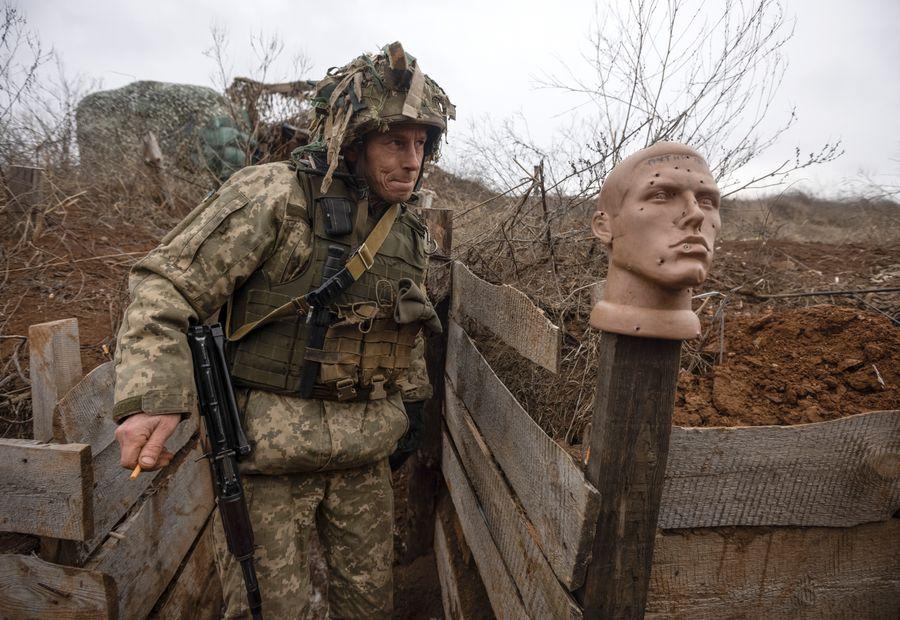
As both Nikita Khrushchev and President John Adams said, "facts are stubborn things.” All these calls for neutrality fail to mention that Ukraine was neutral in 2013-14 when the Maidan protests began. President Yanukovych had withdrawn Ukraine's candidacy for the EU and enshrined "non-bloc status" in Ukrainian law. Indeed, the Ukrainian constitution expressly forbade the stationing of foreign troops on its soil then. The protests that broke out in the fall of 2013 were about closer ties with the EU, not NATO. If neutrality wasn't good enough for Putin then, why would he settle for it now? Moreover, Putin’s writings, rhetoric, policies, frequent public statements, and the rhetoric and actions of high-ranking officials all indicate that Russia’s problem is the existence of an independent Ukraine that repudiates Moscow and identifies with Europe. Indeed, Putin has Putin’s ultimatums to the West also show that the issue today is not Ukraine but NATO and the entire post-Cold War settlement in Europe. Ukraine is merely a fulcrum upon which Putin wishes to unhinge the entire European status quo. Moscow, despite signing several treaties since 1989 affirming the legal validity of that settlement, believes neither in the rule of law at home or abroad. Rather its state interests of the moment take precedence at all times over such “scraps of paper.”
Therefore, a consistent principle of its diplomacy, going back to the 1990s, is a refusal to accept the existence of Ukraine as an independent state and deny the territorial integrity and sovereignty of every state from Germany to Tajikistan. So, in practical terms, Ukrainian neutrality hardly satisfies Moscow's cravings. What it wants is empire, i.e., the diminished sovereignty and territorial vulnerability of every state east of Germany. The classic definition of empire is the diminished sovereignty of peripheries vis-à-vis the metropole, in this case, Moscow. That fact characterized the Cold War in Europe and Moscow's insistence on threatening force to restore the situation epitomized by the Brezhnev Doctrine that merely spelled out this doctrine on paper and was the lodestar of Stalin and Khrushchev’s earlier policies. As Brezhnev told the Czechoslovak reformers of 1968, "Don't talk to me about Socialism. What we have, we hold."
Under the circumstances, what we now confront is also an assertion of pure power, coercive diplomacy, and the doctrine that might makes right. While many analysts rightly argue that Putin's system resembles a Mafia-like state, in fact, this insistence upon empire is also entirely characteristic of the traditional Russian state, i.e., the patrimonial Muscovite autocracy where the ruler owns the state and is unbound by any law or institution. This reversion to Russian autocracy is not merely a matter of Russia's sovereign choice, as Putin's ideologues pretend. It is a threat to all of Russia's neighbors because it inherently involves a quest for empire since Moscow understands its full sovereignty to be attainable only if that of its neighbors is diminished. Empire in Russia is the flip side of autocracy and Putin, like Catherine the Great, can easily claim that he has no way to defend his frontiers other than to expand them.
Indeed, this crisis shows that continuation of this system irrevocably entails a permanent war against the West, not just Ukraine and Putin has perceived Russia to be at war with the West since 2004, if not earlier. In other words, then, the continuation of Putin's system, irrespective of his or other personalities, entails a permanent state of siege with the West just as the Soviet system, much of which he seems intent on restoring, also was otherwise inconceivable.
Consequently, the argument for imposing neutrality on Ukraine really means undermining its integrity and sovereignty while abandoning it more or less shamefacedly and pretending falsely that we have thereby enhanced European security. Ukraine's independence and integrity remain the keystone in the arch of European security, and undermining it on the basis of an assessment that neither takes account of the facts surrounding its relationship with Russia nor of the nature of the Russian state cannot be the point of departure for a policy whose outcome means a longer and wider state of war in Eurasia, if not globally. Ukraine is the central front in Putin's war upon the West and its values. To abandon it on the basis of the ignorance of the realities set out here would be worse than a crime. It would be a mistake that decisively opens the way to years of strife in Europe.
Stephen J. Blank, Ph.D., is Senior Fellow at FPRI’s Eurasia Program. He has published over 1500 articles and monographs on Soviet/Russian, U.S., Asian, and European military and foreign policies, testified frequently before Congress on Russia, China, and Central Asia, consulted for the Central Intelligence Agency, major think tanks and foundations, chaired major international conferences in the U.S. and in Florence; Prague; and London, and has been a commentator on foreign affairs in the media in the U.S. and abroad. He has also advised major corporations on investing in Russia and is a consultant for the Gerson Lehrmann Group. He has published or edited 15 books, most recently Russo-Chinese Energy Relations: Politics in Command (London: Global Markets Briefing, 2006). He has also published Natural Allies? Regional Security in Asia and Prospects for Indo-American Strategic Cooperation (Carlisle, PA: Strategic Studies Institute, U.S. Army War College, 2005). He is currently completing a book entitled Light From the East: Russia’s Quest for Great Power Status in Asia to be published in 2014 by Ashgate. Dr. Blank is also the author of The Sorcerer as Apprentice: Stalin’s Commissariat of Nationalities (Greenwood, 1994); and the co-editor of The Soviet Military and the Future (Greenwood, 1992).
South Korea’s Nuclear-Powered Submarines After the Midterms
By Jihoon Yu • RealClearDefense
Why Build a Billion-Dollar Warship if a Cheap Drone Can Sink It?
By Ege Can Gün • RealClearDefense
Megaspeed Proves: Congress Must Act on Chip Security
By Michael Groen • RealClearDefense
Creating a MEF Insurance Policy
By Steven Bancroft • RealClearDefense
Operation Epic Fury and the Illusion of Victory
By Stephen D. Cook • RealClearDefense
South Korea’s Nuclear-Powered Submarines After the Midterms
By Jihoon Yu • RealClearDefenseWhy Build a Billion-Dollar Warship if a Cheap Drone Can Sink It?
By Ege Can Gün • RealClearDefenseCreating a MEF Insurance Policy
By Steven Bancroft • RealClearDefense
U.S. Navy Used Expired Munitions During Iran War
By Riley Ceder, Navy Times
The Coast Guard Icebreaker Nobody Wanted
By David Roza, Task & Purpose