
Managing the Canada-India Diplomatic Conflict
Published Nov. 19, 2024 • Read time: 6m
Managing the Canada-India Diplomatic Conflict: A National Security Imperative
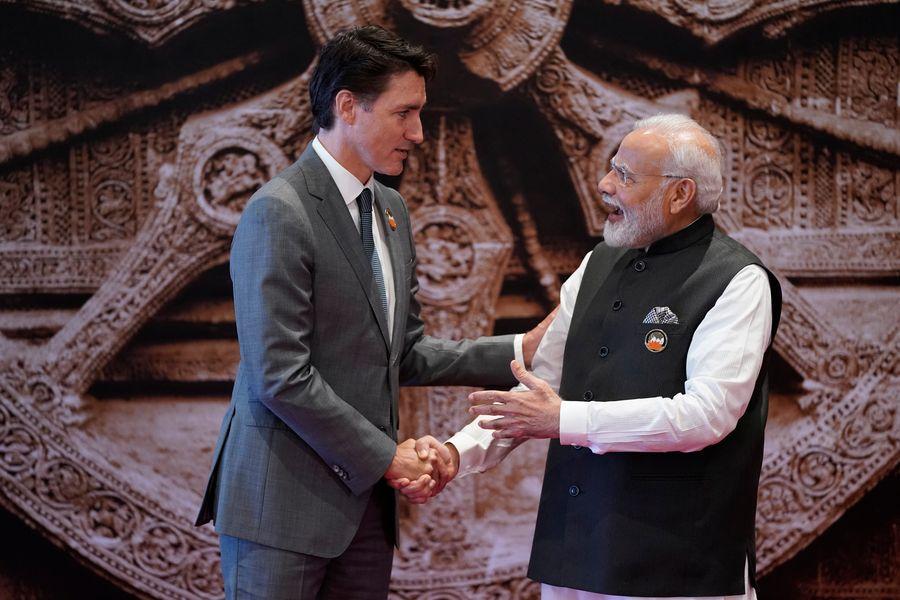
The ongoing diplomatic dispute between Canada and India has escalated into a serious national security concern for both nations. What began as a political row, sparked by Canadian Prime Minister Justin Trudeau’s allegations of Indian involvement in the killing of Hardeep Singh Nijjar, has evolved into a wider conflict that threatens to disrupt security dynamics in both countries. With accusations ranging from interference in domestic affairs to targeted political actions, both Canada and India find themselves in a standoff with far-reaching security implications. This piece argues that while a full resolution may be elusive, both nations must take immediate steps to manage the conflict to prevent further harm to their national security interests.
The Diplomatic Fallout: More Than Just Political Posturing
The Canada-India diplomatic rift gained significant momentum after Trudeau publicly accused India of being involved in the murder of Nijjar, a Canadian citizen and Sikh separatist leader, on Canadian soil. This serious allegation, which India categorically denies, has led to reciprocal expulsions of diplomats and a freezing of relations. But this incident is not just a political spat—it is a matter of national security for both countries, highlighting vulnerabilities that could be exploited by hostile actors if not managed carefully.
India views Canada’s tolerance of pro-Khalistan separatist activities as a direct threat to its national integrity. The Indian government considers these movements not just political activism but a dangerous form of extremism that threatens its sovereignty. For Canada, the challenge is balancing its commitment to free speech and political expression with its responsibility to ensure that its territory is not used as a platform for extremist activities that could harm relations with a key partner like India.
How a Dying Agency Turned Fentanyl Into a Weapon of Mass Destruction
Congress Must Reauthorize Section 702 of the Foreign Intelligence Surveillance Act
Counterterrorism and the Growing Convergence in Homeland Security and Homeland Defense
Washington Cannot Ignore Afghanistan’s Weapons Legacy
This clash over fundamental values—India’s emphasis on national security and territorial unity versus Canada’s dedication to free expression—has exacerbated tensions, making the conflict more difficult to manage. The diplomatic freeze not only strains relations but also opens potential security risks for both nations, particularly in terms of terrorism, espionage, and the erosion of critical security partnerships.
The National Security Costs of a Prolonged Stalemate
For Canada, the stakes are high. Beyond the diplomatic fallout, a prolonged conflict with India poses direct risks to Canadian national security. India is a key player in the Indo-Pacific, a region increasingly central to Canada’s foreign and security policy. Canada’s role in regional security initiatives, such as its growing ties with the Quad and its focus on countering Chinese influence, requires stable relations with India. A deteriorating relationship undermines Canada's ability to contribute effectively to Indo-Pacific security, weakening both its credibility and its strategic positioning in the region.
Additionally, the domestic threat landscape could become more complicated for Canada if extremist elements within the Sikh diaspora are emboldened by the diplomatic rift. The possibility of increased radicalization, coupled with deteriorating intelligence-sharing mechanisms between Canada and India, could expose Canada to greater risks of extremist violence and foreign interference.
For India, the national security risks are equally significant. While Canada may not be one of India’s top economic partners, it remains a critical player in the broader Western alliance network. Canada’s role in international institutions, including its influence in the Commonwealth and multilateral security frameworks, can impact India’s global standing. A continued standoff could hinder India’s ability to secure its interests in these international forums and create openings for adversaries to exploit divisions between New Delhi and Western capitals.
Moreover, the deterioration of diplomatic relations with Canada could limit India’s access to critical intelligence-sharing and counter-terrorism cooperation that has proven valuable in past operations. For a country with a long-standing focus on countering terrorism and insurgency threats, this breakdown in security cooperation with a Western ally like Canada poses significant risks.
What Canada Needs to Do
For Canada, managing this conflict is a matter of national security. While maintaining its commitment to free speech, Canada must take concrete steps to address India’s concerns about extremist activities on Canadian soil. This includes strengthening intelligence cooperation with India to better monitor and address potential threats from pro-Khalistan groups that advocate violence or promote terrorism. Doing so would not only reassure India but also help Canada mitigate domestic security risks.
Canada should also engage in diplomatic backchannels to rebuild trust. Public posturing has hardened positions on both sides, but quiet diplomacy could create the space needed for both countries to recalibrate their approach. Reassuring India that Canada takes its national security concerns seriously, while finding a way to uphold Canadian legal norms, would be a significant step toward de-escalation.
Additionally, Canada must be strategic in its public communications. The accusations against India have already damaged relations, and further public confrontation risks deepening the rift. A more measured approach, focusing on dialogue rather than accusations, will be essential to managing the fallout and preserving Canada’s strategic interests in the Indo-Pacific and broader international security frameworks.
What India Needs to Do
For India, the conflict with Canada is not just a diplomatic dispute—it is a national security issue. India’s aggressive stance risks isolating it from Western partners at a time when it needs to strengthen its alliances in the Indo-Pacific to counterbalance China’s influence. India would be better served by engaging diplomatically with Canada and recognizing that the political dynamics in Ottawa are driven by democratic norms, not hostility toward India.
India should also re-open diplomatic channels to discuss its security concerns directly with Canada, rather than through public accusations. This would help prevent extremist elements from exploiting the current diplomatic freeze and undermining India’s long-term security goals. India must focus on the bigger picture: its strategic interests in counterterrorism, intelligence-sharing, and multilateral security cooperation are best served by maintaining stable relations with key Western allies like Canada.
Moreover, India should recalibrate its diplomatic posture to reflect the long-term importance of its Western partnerships. As the Indo-Pacific region becomes more contested, India’s ability to work with Canada and other Western nations will be critical to ensuring regional stability and security. A continued diplomatic standoff with Canada only distracts from these broader security challenges.
A Path Forward: Prioritizing National Security
While a complete resolution to the Canada-India diplomatic conflict may not be immediately achievable, both nations must prioritize managing this conflict in a way that minimizes the national security risks for both sides. Canada should take steps to reassure India that it is serious about addressing security concerns, while India must avoid allowing this dispute to damage its broader security and diplomatic objectives.
By focusing on shared security interests, such as counter-terrorism, regional stability, and multilateral engagement, both nations can de-escalate tensions and prevent the conflict from spiraling further. In an increasingly complex global security environment, neither Canada nor India can afford to let a diplomatic dispute compromise their national security.
Andrew Latham, Ph.D., a tenured professor at Macalester College in Saint Paul, Minnesota. He is also a Senior Washington Fellow with the Institute for Peace and Diplomacy in Ottawa and a non-resident fellow with DefensePriorities, a think tank in Washington, DC.

Iron Raven: Remembering Colonel Joseph B. Conmy, Jr.
By Louis Marano • RealClearDefense
Stand Proud of the Force
By Jay Rogers • RealClearDefense
How a Dying Agency Turned Fentanyl Into a Weapon of Mass Destruction
By Barry Angeline • RealClearDefense
The Pressure Is the Message: What Xi and Putin Faced in Shenzhen
By Emzari Gelashvili • RealClearDefense
China’s Revised Mobilization Law and the Expanding Reach of National Defense
By Muhammad Shoaib • RealClearDefense

Marine Corps Hero Under Federal Investigation
By Laporta, Burnham & Watson, CBS
A Postmortem of Maneuver Warfare in the U.S. Marine Corps
By Donald Vandergriff
U.S. Putting Weapons in Space: A Strategic Blunder?
By Ajey Lele • RealClearDefense
U.S. Senate Seeks to Exchange Shipbuilding Funds for More Munitions
By Naval News
F-35C Completes First Launch and Recovery Trials on a Ford-Class Carrier
By Navy T.