
Terrorism
RealClear Context
Click below to continue reading this story, discover more Terrorism stories from over 25 years of RealClear archives, or follow this topic to stay in the know.
Mosul Eye, ISIS, and the Jews Iraq Forgot
Historian Omar Mohammed secretly reported on the Islamic State as the blogger Mosul Eye, eventually becoming a CIA source....
10h agoRead it on Habits of a Free MindHow a Dying Agency Turned Fentanyl Into a Weapon of Mass Destruction
Call fentanyl a drug, and you get arrests and treatment grants. Call it a chemical weapon, and you get the national-security toolbox ......
10h agoRead it on RealClearDefense
How a Dying Agency Turned Fentanyl Into a Weapon of Mass Destruction
In January 2025, the Countering Weapons of Mass Destruction Office at the Department of Homeland Security was slated for elimination. Most offices in that position start packing boxes and polishing résumés. Instead, its leader, David Richardson, called a meeting to confront a tragedy. From 2020 through 2025, more than 300,000 Americans died of fentanyl overdoses[i], roughly three-quarters of the number of Americans who died in World War II[ii]. DHS had been talking about calling fentanyl a weapon of mass destruction (WMD) since 2019, an unresolved holdover from the first Trump administration. Richardson’s team turned six years of talk into a signed recommendation in six weeks.
For nine days, the team ran problem-solving sessions across the department, with 17 components and offices at the table. Most participated reluctantly, and most argued nothing should be done. Richardson pressed on. After a few iterations, they had their problem statement: fentanyl and other synthetic opioids are the leading cause of death for Americans aged 18 to 45[iii]. Their recommendation: the president should declare fentanyl a WMD, so the entire federal government could attack the problem on equal terms.
Pope of FEMA Podcast - Dirty Bomb Threat From Iran?
David Richardson and co-host Barry Angeline discuss a reported “dirty bomb” threat from Iran, questioning CNN’s sourcing and emphasizing that a credible national emergency would prompt the president to address the public directly.
1d agoWatch it on Hot Wash Podcasts
Congress Must Reauthorize Section 702 of the Foreign Intelligence Surveillance Act
As Americans recently commemorated the 25th anniversary of the terrorist attacks of September 11, 2001, that killed 2,976 people, politicians, scholars, and members of the public shared many deeply moving speeches and essays about the horror and heroism of that traumatic day. Yet, few people devoted any substantial attention to the intelligence policy failures that made it possible for our enemies to plan and build their forces in the shadows, to conspire and train and ultimately execute the worst terrorist attack in American history. There is considerable value in remembering some of the specific details regarding the intelligence policy failures that made it possible for the terrorists to operate with impunity. Many of those born after 9/11 are unfamiliar with these intelligence policy failures, and many who lived through that dreadful day and its aftermath have forgotten—or were never told about them. More than two decades after the attacks, has the United States adopted policies that could make us vulnerable to the next mass casualty attack?
Notably, the key word in the phrase “intelligence policy failures” is “policy.” The existence of the al Qaeda terrorist network was well known within the intelligence community; indeed, Osama bin Laden made the list of the FBI’s Top Ten Most Wanted Fugitives in the late 1990s. Intelligence collection methods were actually quite sophisticated in the decade-plus before 9/11. Thus, it was not an “intelligence failure” meaning a failure of the collection methods, but a “policy failure.” And what was that policy? The primary policy failure that contributed substantially to the terrorists’ abilities to operate in the shadows, to plan their coordinated attacks, and to launch the attacks that killed almost 3,000 people was the “wall” of separation that Attorney General (“AG”) Janet Reno erected between the “intelligence” side of the house and the “law enforcement” side of the house.
Congress Must Reauthorize Section 702 of FISA
Intelligence collection methods were actually quite sophisticated in the decade-plus before 9/11 ... it was not an “intelligence failure” meaning a...
3d agoRead it on RealClearDefenseThe New Epicenter of Global Terror
How Africa’s Weak States and Rare Earths Drive Transnational Extremism...
1w agoRead it on Foreign AffairsCounterterrorismConvergence in Homeland Security and Homeland Defense
U.S. homeland security and homeland defense activities are converging. Perhaps nowhere more so than in counterterrorism....
1w agoRead it on RealClearDefense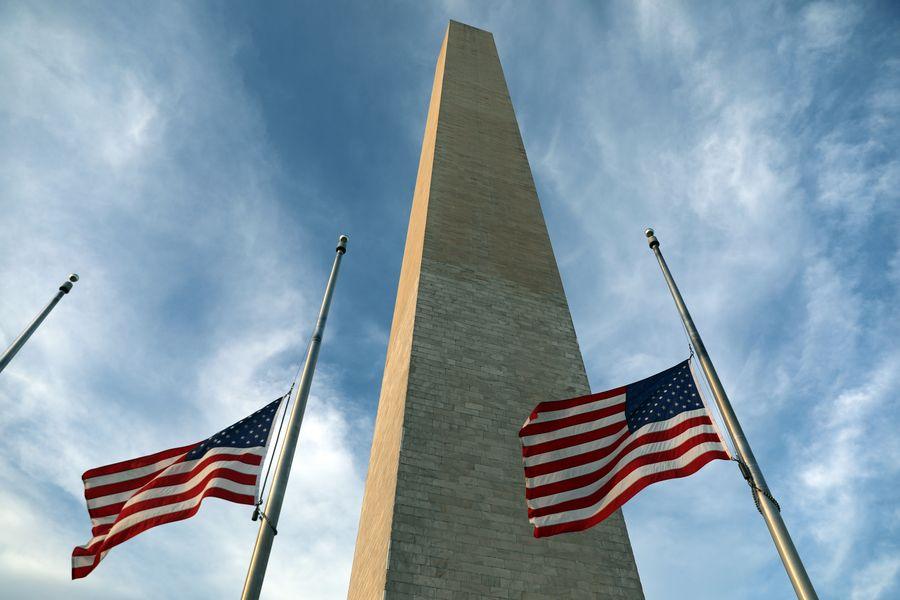
Counterterrorism and the Growing Convergence in Homeland Security and Homeland Defense
U.S. homeland security and homeland defense activities are converging. Perhaps nowhere more so than in counterterrorism.
America rebuilt its national security architecture after 9/11. Since then, it has institutionalized interagency collaboration, and it has developed proficient techniques that disrupt terrorist plots and attacks further upstream. More recently, the country has rebalanced counterterrorism budgets toward other security priorities. This comes as the shifting threat environment – including the terrorist designation of cartels and transnational criminal organizations – is imposing new strains on a lean legacy architecture.
Washington Cannot Ignore Afghanistan’s Weapons Legacy
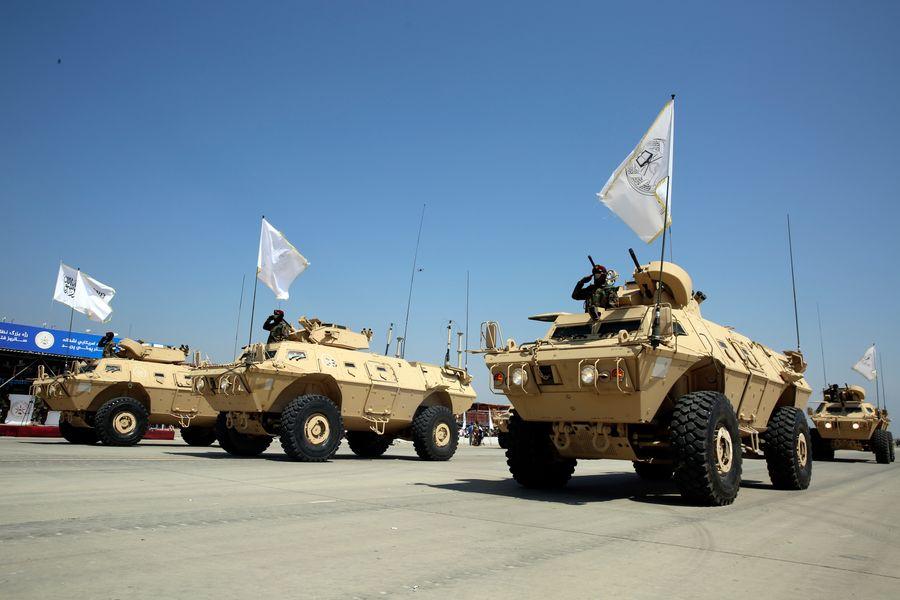
A war may end with a military withdrawal, but its weapons can continue fighting long after the soldiers have gone. Five years after the United States withdrew from Afghanistan, American-supplied rifles, night-vision devices, and other military equipment have appeared in the hands of militants attacking Pakistan. Weapons intended to strengthen Afghan security forces are now improving the capabilities of armed groups operating across the border. America's longest war ended in 2021, but its security consequences did not.
Washington cannot reverse its withdrawal, but it can address the weapons proliferation that followed. Tracing American-origin arms, strengthening counterterrorism intelligence cooperation with Pakistan, and disrupting trafficking networks offer a practical response. These measures would not require another military intervention. They would help contain a threat that affects regional stability and American counterterrorism interests.

Iron Raven: Remembering Colonel Joseph B. Conmy, Jr.
By Louis Marano • RealClearDefense
Stand Proud of the Force
By Jay Rogers • RealClearDefense
How a Dying Agency Turned Fentanyl Into a Weapon of Mass Destruction
By Barry Angeline • RealClearDefense
The Pressure Is the Message: What Xi and Putin Faced in Shenzhen
By Emzari Gelashvili • RealClearDefense
China’s Revised Mobilization Law and the Expanding Reach of National Defense
By Muhammad Shoaib • RealClearDefense

Marine Corps Hero Under Federal Investigation
By Laporta, Burnham & Watson, CBS
A Postmortem of Maneuver Warfare in the U.S. Marine Corps
By Donald Vandergriff
U.S. Putting Weapons in Space: A Strategic Blunder?
By Ajey Lele • RealClearDefense
U.S. Senate Seeks to Exchange Shipbuilding Funds for More Munitions
By Naval News
F-35C Completes First Launch and Recovery Trials on a Ford-Class Carrier
By Navy T.