
Strategic Working Group Strengthens U.S.-South Korea Alliance
Published Jan. 4, 2019 • Read time: 4m
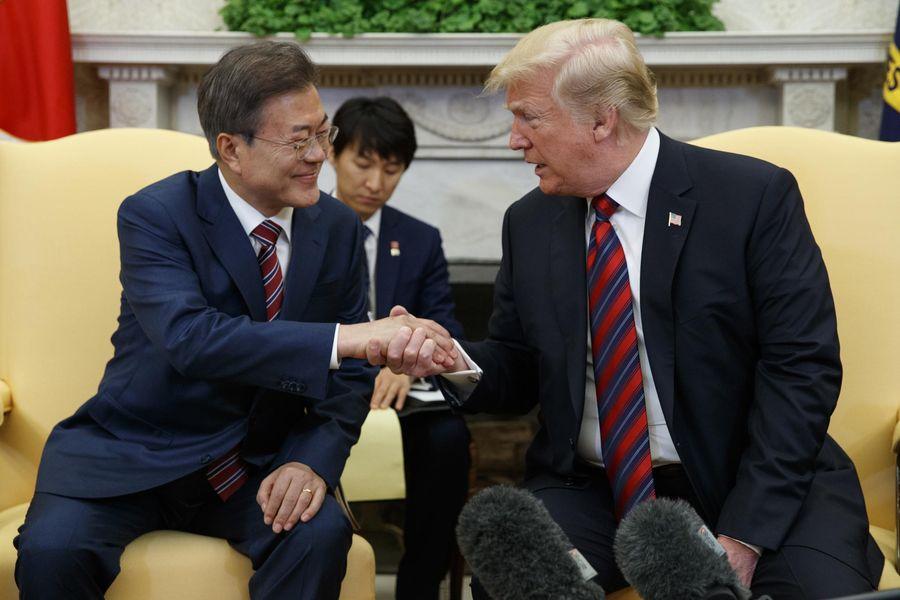
North Korea’s main newspaper condemned the U.S. this morning for preventing reconciliation between Seoul and Pyongyang. This criticism amounts to an indirect admission that Seoul and Washington have begun to coordinate their diplomacy more effectively, thanks in part to the high-level strategic working group they established last fall.
In October, newly appointed U.S. Special Representative for North Korea Stephen Biegun and his South Korean counterpart Lee Do-hoon established the strategic working group; meetings began in November, both face-to-face and via video teleconference. The creation of the working group reflects both short-term pressures and the longstanding need for improved coordination.
Following last September’s summit between Kim Jong Un and South Korean President Moon Jae In, where the two leaders approved the Panmunjom Declaration and a Comprehensive Military Agreement, friction arose in the U.S.-South Korea alliance over the perceived dearth of prior consultation. The previous year, President Trump criticized Seoul for pursuing North-South rapprochement too quickly and in a manner that was not synchronized with U.S. denuclearization efforts.
As part of its ongoing efforts to drive a wedge in the U.S.-South Korea alliance, North Korea rhetorically attacked the new strategy working group within days of its establishment, saying it was a U.S. attempt to meddle in North-South relations and prevent the South from engaging with the North without U.S. approval. In his New Year address on Tuesday, Kim Jong Un indicated that he wants to separate North-South relations from his denuclearization negotiations with the U.S. In effect, he wants to prevent precisely the kind of coordination achieved by the new working group.
As Allies' Capabilities Grow, They Need To Work With U.S. on Nuclear Signalling
President Kennedy: MAD & the Lessons of Berlin and Cuba
The Pope of FEMA
Over-Feminization of Journalism and Modern Woke Reporting
The establishment of the new group complements the existing Security Consultative Committee and Military Committee, through which senior defense and military officials from Washington and Seoul hold meetings as two equal partners. Now, the strategic working group brings together foreign policy and national security professionals from the two allies in a disciplined process that will encourage transparency and prevent misunderstanding. The increased contact will create an environment more conducive to cooperation, understanding, and effective combined and unilateral execution.
Following meetings of the working group in November and December, the U.S. assisted South Korea in obtaining approval from the UN for a groundbreaking ceremony to mark the beginning of efforts to integrate Korean railroad networks. Washington and Seoul are also examining ways to provide humanitarian assistance to the North, such as providing Tamiflu medication, determining a workaround for NGOs whose funding procedures are impacted by sanctions, and considering lifting travel restrictions on U.S. personnel working for NGOs that provide humanitarian assistance in the North.
While the working group is off to a relatively fast start for a bureaucratic organization, there is still room for improvement. For example, holding routinely scheduled versus ad hoc meetings and developing combined policy and strategy rather than coordinating separate ones would enhance the group’s effectiveness. Already, it is clear the group will significantly advance consultation and coordination between the U.S. and South Korea, with the potential to become one of the most important organizations contributing to successful policy management and strategy execution toward North Korea.
Kim Jong Un is rightly concerned with this working group because it strengthens the alliance and prevents him from driving a wedge between South Korea and the U.S. His frustration is a sign that Washington and Seoul are moving in the right direction.
David Maxwell, a 30-year veteran of the United States Army and retired Special Forces colonel, is a senior fellow at the Foundation for Defense of Democracies. Follow him @davidmaxwell161.
Follow FDD on Twitter @FDD. FDD is a Washington-based, nonpartisan research institute focusing on national security and foreign policy.
This article appeared originally at Foundation for Defense of Democracies (FDD).

Iron Raven: Remembering Colonel Joseph B. Conmy, Jr.
By Louis Marano • RealClearDefense
Stand Proud of the Force
By Jay Rogers • RealClearDefense
How a Dying Agency Turned Fentanyl Into a Weapon of Mass Destruction
By Barry Angeline • RealClearDefense
The Pressure Is the Message: What Xi and Putin Faced in Shenzhen
By Emzari Gelashvili • RealClearDefense
China’s Revised Mobilization Law and the Expanding Reach of National Defense
By Muhammad Shoaib • RealClearDefense
Marine Corps Hero Under Federal Investigation
By Laporta, Burnham & Watson, CBS
A Postmortem of Maneuver Warfare in the U.S. Marine Corps
By Donald Vandergriff
U.S. Putting Weapons in Space: A Strategic Blunder?
By Ajey Lele • RealClearDefense
U.S. Senate Seeks to Exchange Shipbuilding Funds for More Munitions
By Naval News
F-35C Completes First Launch and Recovery Trials on a Ford-Class Carrier
By Navy T.