
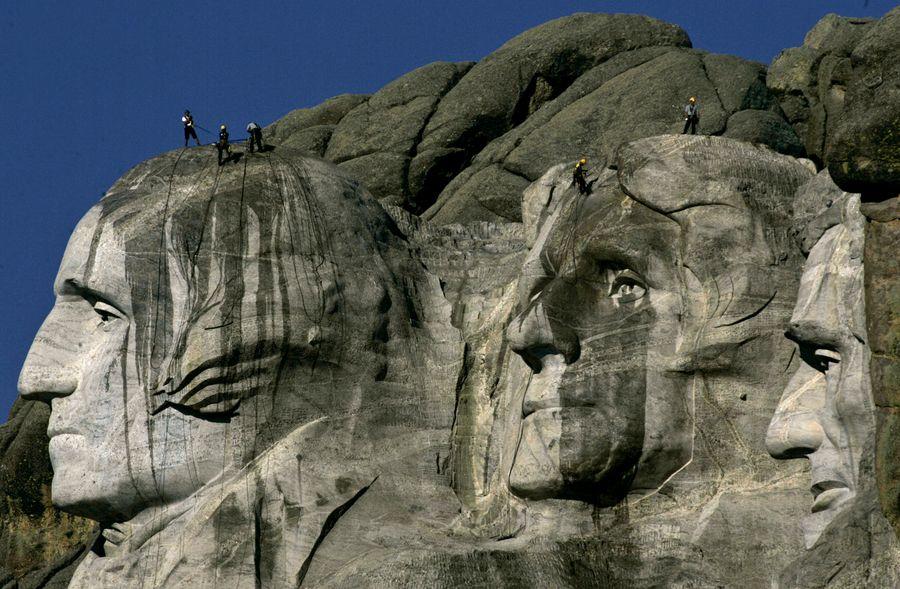
Why Washington's Farewell Address Still Resonates
Published Oct. 12, 2024 • Read time: 7m
“First in war, first in peace, and first in the hearts of his countrymen,” wrote Henry “Lighthorse Harry” Lee of the nation’s first president George Washington. After successfully commanding the colonial and later the American armed forces in the War of Independence against Great Britain, Washington, like Rome’s hero Cincinnatus, returned to his farm only to be summoned back by popular will to lead the nation in peacetime. As President of the United States, Washington spent eight years endeavoring to unify the new nation and keep it out of foreign wars. He succeeded brilliantly. Near the end of his presidency, Washington issued his Farewell Address, which first appeared in the Philadelphia Daily American Advertiser 228 years ago on September 19, 1796. It is truly a document for the ages, and its wisdom and counsel still resonate today.
One of the best books on Washington’s Farewell Address was written in 2017 by John Avlon, the former editor-in-chief of the Daily Beast, former CNN anchor, and currently a candidate for New York’s 1st congressional district. Avlon called the Farewell Address “an autobiography of ideas,” and noted that Alexander Hamilton and James Madison contributed to its content. Though Washington has been compared to Cincinnatus, his favorite classical philosopher was the Roman Seneca, who prized virtue, moderation, and temperance above all else. Avlon wrote that the Farewell Address contained “six broad pillars of liberty”: national unity, political moderation, fiscal discipline, public virtue and religion, education, and foreign policy.
As Allies' Capabilities Grow, They Need To Work With U.S. on Nuclear Signalling
President Kennedy: MAD & the Lessons of Berlin and Cuba
The Pope of FEMA
Over-Feminization of Journalism and Modern Woke Reporting
Washington’s 19th century successors as president invariably invoked the Farewell Address when commenting on foreign policy, and since 1893, the U.S. Senate has had a member read the Farewell Address on Washington’s birthday. But in the 20th century and in the 21st century, many of America’s leaders have mostly ignored Washington’s ageless counsel when formulating and implementing domestic and foreign policies. As a result, our nation today is divided and politically polarized, without fiscal discipline, hostile to virtue and religion, under-educated, and over-committed in foreign policy. The cures for these national maladies can be found in the Farewell Address.
Washington began the Farewell Address by explaining to his fellow citizens that he would not run for a third-term as president. He had wanted to retire, he said, after his first term, but explained that “mature reflection on the then perplexed and critical posture of our affairs with foreign nations, and the unanimous advice of person entitled to my confidence, impelled me to abandon the idea.” It was duty, not ambition, that called him to a second-term as the nation’s leader.
Washington humbly apologized for his “very fallible judgment,” and said that he was consoled by the facts that “while choice and prudence invite me to quit the political scene, patriotism does not forbid it.” He mentioned his “unceasing vows that Heaven may continue to you the choicest tokens of its beneficence; that your Union and brotherly affection may be perpetual; that the free constitution, which is the work of your hands, may be sacredly maintained; [and] that its administration in every department may be stamped with wisdom and virtue . . .”
Washington then imparted what he called “the disinterested warnings of a parting friend.” He warned against national disunity which would be fostered, he believed, by “internal and external enemies.” America’s citizens, he wrote, should frown “upon . . . every attempt to alienate any portion of our country from the rest, or to enfeeble the sacred ties which now link together the various parts.” Our citizens should concentrate their affections for their country. Washington preached nationalism and patriotism, which today have become words frowned upon by many on the left.
Washington, anticipating another presidential Farewell Address made 165 years later, warned against “overgrown military establishments, which, under any form of government, are inauspicious to liberty, and which are to be regarded as particularly hostile to republican liberty.” In 1796, George Washington was warning about the “military-industrial complex” that has produced in some instances unnecessary military interventions abroad and endless wars that proved unwinnable.
Washington warned against factions and parties that would harm our unity, and he noted that an “enterprising minority of the community” may replace the will of the nation with the will of a party. Washington feared that “cunning, ambitious, and unprincipled men” can subvert the will and power of the people and “usurp for themselves the reins of government, destroying afterwards the very engines which have lifted them to unjust dominion.” Here, Washington foresaw what many today call the “deep state.” And he warned that it could lead to a “permanent despotism” that could open the door to “foreign influence and corruption.” Washington had a realistic view of human nature and especially what James Burnham called “political man,” who has a “love of power and a proneness to abuse it.”
Washington in the Farewell Address also speaks to those today who wish to banish religion and morality from the public square. He called religion and morality “great pillars of human happiness” and the “firmest props of the duties of men and citizens.” And he cautioned that morality cannot be maintained without religion. He also promoted fiscal discipline and sound credit for the nation.
But it is on the subject of foreign policy that Washington’s Farwell Address is most remembered and most needed in today’s dangerous world. Washington’s counsel on foreign policy is nationalist and realist; you might say, it is “America first.” There are no allusions in the Farewell Address to global governance or to surrendering sovereignty for the sake of mankind. The theme throughout the foreign policy portion of the Farewell Address is adherence to America’s concrete national interests. Alliances should only be temporary, and only maintained when necessary. Sentiment has no place in the nation’s external affairs. We should not be passionately attached to any other country, but instead seek to “[o]bserve good faith and justice towards all nations,” and “cultivate peace and harmony with all.” Washington understood that sometimes conflicts would arise and wars might be necessary, but we should always “choose peace or war, as our interest, guided by justice, shall counsel.” Our destiny, he wrote, should not be interwoven with any other part of the world, which is why “It is our true policy to steer clear of permanent alliances . . . [while] safely trusting to temporary alliances for extraordinary emergencies.” “There can be no greater error,” Washington warned, “than to expect or calculate upon real favors from nation to nation. It is an illusion which experience must cure . . .”
Alas, experience has not cured the illusion of the Wilsonian worldview that America must try to reshape the world in our image. That illusion Washington warned against has afflicted Woodrow Wilson, Franklin Roosevelt, Harry Truman, John Kennedy, Lyndon Johnson, Jimmy Carter, Bill Clinton, George W. Bush, Barack Obama, and Joe Biden. It is an illusion that fostered our defeat in Vietnam, the endless wars in Iraq and Afghansitan, the global war on terror, the disaster of the so-called “Arab Spring, an uneccesarily enlarged and provocative NATO alliance, a revived Sino-Russian allaince, and that is fueling a war in Ukraine that daily brings us closer and closer to World War III.
We are adrift in a sea of international turmoil with shrinking armed forces and a woke defense establishment, and where our commitments exceed the resources we devote to them. It is a recipe for disaster. And we are here because we strayed too far from the wise counsel of Washington’s Farwell Address.
Francis P. Sempa writes on foreign policy and geopolitics. His Best Defense columns appear at the beginning of each month.

When the Warfighter Becomes the Sensor
By Elise G. Annett • RealClearDefense
The U.S. and its Allies Need a Collective Maritime Strategy
By Antonios Marios Giannakopoulos • RealClearDefense
Making Maneuver Great Again
By Gary Anderson • RealClearDefense
Ending the Conflict with Iran
By Anthony Cowden • RealClearDefense
Going After the Cyprus Money Laundering Hub
By Lise Korson • RealClearDefense
Making Maneuver Great Again
By Gary Anderson • RealClearDefenseMaking Maneuver Great Again
By Gary Anderson, RealClearDefense
Bandwidth as a Service for Naval Forces
By Brandan R. Schofield, CIMSEC
The Army and the Marine Corps in a Pacific War
By Van Horrick & Bancroft, MWI
Coast Guard’s Updated Force Design Plan Includes Maven Smart System
By DS