
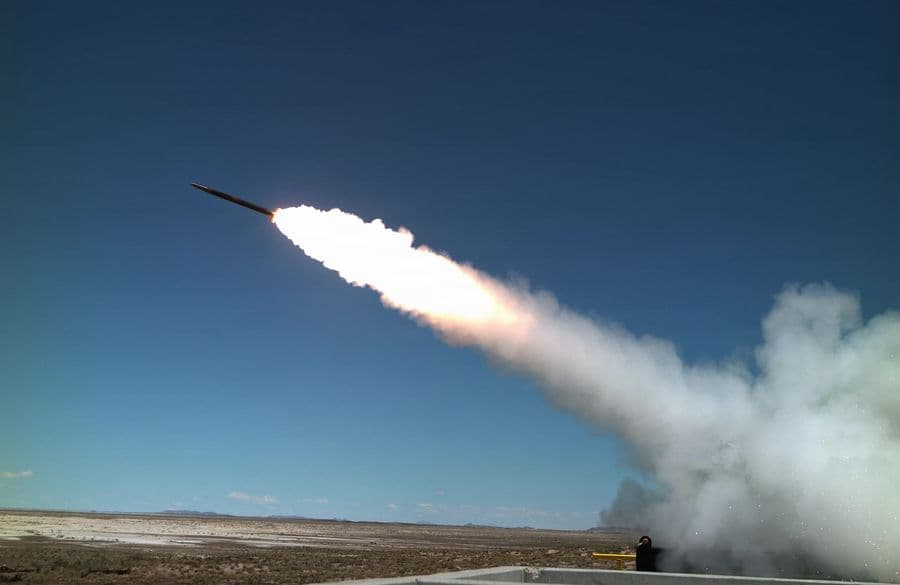
Red Wasp is an air defense interceptor S&T program at the DEVCOM Aviation & Missile Center, applying solid fuel ramjet tech to the Stinger missile to increase effective distance. (U.S. Army Combat Capabilities Development Command Aviation and Missile Center)
How the Army Can Turn Plans into Combat Power
Last updated 05:43 AM EST • Read time: 6m
The Army needs a clear delivery lead when a high-priority capability depends on several organizations acting together. A new capability may require changes to funding, personnel, training, equipment, doctrine, and sustainment. If those requirements move on separate schedules, units may receive equipment before they can use it. The Army should assign a delivery lead to selected efforts, define the lead’s authority, and hold the lead responsible for tracking dependencies and elevating unresolved decisions.
Senior Army leaders have called for faster adaptation, while also pointing to the difficulty of changing defense processes. In her 2023 AUSA remarks, then-Secretary of the Army Christine Wormuth called for transformation. In 2024, then-Secretary Dan Driscoll and then-Chief of Staff General Randy George described commercial and dual-use technologies as advancing faster than defense processes. A former Army Futures Command commanding general warned that the Army’s rate of change lagged behind the pace of the world. These statements establish a demand for faster adaptation.
Fragmented schedules can leave soldiers with new equipment that they are not ready to use. Different Army offices manage equipment, training, and sustainment, and each follows its own schedule. A named delivery lead would keep those schedules aligned and raise delays to the senior leader who can resolve them.
Senior leaders should appoint the lead for efforts that cross organizational boundaries and define the lead’s scope, reporting chain, and decision rights from the beginning. The lead should maintain a shared schedule, identify risks to delivery, and elevate decisions beyond the lead’s authority. Existing officials should retain their statutory and assigned roles where appropriate.
Force Changes Require Aligned Resources
The Army’s Force Structure Transformation plan shows that force design requires coordinated decisions concerning people, equipment, and facilities. The plan describes reductions in some authorizations and plans to build formations for long-range fires and air defense for example. Reducing some Army authorizations and building these formations will affect personnel levels, equipment needs, and the locations where units are based.
A new unit needs trained soldiers, equipment, facilities, and sustainment before it can operate. The Army must coordinate each requirement across organizations that control different resources and follow different schedules. A delivery lead could track those requirements together and flag delays that threaten the unit’s readiness.
The Army should measure force design progress by whether formations can perform their missions, not only by whether authorizations have changed. A delivery lead can track the status of supporting systems against agreed milestones. When one dependency threatens readiness, the lead can identify the responsible organization and elevate the decision before the gap affects the unit.
IVAS Shows the Need to Connect Feedback to Decisions
The Integrated Visual Augmentation System shows why soldier feedback must shape decisions about testing and fielding. The Director, Operational Test and Evaluation’s FY2025 IVAS report describes soldier evaluations and system performance concerns. In April 2025, the Army canceled the IVAS 1.2 operational assessment, halted production and future fielding of that version, and shifted toward the Soldier Borne Mission Command effort.
IVAS shows that soldier feedback and test results should guide requirements, funding, and fielding decisions. The soldier evaluations identified concerns with usability, physical effects, and reliability in the system. Assigning a delivery lead could have brought those findings to the officials responsible for system design, testing, funding, and fielding. Coordination can help leaders address problems and decide whether to revise, continue, or stop an effort.
Other Services Offer Limited, Useful Comparisons
The Marine Corps’ Force Design 2030 report shows that force design connects resource decisions to new operational capabilities. The plan divests some capabilities and shifts other resources toward mobile littoral formations. Making choices like these requires leaders to coordinate force structure, personnel, equipment, and training allowing the new formations can operate.
The Air Force’s Kessel Run connects software developers with the operational users who rely on their tools. The Defense Innovation Board’s Software Is Never Done: Refactoring the Acquisition Code for Competitive Advantage describes efforts to change how the Air Force develops software. The Army followed with its Army Software Factory. Both efforts show the value of bringing developers and users together to get the operational feedback that can shape the tools soldiers receive.
Assign Delivery Leads to Selected Efforts
Senior leaders should appoint delivery leads for high-priority efforts that depend on decisions across multiple organizations. Senior leaders should appoint a delivery lead when an effort depends on several organizations and no single office is responsible for coordinating their work. The appointing official should define the lead’s responsibilities, authority, reporting chain, and duration.
Each delivery lead should maintain a single schedule that connects the organizations and resources needed to field a capability. The lead should flag delays, identify who must resolve them, and raise decisions beyond the lead’s authority. Senior leaders can then see where the effort is at risk and act while preserving existing roles.
Leaders should establish decision gates before an effort is allowed to advance. Each gate should specify the evidence leaders need to continue, revise, delay, or stop the effort. Test results and soldier feedback should guide those decisions while funding and production should advance when a system meets agreed standards. Senior officials should retain the authority to pause or end an effort that fails.
The Army needs to measure progress by whether units can use and maintain the capability. Track test results, equipment availability, and whether soldiers have the training and support they need. These measures would show whether the effort has delivered a functioning capability.
Clear ownership cannot remove every delay. Technical problems, changing operational needs, and resource limits still require decisions by officials with the authority to make them. Delivery leads can make dependencies visible, clarify who must act, and give senior leaders a timely basis for decisions.
For selected efforts, delivery leads can connect plans, resources, and field readiness. Clear authority, shared schedules, and evidence-based decision gates can help leaders identify conflicts earlier and focus attention on capabilities units can employ and sustain.
Matt Russell and Michael Carvelli are co-founders and managing partners of Attain Leadership Solutions, a consulting firm that helps organizations turn strategy into execution, strengthen leadership teams, and improve organizational performance. Their work draws on experience leading complex organizations and planning operations in demanding environments. Russell is a retired Army infantry officer and strategist. Carvelli is completing his Army career as an engineer officer and organizational leader.
The views expressed are their own and do not represent those of the U.S. Army, the Department of Defense, or any part of the U.S. government.

Beyond Hormuz: What Washington Should Expect from a Frontline Ally
By Daewon Cho • RealClearDefense
Putin, Plague, and the America’s Biodefense Gap
By Ryan Kane • RealClearDefense
Patriot Delays Force a New Air Defense Doctrine on NATO’s Eastern Flank
By Jan K. Varga • RealClearDefense
How the Army Can Turn Plans into Combat Power
By Matt Russell • RealClearDefense
Is It Déjà vu All Over Again: The 2012 Report on Global Zero
By Peter Huessy • RealClearDefense

U.S. Marine Corps Attack Helicopters Set for Major Upgrade
By C. Jones, Defence Blog
How the Iran War Compounded the U.S. Navy’s Maintenance Crisis
By Hartung, NatInt
Fielding Forces for Full Mobilization
By Jon Hoffman, Proceedings
BAE’s New Launcher Lets Warships Deploy and Replenish Missiles at Sea
By NextGenD
Why Is the Navy Spending $19 Billion on ‘Flying Gas Stations’?
By Mark Thompson, RS