
In Defense of CNO's in an Unfriendly Washington D.C.
Last updated 08:57 AM EDT • Read time: 6m
A recent article in Real ClearDefense, penned by an anonymous author purports to offer advice on the selection of the next Chief of Naval Operations, as well as paraphrasing William Shakespeare by inviting the reader to, “Sit upon the ground and tell the sad story of the death of the Chief of Naval Operations role” in the post-Cold War world. The author makes some valid points. Many past CNO’s were fleet commanders first before taking the position. The Fat Leonard Scandal was a severe Navy “black eye” to the service’s reputation, and it did have some impact on flag promotions. The author is also correct in noting the absence in the CNO rotation of a naval aviator since that of Admiral Jay Johnson that ended almost a quarter century in the past. Having multiple warfare designators as the CNO helps build diversity of thought in both acquisition and doctrine for the fleet.
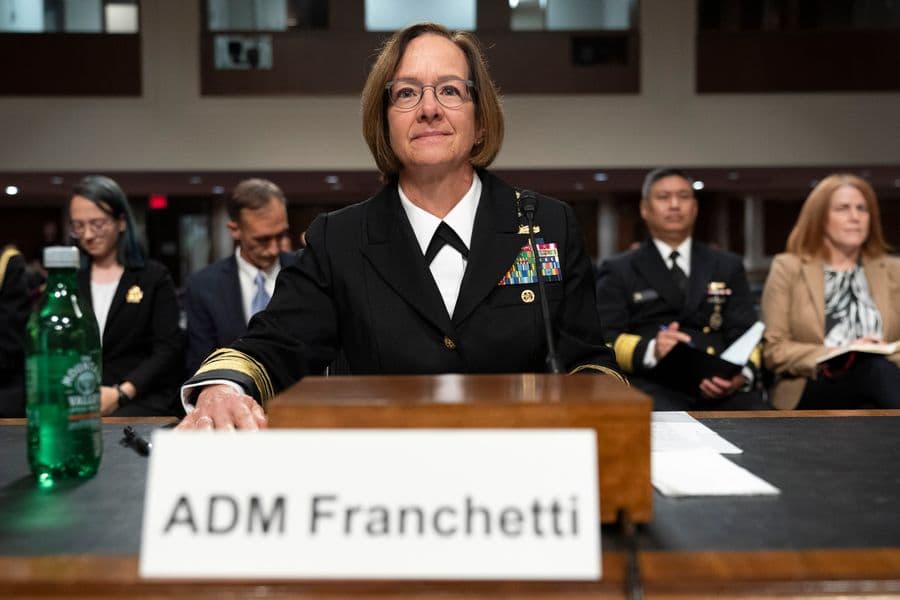
There are also a great many misconceptions and outright falsehoods in this article. There is no proof that Admiral Lisa Franchetti was presumed a “DEI hire” by the operating fleet and I would challenge the author to provide such. Like her or not, she met all the required tenets the author suggests for CNO including his all-important fleet command position. It should also be noted that any three- and four-star officer appointment is inherently political, as elected/Senate confirmed officials make the choice of who serves in those capacities. Those choices are largely outside the Navy’s control. Franchetti, her predecessor Admiral Gilday (a combat veteran of the First Gulf War whose ship was mined) and Admiral Richardson, an experienced submarine commander with many high-level joint operational assignments were all well qualified to assume what the author rightly called the period of “corporate CNO’s) that perhaps did begin with Admiral Vern Clark, who was the first CNO to graduate from a business school program. Even during the hallowed Cold War period CNO’s who had not held traditional fleet command were selected. Arguably the first modern CNO who recognized the growing Soviet naval threat and pressured the Navy to again focus on sea control was Admiral Elmo Zumwalt, who held the unconventional Commander, U.S. Naval Forces Vietnam billet as a three-star officer prior to his elevation to the top Navy job. Don’t like a specific commander? Blame the presidential admin in office and not the Navy.
The author also appears unaware of the vastly different political and geostrategic environments that have driven CNO appointments since the end of the Cold War. The Goldwater Nichols Act of 1986 largely removed or submerged the remaining operational control of forces possessed by the CNO in the wake of reforms by President Eisenhower that made the Joint Chiefs of Staff from warfighting commanders into his staff component advisors. As a former senior flag officer himself, Eisenhower could function well with this arrangement, but his successors, lacking high level military experience have not fared as well and increasingly relied on a civilian defense bureaucracy to create strategy and even operational level of war employment options for military forces. Defense Secretary Bob McNamara and his attendant “whiz kids” raised this to a high art in the 1960’s, and his successors have largely followed suit in reducing even senior military officers to being operational and even tactical level of war executors of the policy choices of sometimes inexperienced senior defense officials. Legendary CNO Admiral Arleigh Burke once enjoined officers to “pound the table” and make sure their superiors know there views, but precious few flag officers, most raised in the largely benign, post-Cold War environment do not have this skill, as it has been bred out of successive flags through focus on joint and civilian leadership as opposed to that of senior uniformed officers.
The end of the Cold War and with it a defined enemy has accelerated that process, and only now with the designation of the People’s Republic of China as the “pacing threat” do America’s commanders and their legions again have focus for war planning and execution. There will have to be some realignment of civil/military control over military planning and operations to return operational control of forces again to admirals ready to steam to death or glory, whether at sea, the pentagon, or in Congressional testimony.
I would also take issue with the author’s intense criticism of the surface warfare community, his own purported warfare specialty. All flag officers become detached from their parent communities upon flag rank. High-level joint and Washington D.C.-area tours are often required for all officers to select for flag rank and not confined solely to the surface fleet. The term “warfighter” in the Navy is at best a misnomer as well, as no officer is necessarily such after they complete a squadron, group, or fleet command.
Who will be the next CNO? Popular word says Admiral Caudle, but he, Admiral Grady, Admiral Munsch, Admiral Kilby or several other officers would be great choices. Vice Admiral Brad Cooper and Vice Admiral Fred Kacher are inspiring fleet commanders and leaders who would also serve well in the role of CNO, much as Admiral Zumwalt did as a deep selected Vice Admiral for the position. Contrary to that author’s opinion, the United States navy is filled with good officers ready to serve in combat roles. He obviously has not interacted with many flag officers as he does not seem to understand the deep commitment to service that drives men and women in our navy to serve for decades at sea, away from family and friends, and at pay levels often lower than their civilian counterparts in order to defend their fellow citizens and others around the globe.
The CNO’s of the last several decades are not the problem, but rather the Goldwater Nichols joint system that has devalued their authority and leadership capacity over time. Fix that, make the Chairmen of the Joint Chiefs of Staff again a “first among equals” leader of a collective Joint Chiefs entrusted with war planning, service organization and defense acquisition. CNO’s will again become effective when armed with their Cold War-era authorities.
Dr. Steven Wills currently serves as a Navalist for the Center for Maritime Strategy at the Navy League of the United States. He is an expert in U.S. Navy strategy and policy and U.S. Navy surface warfare programs and platforms.

The Services Do Not Need a Four-Star Autonomous Warfare Command
By Steven Wills • RealClearDefense
Honor Them While There Is Still Time
By Jeffrey Rosales • RealClearDefense
From Siberia to Fairford: How Operation Spider’s Web Has Changed the Rules of Airpower
By Frank A. Rose • RealClearDefense
Faster Simulations, Better Defense Decisions
By Rut Lineswala • RealClearDefense
Will HASC Have an Oversight Subcommittee in the Next Congress?
By Christopher J. Bright • RealClearDefense
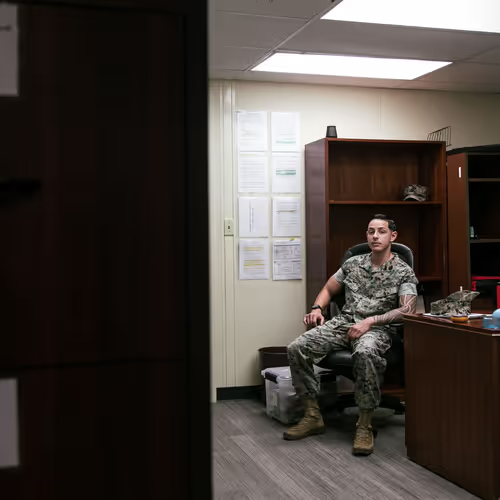
Hegseth Barred Trans Troops. Military Boards Are Rejecting Those Orders.
By NYT
Closing the Sea: Lessons from Ancient Mediterranean Blockades
By DeCasien, CIMSECFrom Siberia to Fairford: How Operation Spider’s Web Has Changed the Rules of Airpower
By Frank A. Rose • RealClearDefenseFaster Simulations, Better Defense Decisions
By Rut Lineswala • RealClearDefense
Bombers Could Have a Major Air-to-Air Combat Role
By Joseph Trevithick, The WarZone