
U.S. Air Force Should Acquire U.S. Manufactured Aircraft
Last updated 05:20 AM EDT • Read time: 4m
The Air Force should source hardware from domestic sources and avoid signing big contracts with foreign companies. Foreign companies producing aircraft for the Pentagon can cause problems that include supply-chain problems, concerns over the foreign nation’s loyalty to the U.S. military and the outsourcing of American jobs. The Pentagon may seek short term small contracts from some foreign based companies, but engaging in long term contracts with a company based overseas is unpopular and bad policy.
The American people are rolling into an election year where it is becoming clear that Washington is dysfunctional. Polling indicates that the Democrat led Senate and Republican led House are not popular. According to the Real Clear Politics polling averages, the President is struggling with 57% disapproval rating and people believe our nation is going in the wrong direction by a staggering 43% choosing the wrong direction versus the right direction. One reason why is because Washington politicians are not being responsive to the will of the American people.
Today, our military is in dire need of an upgrade to face threats coming from abroad. Much of the military hardware produced to protect America has been shipped overseas, and often left there to be destroyed or completely abandoned. At the same time, Congress is at a loggerhead over how to fund military appropriations for this year. It is important that Congress, and the White House, engage in policies that protect America while encouraging economic growth.
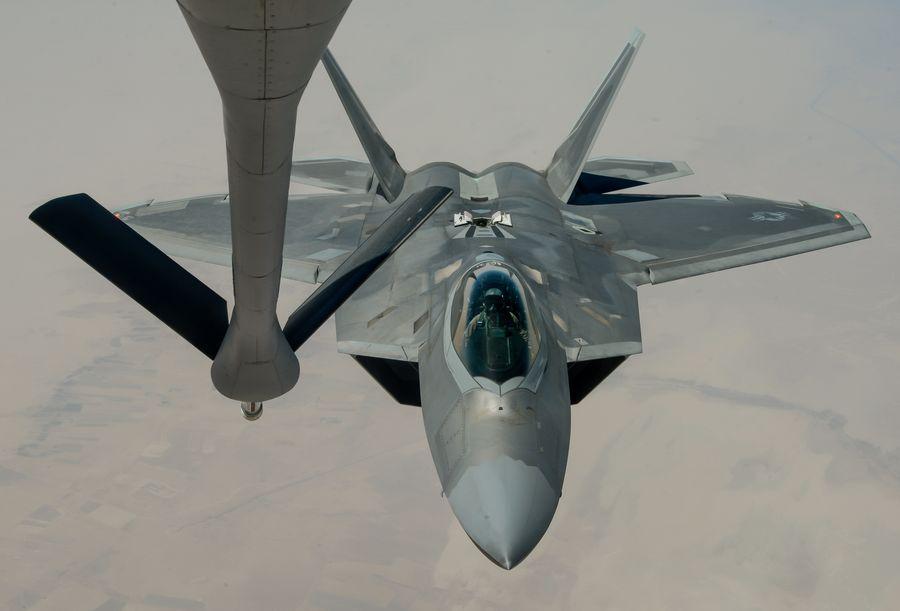
One issue that moves voters is the issue of jobs. Right now, the U.S. Air Force is preparing for a competition to procure the next air refueling tanker. According to the Air Force, the current “KC-135 Stratotanker provides the core aerial refueling capability for the United States Air Force and has excelled in this role for more than 60 years.” This tool of the military allows the Air Force to branch out and “provide aerial refueling support to Air Force, Navy, Marine Corps and allied nation aircraft.” The aircraft is the KC-135 and is produced by an American company. The Air Force is seeking to replace these tankers with the Next-Generation Air-Refueling System program (NGAS).
Air Dominance has been owned by the U.S. Air Force for decades. A pivotal piece of this complex machine is our Air to Air refueling tanker jets. The U.S. tanker fleet has always been developed, manufactured, and maintained by U.S. personnel.
One emerging problem is that the Air Force seems open to the idea of taking a bid from the French Aerospace company Airbus to replace the American made tanker that supports American jobs and keeps American taxpayer cash in the United States. National Defense Magazine reported on February 26, 2024, that last September, the Air Force solicited industry for a new tanker and “at the end of October, Lockheed Martin, which had teamed with Airbus to offer a special version of the European maker’s A330 multi-role tanker transport, or MRTT, for the recapitalization program, unexpectedly announced its withdrawal from the partnership.” When Lockheed cut ties with the European company to produce the tanker, one would think that Airbus would have stepped back. Instead “Airbus announced that it would respond to the KC-135 recapitalization request with a U.S. version of the A330 MRTT.” In other words, the European based company feels like they can prey on U.S. taxpayers being unaware that, if they get the contract, the Pentagon will be exporting billions overseas to purchase aircraft that could be produced by an American company.
There is a law on the books that protects taxpayers called the Buy American Act. That law was passed in the Depression-era and mandated that the federal government must purchase goods “substantially” made from sources domestically. This was used by the Biden Administration in 2021 as part of the Build America Buy America Act, included in the Infrastructure Investment and Jobs Act to push more domestic sourcing. Bloomberg News editorialized on December 11, 2023, “an executive order issued by President Joe Biden in 2021 defined this phrase to mean 60% of a product’s content, up from 55%, with the aim of reaching 75% by 2029.” The goal is to “help to reduce supply-chain disruptions, limit security breaches and create U.S. manufacturing jobs.” Those are all the reasons why Americans should reject Airbus getting the future contract to manufacture tankers for the Air Force.
When Congress takes up the appropriations bills for this year and the next, they should keep in mind that the American people are watching, therefore they should avoid contracting with foreign companies that will send more U.S. jobs overseas and potentially threaten our Air Dominance that we have maintained since 15 April 1953.
Jared “Chowda” Conaboy, Commissioned in 1998 from UMASS ROTC, 21 years in Air Force/ANG with Over 2000 hours in F-15C, Instructor Pilot, and Weapons School Graduate.

2949 Marine Prisoners, Hostages, and Peacetime Governmental Detainees Since Our Corps' Founding
By Jon Couch • RealClearDefense
America Must Win the Biotech Race Against China
By Rob Maness • RealClearDefense
How Digital Twins Can Strengthen Naval Readiness Before a Crisis Begins
By Carl Napoletano • RealClearDefense
The Uninsured Sky
By Joe Sandri • RealClearDefense
Counterterrorism and the Growing Convergence in Homeland Security and Homeland Defense
By Austin Doctor • RealClearDefense
How Digital Twins Can Strengthen Naval Readiness Before a Crisis Begins
By Carl Napoletano • RealClearDefense
F-16s Build on Iran Combat Lessons to Prepare for China Threat
By Rebecca Grant • Lexington Institute
U.S. Aircraft Evacuated From Second U.K. Base Due to Iran Threat
By Holliday, et al, WSJ
US Marine Corps Acquires Textron’s Ripsaw M3 Uncrewed Ground Vehicles
By DPost
U.S. Navy’s First San Antonio Flight II USS Harrisburg Completes Sea Trials
By GDN