
Missile Defense Meets Its Moment
Last updated 06:37 AM EDT • Read time: 9m
Join the Conversation
0Now America and Its Allies Must Adapt
For decades, missile defense was one of the most divisive issues in national security policy. Supporters argued it would protect civilian populations, reassure allies, and strengthen deterrence. Critics countered that it was too expensive, technically unreliable, or strategically destabilizing. Entire careers were built debating whether missile defense could ever fulfill its promise.
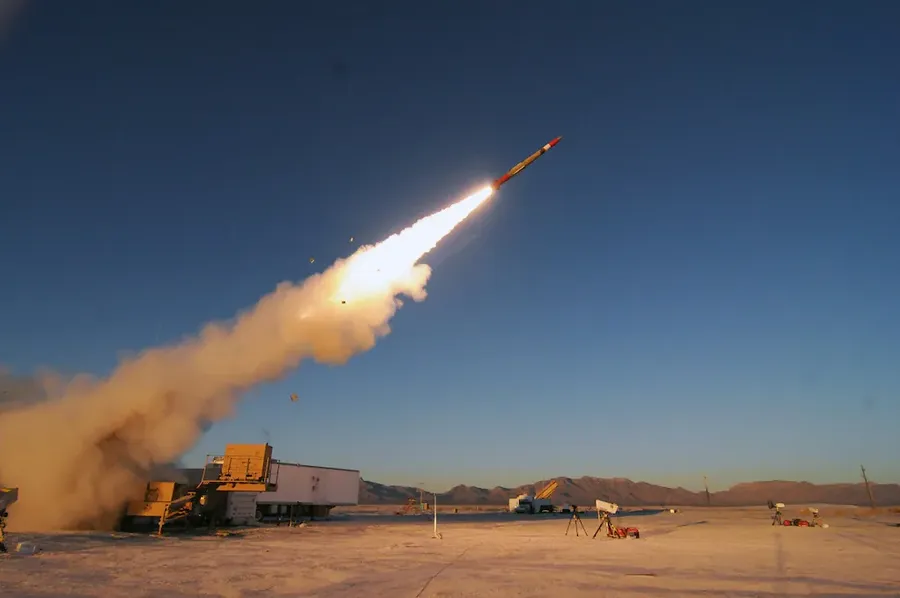
That long-running debate has now been overtaken by events. In Ukraine, Israel, and across the Middle East, missile defense has moved from theoretical concept to operational necessity. It is no longer something discussed only in think tank seminars or academic journals. It is being tested in combat under real-world conditions.
The results are increasingly clear: missile defense works. Not perfectly—but decisively enough to shape outcomes. It has saved lives, preserved freedom of action for political and military leaders, and complicated the coercive strategies of aggressor states.
The central question now is no longer whether missile defense is worth pursuing. It is whether the United States and its allies can modernize quickly enough to stay ahead of rapidly evolving threats.
Weapons of Terror and Political Coercion
One of the clearest lessons from recent wars is that missiles and drones are not being used solely for battlefield advantage. As my colleague Peppino DeBiaso wrote over 25 years ago, missiles are increasingly instruments of political coercion.
Since the start of Russia’s full-scale invasion in February 2022, Moscow has repeatedly launched large-scale attacks against Ukraine’s critical civilian infrastructure, especially its electrical grid. These strikes were not designed merely to destroy equipment. Their purpose was to terrorize the population, weaken morale, and pressure Kyiv into political concessions.
We have seen similar dynamics in the Middle East. Iran and its proxies have used missiles and drones not only against military targets, but against civilian areas and regional partners. Even states not directly involved in military operations have faced pressure through threats or attacks designed to influence their political calculations.
This is an important reality for Western policymakers to understand. Missile and drone warfare is not just about destruction—it is about coercion. Missile defense is one of the few tools available to blunt that coercion by denying adversaries the psychological and political effects they seek.
As I have written elsewhere, the lessons of Ukraine and the Middle East will matter even more in the Indo-Pacific, where distance, magazine depth, and the pace of conflict could place unprecedented stress on U.S. and allied defenses.
Missile Defense Has Proven Its Value
The performance of modern air and missile defenses in recent conflicts should give policymakers confidence.
Twenty years ago, many observers would have doubted that integrated defensive systems could intercept such a high percentage of incoming threats in complex combat environments. Yet publicly available information from recent operations suggests that defensive networks have performed at impressively high levels in most cases.
That success matters for several reasons.
First, it protects civilian populations and critical infrastructure. Even imperfect defenses that intercept most incoming threats can dramatically reduce casualties and economic damage.
Second, it buys time for decision-makers. Leaders under missile attack are often under immense pressure to escalate, capitulate, or accept unfavorable terms. Effective defenses create space for calmer and more deliberate decision-making.
Third, it preserves military capability. Airfields, logistics hubs, command centers, and troop concentrations are all more survivable when backed by credible missile defense.
Finally, it strengthens deterrence. Adversaries are less likely to rely on missile coercion if they believe their attacks will fail to achieve strategic results.
Success Has Also Exposed Serious Weaknesses
Recent operations have also highlighted uncomfortable truths that the United States and its allies can no longer ignore.
Inventory Shortfalls
The first problem is magazine depth. Patriot, Terminal High Altitude Area Defense (THAAD), Standard Missile-3 (SM-3), and other interceptors are highly capable—but inventories remain too small for prolonged high-intensity conflict.
This concern is not new. Nearly two decades ago, Pentagon studies and the U.S. congressional defense committees warned that U.S. interceptor stockpiles were insufficient for likely wartime requirements. Those warnings were acknowledged but never fully addressed. Today, after years of underinvestment and multiple simultaneous crises, the gap has widened.
The United States built much of its defense industrial base for efficiency in peacetime. It now needs capacity for wartime scale, especially for longer, attritional conflicts.
In modern war, the side that runs out of munitions first loses.
The Vulnerability of Fixed, Land-Based Sensors
A second lesson is the vulnerability of fixed land-based radars and sensor nodes.
Adversaries understand that missile defense systems depend on timely and accurate tracking data. Without sensors, even the best interceptor cannot perform effectively. That makes radars and communications nodes priority targets from the opening hours of any conflict.
Recent reporting indicates that Iran has targeted radar and sensor infrastructure across multiple countries during the latest regional conflict, including reported damage to systems in Qatar, Jordan, Saudi Arabia, Bahrain, and the United Arab Emirates. Open-source analysis has specifically cited damage to AN/TPY-2 radars that support THAAD batteries, as well as an AN/FPS-132 phased-array radar in Qatar.
Iran and other adversaries clearly understand that blinding or degrading sensors could be as valuable as striking launchers or airfields. Knock out the sensors, and you can seriously weaken the entire defensive architecture.
A missile defense posture built around a small number of static assets is therefore increasingly vulnerable. The United States and its allies need more mobile, distributed, redundant, and survivable sensing networks.
The Cost Curve Problem
Third, the economics of modern warfare favor the attacker.
A relatively inexpensive one-way drone can force defenders to expend interceptors costing hundreds of thousands—or even millions—of dollars. For example, you don’t want to use a $4 million missile defense interceptor to intercept a $25,000 drone. Such an exchange ratio is strategically unsustainable. If the defender spends vastly more than the attacker on each engagement, the attacker retains an inherent advantage.
This challenge is no longer theoretical. It is visible in conflicts today.
Saturation Attacks and Shared Learning
Finally, America’s adversaries are learning and adapting rapidly.
Russia has demonstrated increasingly sophisticated saturation attacks that combine ballistic missiles, cruise missiles, electronic warfare, and drones in coordinated salvos. Iran has shown similar capabilities. China and North Korea are watching.
These states do not learn in isolation. They study each other’s operations, exchange technology, and absorb lessons from current wars. The only question is whether the United States and its allies are learning faster.
What Washington and Its Allies Should Do Now
The answer is not to abandon missile defense, but to accelerate its modernization.
1. Expand Interceptor Inventory and Production Capability
Congress must authorize multi-year procurement contracts that give industry the certainty needed to expand production lines, invest in workforce development, and strengthen resilient supply chains. Magazine depth is not a luxury—it is a prerequisite for sustained deterrence and effective warfighting. The good news is that, under efforts being spearheaded by U.S. Deputy Secretary of Defense Steven Feinberg, the Department of Defense is working closely with industry to strengthen the munitions industrial base. But this effort must be sustained and accelerated. Interceptor inventories were too often treated as a secondary priority in the past. That cannot be allowed to happen again.
2. Build a Layered Global Sensor Architecture
The next generation of missile defense will require seamless integration of space-, air-, sea-, and land-based sensors. Systems such as next-generation overhead infrared satellites, tracking constellations, and modernized radars should be linked through common command-and-control networks. The case for proliferated space-based sensing is particularly strong. Orbital systems are harder to suppress than fixed ground sites and can provide persistent global coverage. Mobile and relocatable ground sensors should complement those constellations, creating multiple pathways for tracking data even under attack.
3. Accelerate the Development of Emerging Technologies
The United States must move aggressively to develop new technologies like high-energy lasers, high-power microwaves, autonomous interceptors, and AI-enabled battle management systems. These capabilities offer the prospect of lower-cost, scalable defenses against drones, cruise missiles, and swarm attacks that could otherwise exhaust traditional interceptors. What was once experimental is becoming operationally relevant. This is key if we are to effectively address the “cost curve” problem currently facing air and missile defense operations.
4. Expand Left-of-Launch Capabilities
The most cost-effective form of missile defense may be stopping attacks before they begin. Cyber operations, electronic warfare, signal jamming, spoofing, sabotage, and the disruption of adversary command-and-control networks should be integrated into regional defense planning. Pre-launch disruption can often achieve what expensive interceptors cannot. The United States and its allies must treat left-of-launch capabilities as a core element of deterrence, not a supporting afterthought. By degrading an adversary’s ability to launch, coordinate, or target missile attacks, these tools can reduce pressure on defensive interceptors, complicate enemy planning, and strengthen the overall resilience of allied defense architectures
5. Strengthen Allied Integration and Burden Sharing
Missile defense can no longer be treated as a purely national mission. The scale and complexity of today’s threats require a coalition-based approach that draws on the capabilities of NATO allies, Israel, Japan, Gulf partners, and key Indo-Pacific nations. These countries bring valuable sensors, interceptors, geography, operational experience, and industrial capacity that can strengthen a more resilient collective defense architecture.
The United States must prioritize an integrated allied network built on shared early-warning data, interoperable systems, common software standards, co-production agreements, and coordinated command structures. Joint procurement, shared stockpiles, and collaborative research can reduce costs and accelerate delivery while strengthening deterrence. In the missile age, adversaries are less likely to challenge a coalition whose defenses are integrated, distributed, and backed by the combined power of multiple nations.
Missile Defense Is No Longer Optional
For years, missile defense was treated by some as a niche issue or a future possibility. That era is over. It is now central to deterrence, crisis management, and alliance security.
But recent success should not breed complacency. Adversaries are building larger salvos, cheaper drones, smarter strike packages, and better methods to blind defenses. The systems that performed well in recent wars will be tested even harder in the next one.
Missile defense has met its moment.
The question is not whether it works—it does.
The question is whether the United States and its allies can adapt fast enough before adversaries render today’s advantages obsolete.
Frank A. Rose is president of Chevalier Strategic Advisors, a strategic advisory firm focused on the intersection of geopolitics and defense technology. He previously served as U.S. Assistant Secretary of State for Arms Control, U.S. Deputy Assistant Secretary of State for Space and Defense Policy, a Professional Staff Member on the House Armed Services Committee, and as a Policy Advisor at the U.S. Defense Department.

2949 Marine Prisoners, Hostages, and Peacetime Governmental Detainees Since Our Corps' Founding
By Jon Couch • RealClearDefense
America Must Win the Biotech Race Against China
By Rob Maness • RealClearDefense
How Digital Twins Can Strengthen Naval Readiness Before a Crisis Begins
By Carl Napoletano • RealClearDefense
The Uninsured Sky
By Joe Sandri • RealClearDefense
Counterterrorism and the Growing Convergence in Homeland Security and Homeland Defense
By Austin Doctor • RealClearDefense
How Digital Twins Can Strengthen Naval Readiness Before a Crisis Begins
By Carl Napoletano • RealClearDefense
F-16s Build on Iran Combat Lessons to Prepare for China Threat
By Rebecca Grant • Lexington Institute
U.S. Aircraft Evacuated From Second U.K. Base Due to Iran Threat
By Holliday, et al, WSJ
US Marine Corps Acquires Textron’s Ripsaw M3 Uncrewed Ground Vehicles
By DPost
U.S. Navy’s First San Antonio Flight II USS Harrisburg Completes Sea Trials
By GDN