
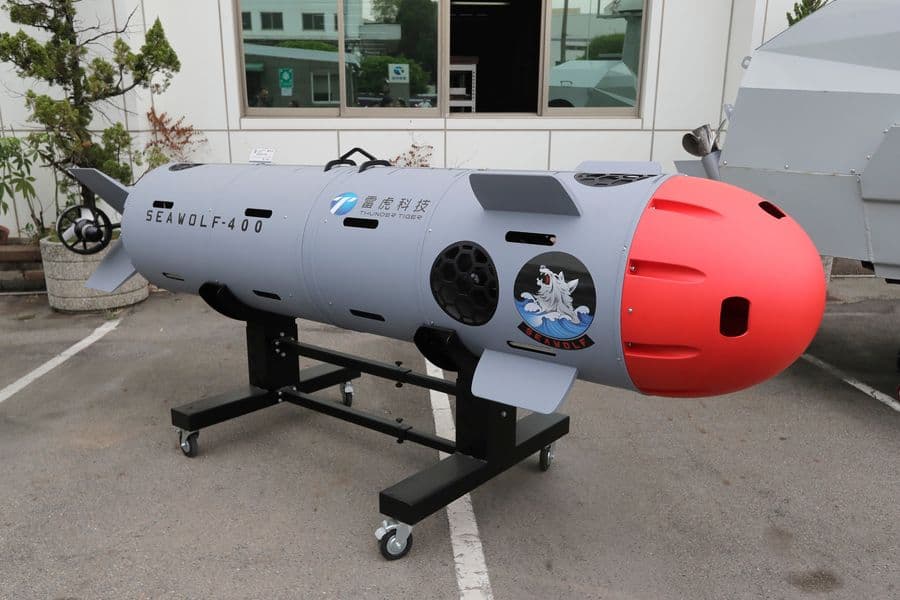
Taiwan's Special Act: A Strategic Blueprint for Asymmetric Deterrence
Last updated 07:22 AM EDT • Read time: 4m
Taiwan’s recent "Special Act for the Procurement of Programs to Enhance Defense Resilience and Asymmetric Capabilities" is more than a budgetary maneuver; it is a fundamental recalibration of the Indo-Pacific security architecture. As Beijing intensifies its authoritarian expansion, the security discourse in Washington has often fixated on the question of "if" a conflict might occur. However, the operational reality demands a shift in focus: how to make that conflict—should it arise—strategically untenable for the aggressor. The deep integration of U.S. and Taiwanese defense initiatives is no longer a diplomatic preference; it is an urgent operational necessity.
The Operational Reality: Shifting Beijing’s Calculus
True deterrence is not forged through rhetorical warnings but through the cold calculation of costs and benefits. By executing this Special Act, Taiwan is conducting a rigorous, systems-level audit of its vulnerabilities against modern hybrid warfare. Beijing’s military doctrine relies on the expectation of a swift, decisive victory that isolates Taiwan before international actors can respond.
To dissolve these military fantasies, the U.S. and Taiwan must create a unified defensive posture that forces Beijing to acknowledge that any attempt to use force against Taiwan would trigger a catastrophic, global economic chain reaction. We must frame this not as a localized skirmish, but as a high-stakes strategic gamble that poses an existential risk to the regime itself. When U.S. defense supply chains are expedited and Taiwan’s defensive depth is reinforced through substantive, timely arms sales, it forces the adversary to conclude that the cost of entry is prohibitively high—that "today is not the day."
Constructing the "No-Go Zone" through Technical Integration
Tactically, Taiwan is constructing a resilient "nervous system" for the defense of the island. This network integrates battlefield awareness—leveraging unmanned aerial systems and low-earth orbit (LEO) satellite terminals—with real-time, high-fidelity data links. The objective is to ensure that Taiwan’s missile systems, such as the locally produced Hsiung Feng III, can maintain lethality and command authority even under the pressure of intense electronic warfare and communication jamming.
The synergy between Taiwan’s indigenous production and U.S.-made assets, such as the Harpoon Coastal Defense System, is the foundation of an asymmetric maritime "no-go zone." This is not a classic arms race, which Taiwan would inevitably lose in terms of raw volume; it is a calculation of cost asymmetry. By integrating these systems into a high-bandwidth, low-latency C2 (Command and Control) network, we are effectively shifting the operational burden back onto the adversary. Every asset the PLA commits to the strait must carry a prohibitive political and material price, ensuring that the maritime blockade line remains impenetrable to standard military maneuvers.
Digital Resilience and Industrial Trust
Modern warfare is decided by systems, not merely firepower. Taiwan’s focus on "resilience"—the capacity to maintain social and military continuity under extreme duress—is the critical variable in the Indo-Pacific equation. Through AI-assisted decision-making, comprehensive C5ISR integration, and redundant communication architectures, we ensure the chain of command remains functional even if critical infrastructure is targeted.
This investment is a direct fruit of the U.S.-Taiwan democratic partnership. The U.S. role in cybersecurity and intelligence sharing provides the leverage necessary for Taiwan to remain a stable, secure pivot point for global supply chains. As we look to the future, both parties should deepen cooperation within the defense industrial base, treating it as an interconnected ecosystem. This "Non-Red" supply chain strategy is essential for protecting the technological foundations of our shared security.
A Call for Streamlined Cooperation
History does not turn on anxiety; it changes based on choices. Through the Special Act, we are addressing our defense gaps in peacetime, fusing democratic values with cutting-edge technology. However, policy intent must be matched by execution. We urge Washington to further streamline procurement procedures and accelerate technology transfers to ensure this asymmetric network reaches full operational capacity.
The ultimate form of deterrence is the convergence of political resolve and operational readiness. When steadfast U.S. support meets substantive, long-term Taiwanese preparation, the Indo-Pacific remains a zone of peace rather than a theater of conflict.
Jui-hung Yen holds a Ph.D. in Political Science from the National Defense University of the Republic of China (Taiwan) and is an observer of Cross-Strait relations.

The Services Do Not Need a Four-Star Autonomous Warfare Command
By Steven Wills • RealClearDefense
Honor Them While There Is Still Time
By Jeffrey Rosales • RealClearDefense
From Siberia to Fairford: How Operation Spider’s Web Has Changed the Rules of Airpower
By Frank A. Rose • RealClearDefense
Faster Simulations, Better Defense Decisions
By Rut Lineswala • RealClearDefense
Will HASC Have an Oversight Subcommittee in the Next Congress?
By Christopher J. Bright • RealClearDefense
Hegseth Barred Trans Troops. Military Boards Are Rejecting Those Orders.
By NYT
Closing the Sea: Lessons from Ancient Mediterranean Blockades
By DeCasien, CIMSECFrom Siberia to Fairford: How Operation Spider’s Web Has Changed the Rules of Airpower
By Frank A. Rose • RealClearDefenseFaster Simulations, Better Defense Decisions
By Rut Lineswala • RealClearDefense
Bombers Could Have a Major Air-to-Air Combat Role
By Joseph Trevithick, The WarZone