
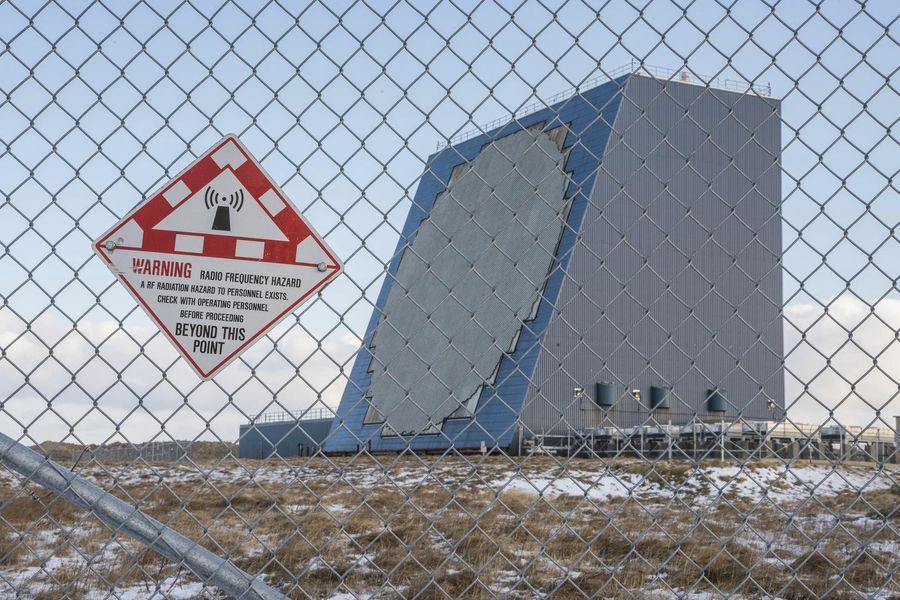
U.S. Military Aims for $1B Missile Defense Radar in Hawaii
Last updated 05:27 PM EDT • Read time: 3m
HONOLULU (AP) — The U.S. military wants to install missile defense radar in Hawaii to identify any ballistic missiles that are fired from North Korea or elsewhere, officials said Tuesday.
The $1 billion system would spot warheads on missiles headed for Hawaii and other U.S. states, and provide that information to ground-based interceptors in Alaska designed to shoot them down. It would be able to distinguish warheads from decoys that are designed to trick missile defense systems.
The radar would help give the Alaska missiles “better eyes,” said Sen. Brian Schatz, a Democrat from Hawaii and a supporter of the project.
So far, lawmakers have appropriated $61 million for planning but not funds for construction. Schatz, who serves on the defense subcommittee of the Senate Appropriations Committee, said he doesn’t have much doubt about the likelihood of follow-on funding.
The radar would be about 30 to 50 feet (9 to 15 meters) wide and 60 feet to 80 feet (18 to 24 meters) high, according to the Missile Defense Agency.
It will likely to have a flat-face surface like one in Shemya, Alaska, instead of a ball-like appearance of other military radar. Experts say the larger the face, the more precisely it will be able to distinguish between warheads and decoys.
The agency is studying two possible locations for the radar, both of which are on Oahu’s North Shore. It’s collecting public comment through July 16.
Schatz said lawmakers discussed the radar with the previous commander of U.S. forces in the Pacific, Adm. Harry Harris, who recently retired and has been nominated to be the U.S. ambassador to South Korea.
“We already have robust capabilities, but working with Admiral Harris, we wanted to double down and make sure we have the most powerful combination of missile interceptors and radar systems anywhere,” Schatz said in a phone interview.
The radar would help identify long-range ballistic missile threats mid-way through flight.
David Santoro, a director and senior fellow for nuclear policy at the Pacific Forum think tank in Honolulu, said threats from North Korea were increasing as Pyongyang developed more sophisticated missiles and nuclear weapons.
“Over the past few weeks, we have seen a so-called peace initiative developing, but the reality is the threat is still there. It’s not going away,” Santoro said. The U.S. would be expected to build a radar system to counter the threats, he said.
U.S. concerns about the threat from North Korean missiles spiked last year as North Korea test-fired long-range missile over Japan and threatened to launch ballistic missiles toward the Guam, a major U.S. military hub in the Pacific. President Donald Trump warned the U.S. military was “locked and loaded, should North Korea act unwisely” and that the U.S. would unleash “fire and fury” on the North if it continued to threaten America.
But then Trump and North Korea’s leader, Kim Jong Un, met in Singapore earlier this month and issued a declaration agreeing to “work toward complete denuclearization of the Korean Peninsula.”
The statement did not define a process, say when it would begin or say how long it might take.
Information from: Honolulu Star-Advertiser, http://www.staradvertiser.com
© Copyright 2018 Associated Press. All rights reserved.

2949 Marine Prisoners, Hostages, and Peacetime Governmental Detainees Since Our Corps' Founding
By Jon Couch • RealClearDefense
America Must Win the Biotech Race Against China
By Rob Maness • RealClearDefense
How Digital Twins Can Strengthen Naval Readiness Before a Crisis Begins
By Carl Napoletano • RealClearDefense
The Uninsured Sky
By Joe Sandri • RealClearDefense
Counterterrorism and the Growing Convergence in Homeland Security and Homeland Defense
By Austin Doctor • RealClearDefense
How Digital Twins Can Strengthen Naval Readiness Before a Crisis Begins
By Carl Napoletano • RealClearDefense
F-16s Build on Iran Combat Lessons to Prepare for China Threat
By Rebecca Grant • Lexington Institute
U.S. Aircraft Evacuated From Second U.K. Base Due to Iran Threat
By Holliday, et al, WSJ
US Marine Corps Acquires Textron’s Ripsaw M3 Uncrewed Ground Vehicles
By DPost
U.S. Navy’s First San Antonio Flight II USS Harrisburg Completes Sea Trials
By GDN