
Army Aviation's Cancellation Sends Clear Message to Industry
Last updated 06:26 AM EDT • Read time: 4m
“Don’t invest. Don’t take risks.”
DoD and Congress must move fast to shore up a critical engineering workforce
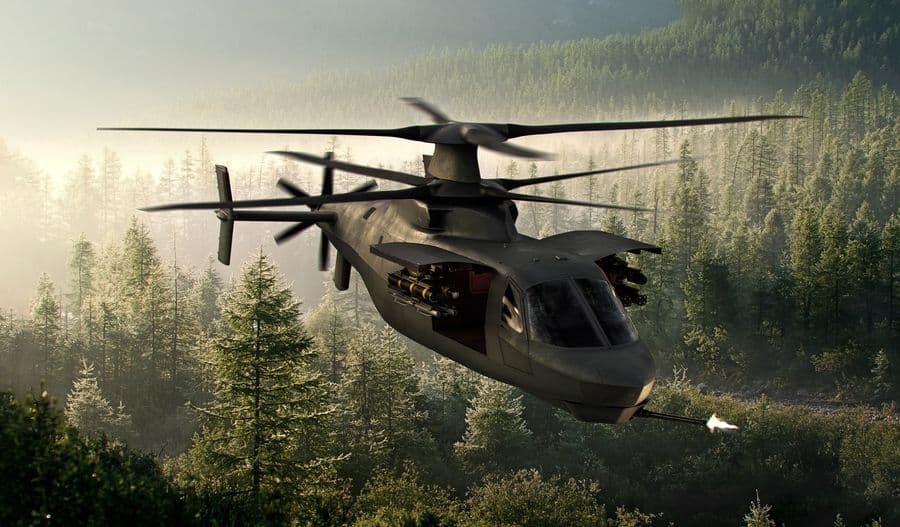
Last month the Army announced its decision to “end development” of its new manned reconnaissance helicopter, the Future Attack Reconnaissance Aircraft (FARA), “at the conclusion of FY24 prototyping activities.”
In other words, the Army canceled a program that was for years the service’s number one aviation modernization priority.
Cancellation of FARA represents the Army’s fourth unsuccessful attempt to field a reconnaissance helicopter to replace my old platform, the OH-58D Kiowa Warrior (the Comanche, the Arapaho Armed Reconnaissance Helicopter, and Armed Aerial Scout being the other three).
This decision could have a devastating effect on the rotary wing industrial base which, for the immediate future, means the design and engineering capabilities of Lockheed Martin’s Sikorsky. More broadly, the Army’s cancellation sends an unmistakably clear message to the broader defense industry at the worst possible time: “Don’t invest. Don’t take risks.”
The timing is especially rich, too: FARA’s cancellation comes less than a month after the Department of Defense (DoD) released its first-ever Defense Industrial Strategy, which aims to “guide DoD actions and resource prioritization” to create “a modern, resilient defense industrial ecosystem.”
If the Army – and DoD writ large – are serious about creating a resilient industry ecosystem, then it’s essential that they work with Congress to preserve and put to work the engineering workforce previously assembled and brought to bear on the FARA project. That workforce is, in no uncertain terms, a perishable resource and one that will not be easy to reestablish if lost.
An obvious avenue exists in Black Hawk modernization, something the Army has acknowledged is necessary as the aircraft will continue to operate well beyond the 2060s.
If Army does invest in Black Hawk modernization – things like increased speed, lift, range, survivability, safety and autonomy, communications, and the ability to operate as a critical partner in joint all-domain operating environments – this could help reduce the engineering impact, but the funding required needs to come in Fiscal Year 2024 and 2025. Without it, America’s rotary-wing innovation capabilities will atrophy as America's highly skilled rotorcraft engineers are forced into other professions.
The Army puts rotary industrial base in a tail-spin
The biggest impact of the FARA cancellation will be to Sikorsky, which has long been a national asset and a world leading helicopter technology company. Given the rapidly deteriorating global security environment, this is critically important to stability worldwide.
Sikorsky had hundreds of engineers working on FARA – a highly skilled labor force which cannot simply be transferred to other programs without DoD funding certainty. The company also invested $1 billion to develop the X2 coaxial rotor technology – technology that delivers unprecedented speed, maneuverability and agility.
One encouraging sign for the rotor industrial base is that the Army’s latest sources sought announcement seeks to extend Black Hawk production beyond the current multi-year contract, with a new contract potentially extending out to 2032. This is a possible path for shoring up the industrial base that could mitigate some of the impact of FARA’s cancellation, but it may not materialize quickly enough to preserve the current manufacturing workforce. The Army needs to be disciplined about sustaining this effort, and on that count doubts abound.
While the Army’s announcement indicates it will invest in research and development to expand unmanned aerial reconnaissance capabilities, it isn’t at all clear what programs the Army has to satisfy this long-unmet need or whether any of the work that went into FARA would be translate to this space.
What’s needed: tangible commitment
As a pilot flying the OH-58D Kiowa Warrior helicopter for the 101st Airborne in both Afghanistan and Iraq, the OH-58D was the most highly sought-after, most requested platform by ground commanders in the War on Terror. Now in our era of renewed Great Power Competition, with a rapidly deteriorating global security situation, America’s ground forces have no real reconnaissance aircraft at a time when current drones aren’t able to fully meet reconnaissance needs.
Today, the Army must make a budgetary commitment to the Black Hawk program with production rates that make a multi-year procurement viable. In support of the dire need to keep this national industrial base asset alive, the Army must invest in a Black Hawk modernization program.
The Administration, DoD, and Army leadership need to work with Congress and industry to ensure Sikorsky remains a national asset. This charge is critical if the Army intends to limit the disastrous impact of its decision on the rotary-wing industrial base, national security, and the warfighter.
Amber Smith is a former OH-58D Kiowa Warrior helicopter pilot-in-command and air mission commander in the 101st Airborne Division. Previously she served as the Deputy Assistant to the Secretary of Defense (Outreach) and is a combat veteran of Iraq and Afghanistan. For more information visit OfficialAmberSmith.com

A Passage to the Middle East: India as a Mediator and Security Partner
By Irina Tsukerman • RealClearDefense
South China Sea is Key to Invigorate Positive U.S.–Malaysia Relations
By Brent D. Sadler • RealClearDefense
The Necropolitics of the Wasteland
By Yunus Emre Tumen • RealClearDefense
AI, Robotics, and Marines
By Gary Anderson • RealClearDefense
The Emerging SQUAD
By Muhammad Shoaib • RealClearDefense
AI, Robotics, and Marines
By Gary Anderson • RealClearDefense
AUKUS Partners Test Autonomous Maritime Systems
By Jangoulun Singsit, Naval Tech
AUKUS: USS Colorado Announced as First Submarine for SRF – West
By USNI News
Navy, Marine Corps Simulate Ship Strikes From Air and Land
By Alex Wilson, S&S
Air National Guard To Stand Up a New Special Tactics Squadron
By Patty Nieberg, T&P